
Company
Most Accurate Healthcare AI designed for everything from admin workflows to clinical decision support.
Most Accurate Healthcare AI designed for everything from admin workflows to clinical decision support.
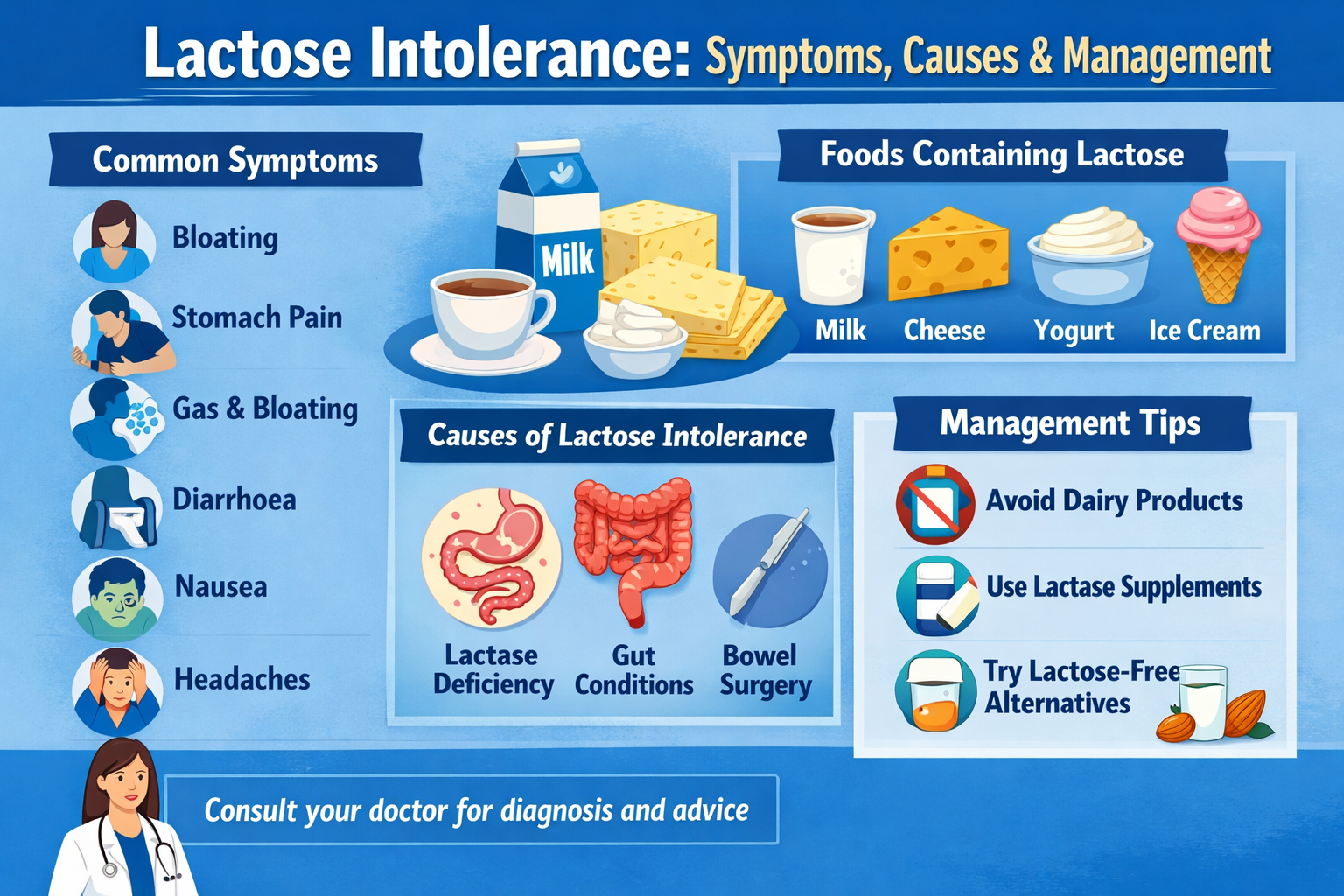
Lactose intolerance is a common digestive condition that affects millions of people worldwide. It occurs when the body cannot properly digest lactose, a natural sugar found in milk and dairy products. When lactose is not fully digested, it can lead to uncomfortable symptoms such as stomach pain, bloating, and digestive upset after eating certain foods.
Understanding the symptoms, causes, and management of lactose intolerance can help individuals make informed dietary choices and reduce discomfort. This article explains everything you need to know about lactose intolerance, including symptoms, foods that contain lactose, testing methods, and treatment options.
Lactose intolerance happens when the body does not produce enough lactase, an enzyme that helps break down lactose in the digestive system. Lactose is commonly found in dairy products such as milk, cheese, yogurt, and butter.
When lactose cannot be properly digested, it passes into the large intestine where bacteria ferment it. This process produces gas and other byproducts that cause digestive symptoms.
Lactose intolerance is not the same as a milk allergy. While lactose intolerance affects digestion, a milk allergy involves the immune system and can cause severe reactions.
Symptoms of lactose intolerance can appear within a few minutes or several hours after consuming foods or drinks that contain lactose. The severity of symptoms can vary depending on how much lactose was consumed and how much lactase the body produces.
Common symptoms include:
Some people may also experience symptoms that are not directly related to the digestive system. These may include headaches, tiredness, and joint or muscle pain.
Because symptoms can vary from person to person, lactose intolerance may sometimes be confused with other digestive conditions.
Lactose is naturally present in foods made with animal milk. This includes milk from cows, goats, and sheep. Dairy products are the most common sources of lactose in everyday diets.
Examples of foods that contain lactose include:
In addition to dairy products, lactose can also appear in many processed foods. Food manufacturers often use milk-based ingredients in packaged items.
Processed foods that may contain lactose include:
Because lactose can appear in many packaged foods, checking ingredient labels is important for people managing lactose intolerance.
It is important to understand the difference between lactose intolerance and a food allergy. Lactose intolerance affects digestion and typically causes gastrointestinal symptoms.
A food allergy, on the other hand, involves the immune system and can cause serious symptoms such as:
In severe cases, allergic reactions can become life threatening and require immediate medical attention. Anyone experiencing sudden swelling, breathing difficulties, or severe allergic symptoms should seek emergency medical help.
If symptoms of lactose intolerance happen regularly after eating dairy products, it is advisable to consult a healthcare professional. A doctor can help determine whether lactose intolerance or another condition is causing the symptoms.
Medical advice should be sought if:
A doctor can evaluate symptoms and recommend appropriate tests if necessary.
Healthcare providers may use several methods to confirm lactose intolerance. One common approach is a lactose elimination diet.
In this process, a person temporarily avoids foods that contain lactose. If symptoms improve during this period and return when lactose is reintroduced, lactose intolerance may be the cause.
Doctors may also recommend specific medical tests, including:
Blood tests can measure how the body responds to lactose consumption and whether digestion occurs normally.
The hydrogen breath test is commonly used to diagnose lactose intolerance. During this test, hydrogen levels in a person's breath are measured after drinking a lactose-containing liquid. Elevated hydrogen levels suggest that lactose is not being properly digested.
In rare cases where symptoms are severe or unclear, doctors may perform a gastroscopy. This procedure involves inserting a thin flexible tube through the mouth and into the stomach. A small sample of cells from the small intestine may be taken for examination.
Patients are usually given medication to reduce discomfort and help them relax during the procedure.
There is currently no cure for lactose intolerance, but symptoms can often be managed effectively through dietary adjustments.
The most common treatment involves reducing the amount of lactose consumed. Some people may tolerate small amounts of dairy products, while others may need to avoid them completely.
Many lactose free alternatives are now widely available, including lactose free milk and dairy substitutes made from plants such as almonds, soy, and oats.
Lactase supplements are available in tablet or liquid form. These products contain the enzyme needed to digest lactose and may help prevent symptoms when taken before consuming dairy products.
However, the effectiveness of supplements can vary between individuals.
In some cases, lactose intolerance may develop because of another health condition that affects the digestive system. Conditions such as coeliac disease or inflammatory bowel disease can damage the small intestine and reduce lactase production.
Treating the underlying condition may help improve lactose digestion over time.
The most common cause of lactose intolerance is a natural decline in lactase production as people age. Many individuals produce less lactase after childhood, which can lead to symptoms when consuming dairy.
Other causes include:
Some premature babies may temporarily struggle to digest lactose because their digestive systems are not fully developed. This condition usually improves as the baby grows.
A very small number of people are born with a rare genetic condition that prevents the body from producing lactase at all.
Although lactose intolerance can be uncomfortable, it is generally manageable with simple dietary adjustments. Many people find that they can still enjoy some dairy products in small amounts without experiencing severe symptoms.
Reading food labels, choosing lactose free alternatives, and understanding personal tolerance levels can make a significant difference in managing the condition.
If symptoms persist or become severe, medical advice should always be sought to rule out other digestive disorders.
Lactose intolerance is a common digestive condition caused by the body's inability to properly break down lactose. While symptoms such as bloating, stomach pain, and diarrhoea can be unpleasant, they can usually be managed through dietary changes and, in some cases, lactase supplements.
Understanding which foods contain lactose and monitoring symptoms can help individuals maintain digestive comfort while still enjoying a balanced diet. Consulting a healthcare professional can also ensure accurate diagnosis and appropriate treatment.
Primary reference: National Health Service (NHS). Lactose intolerance information page. Available at the NHS website.
This article is for informational and educational purposes only. It does not replace professional medical advice, diagnosis, or treatment. Always consult a qualified healthcare professional or GP for advice regarding any medical condition or dietary change.