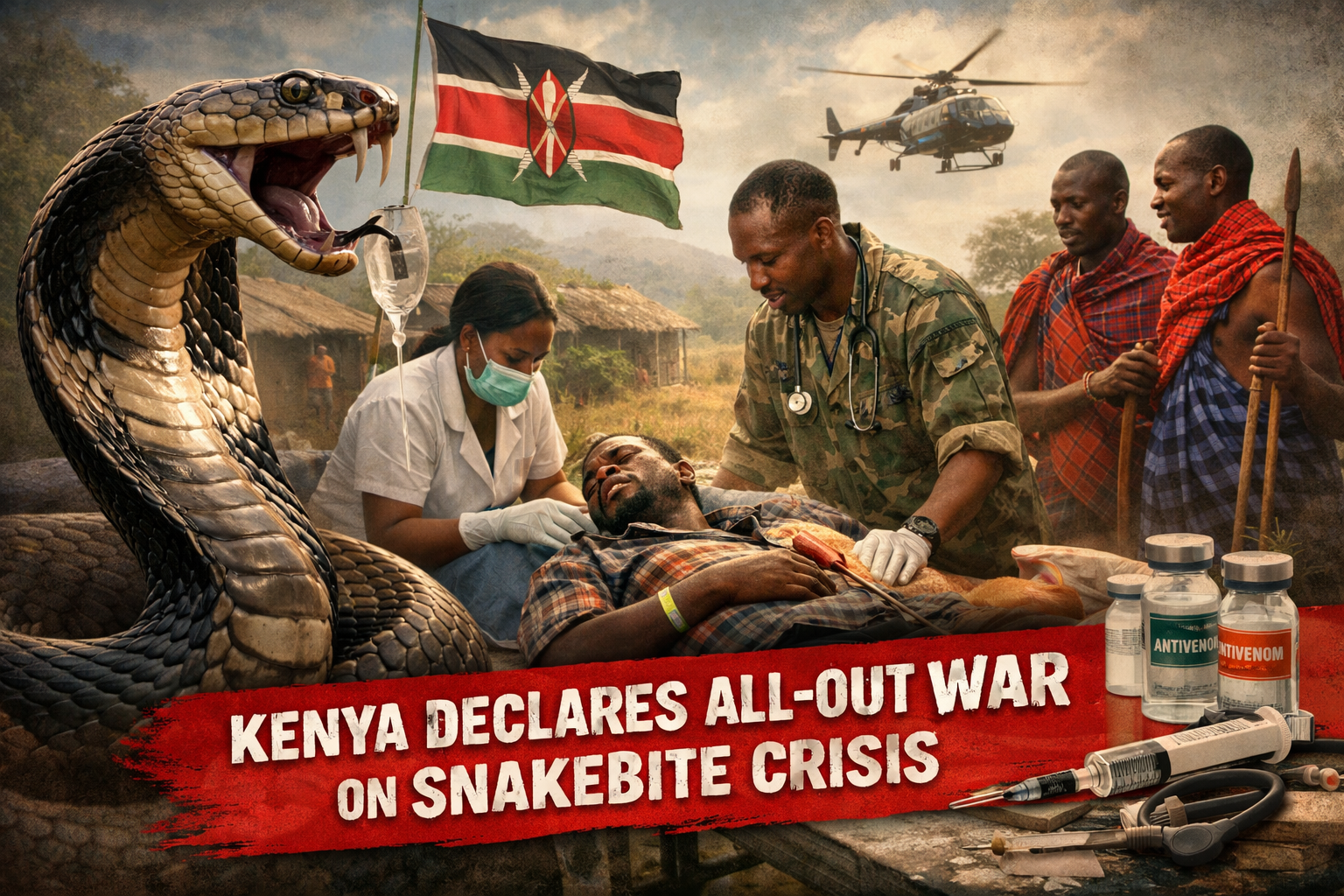
Snakebites have long been a silent public health emergency across rural Africa. Now, Kenya is taking bold and coordinated action to confront the growing threat. In a decisive move aimed at reducing deaths, disabilities, and economic hardship, the government has intensified efforts to combat snakebite envenoming through improved healthcare access, antivenom distribution, public awareness campaigns, and stronger surveillance systems.
This renewed focus signals a major shift in how snakebites in Kenya are perceived and managed. No longer treated as isolated rural incidents, snakebites are now recognized as a national public health priority demanding systemic solutions.
Snakebite envenoming occurs when venomous snakes inject toxins into the body through a bite. These toxins can cause paralysis, tissue destruction, organ failure, and death if not treated promptly. In Kenya, thousands of people are bitten each year, particularly in arid and semi arid regions where human settlements overlap with snake habitats.
Farmers, herders, and children are among the most vulnerable groups. Many bites occur during agricultural work, grazing livestock, or walking long distances in rural areas. Limited footwear, lack of lighting at night, and proximity to bushland increase exposure.
According to the World Health Organization, snakebite envenoming is classified as a neglected tropical disease. Globally, it causes tens of thousands of deaths annually and leaves many more with permanent disabilities. In sub Saharan Africa, the burden is particularly severe due to limited access to timely and effective treatment.
For Kenya, the impact extends beyond health. Snakebites disrupt livelihoods, deepen poverty, and strain already stretched healthcare resources. Families often face high medical costs, loss of income, and long term care needs for survivors with amputations or chronic complications.
Recognizing the scale of the problem, the Kenyan government has introduced a coordinated national response. The strategy centers on prevention, treatment, training, and data collection.
The Ministry of Health has prioritized the procurement and distribution of effective antivenoms to county hospitals and rural health facilities. Previously, many facilities faced chronic shortages, forcing patients to travel long distances or rely on traditional remedies that may delay lifesaving treatment.
By strengthening supply chains and ensuring quality control, authorities aim to reduce fatalities and complications associated with delayed care.
Antivenom remains the only specific treatment for snakebite envenoming. However, it must be administered quickly and correctly. Kenya’s renewed campaign includes:
This effort addresses a critical gap. In many rural areas, patients previously arrived at facilities only to discover that antivenom was unavailable. Delays of several hours can mean the difference between recovery and permanent damage.
Another pillar of the strategy focuses on clinical capacity. Snakebite management requires proper diagnosis, dosing, and supportive care. Health workers must recognize signs of envenoming and respond swiftly.
Training programs are being rolled out to equip doctors, nurses, and clinical officers with updated protocols. These include guidance on:
Strengthening frontline healthcare knowledge reduces mortality and improves patient outcomes.
Prevention is equally important. Many snakebites occur due to limited awareness of risk factors and first aid measures. Community outreach campaigns now emphasize:
Educational programs also teach communities to seek immediate medical care rather than relying solely on herbal remedies. While traditional healers play important cultural roles, delays in receiving antivenom significantly increase risks.
Elevating snakebites to a national agenda reflects a broader understanding of health equity. Rural populations often face multiple vulnerabilities including poverty, limited infrastructure, and climate related risks. Snakebite envenoming compounds these challenges.
Climate change and environmental shifts may also influence snake behavior and distribution. Changing rainfall patterns and habitat disruption can increase human snake encounters. As agricultural land expands, contact between people and wildlife intensifies.
By declaring war on snakebites, Kenya acknowledges that rural health threats require structured policy responses, not reactive treatment alone.
The burden of snakebites goes beyond immediate medical emergencies. Survivors may experience amputations, chronic pain, or psychological trauma. Children may drop out of school due to disability or financial strain. Breadwinners who lose mobility can no longer support their families.
In agricultural communities, even short term hospitalization during planting or harvesting seasons can disrupt food production. This has ripple effects on food security and local economies.
Reducing snakebite incidence and severity therefore contributes to national development goals. Healthier rural populations mean stronger productivity, lower healthcare costs, and greater resilience.
Accurate data is essential for effective intervention. Historically, snakebite cases have been underreported due to poor surveillance systems and reliance on informal treatment pathways.
Kenya is working to improve reporting mechanisms at county and national levels. Enhanced surveillance allows authorities to:
Reliable data also supports partnerships with international health organizations and research institutions seeking to improve antivenom effectiveness.
Kenya’s initiative aligns with global efforts to reduce snakebite deaths and disabilities by 2030. International agencies, research bodies, and non governmental organizations are collaborating to improve antivenom production, affordability, and accessibility.
Global attention has increased funding opportunities and technical support. Cross border cooperation is also important since snake habitats do not follow political boundaries.
By positioning itself as proactive, Kenya may serve as a regional model for comprehensive snakebite management in East Africa.
Despite strong political commitment, several obstacles remain.
Addressing these challenges demands continuous coordination between national government, county administrations, healthcare providers, and community leaders.
While national policy plays a vital role, individuals can also reduce risk through practical measures:
Early intervention remains the most important factor in survival and recovery.
Kenya’s declaration of war on snakebites represents more than a health campaign. It reflects a commitment to protecting vulnerable communities from preventable suffering.
By integrating snakebite management into national health planning, the country acknowledges that neglected tropical diseases deserve sustained attention. This shift may encourage further investment in rural emergency care systems and community health education.
If successfully implemented, the strategy could significantly reduce mortality rates, limit long term disabilities, and strengthen trust in public healthcare institutions.
The road ahead requires persistence, funding, and collaboration. Success will depend on consistent antivenom availability, trained medical staff, accurate reporting systems, and informed communities.
As Kenya advances its campaign against snakebite envenoming, measurable progress will be closely watched by global health stakeholders. The lessons learned could inform broader regional strategies and contribute to achieving international targets for neglected tropical diseases.
Snakebites may have long been overlooked, but they are no longer invisible. With decisive policy action and community engagement, Kenya is working to transform a neglected crisis into a manageable public health challenge.
This article is for informational and educational purposes only. It does not constitute medical advice, diagnosis, or treatment recommendations. Individuals who experience a snakebite should seek immediate professional medical care at the nearest healthcare facility. Always consult qualified health professionals or official government sources for accurate and up to date information.

Most Accurate Healthcare AI designed for everything from admin workflows to clinical decision support.