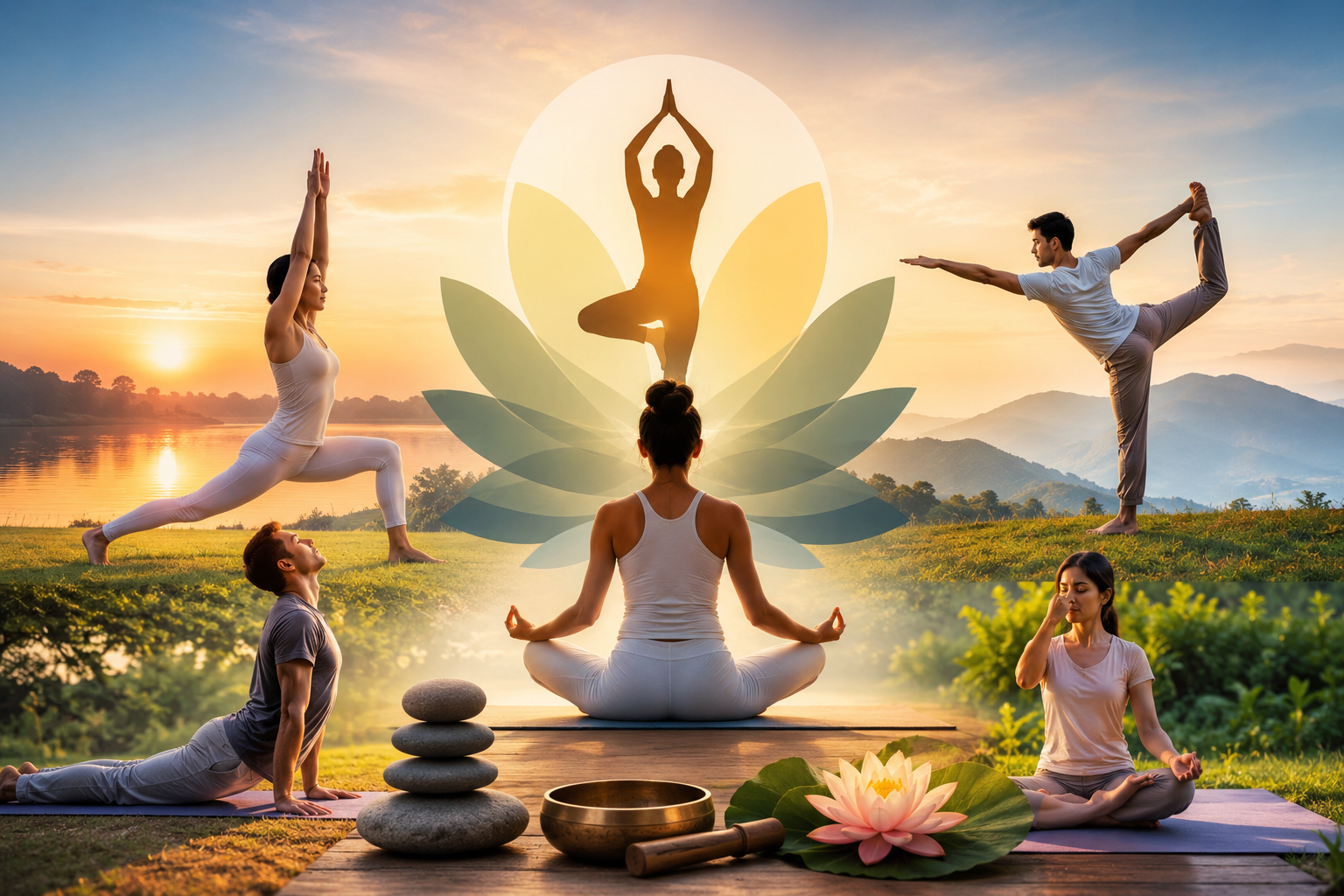
Every year on 21 June, the world comes together to celebrate International Yoga Day, a global event dedicated to one of the oldest wellness practices knownto humanity. Yoga is more than physical exercise, it is a holistic system that connects the body, mind, and breath.
Yoga traces its roots back more than 5,000 years to ancient India. It first appeared in early spiritual texts such as the Vedas and later became more structured in the Upanishads and the Yoga Sutras of Patanjali.
The word “yoga” comes from the Sanskrit root “yuj”, meaning to join or to unite. This reflects yoga’s core philosophy: the union of mind, body, and spirit.
Over centuries, yoga evolved from a deeply spiritual discipline into a widely practiced system for physical health, mental clarity, and emotional balance.
Today, yoga is practiced worldwide in studios, homes, gyms, and even workplaces.
International Day of Yoga was officially declared by the United Nations in 2014, following a proposal by India. The date, June 21, was chosen because it is the summer solstice, the longest day of the year in the Northern Hemisphere, symbolizing light and energy.
Since its first celebration in 2015, millions of people across the world participate in yoga sessions, workshops, and community events.
The day emphasizes yoga as a tool for:
Yoga is widely practiced because it benefits both physical and mental health. Some of its major advantages include:
Yoga enhances flexibility, strength, and balance. Regular practice can improve posture, reduce back pain, and support joint health.
Breathing techniques and meditation calm the nervous system, helping reduce stress hormones and promote relaxation.
Yoga improves focus, memory, and emotional stability by encouraging mindfulness and present-moment awareness.
Certain yoga practices help regulate blood pressure, improve circulation, and reduce risk factors for heart disease.
Relaxation techniques in yoga help people fall asleep faster and enjoy deeper rest.
A balanced yoga routine supports overall wellness and helps the body manage stress more effectively.
Yoga is not a single practice, it includes many styles suited to different needs and personalities.
One of the most common forms, Hatha Yoga focuses on basic postures and breathing. It is ideal for beginners.
Also known as “flow yoga,” it links movement with breath in a dynamic sequence. It is more physically intense.
A structured and fast-paced style that follows a set sequence of postures. It builds strength and discipline.
Focuses on precision and alignment, often using props like blocks and straps. It is great for injury recovery.
Combines breathing, chanting, meditation, and movement to awaken energy within the body.
Practiced in heated rooms, it involves a fixed series of poses designed to improve flexibility and detoxification.
A slow and meditative style where poses are held for longer periods, targeting deep connective tissues.
In today’s fast-paced world, yoga has become more relevant than ever. It is no longer limited to spiritual seekers, it is now widely used by athletes, office workers, students, and even medical professionals.
From reducing digital fatigue to improving workplace productivity, yoga offers practical solutions for modern challenges.
International Day of Yoga reminds us that yoga is not just an exercise but a way of life. It encourages balance, between strength and flexibility, activity and rest, body and mind.
Whether practiced for fitness, peace of mind, or spiritual growth, yoga continues to unite millions across cultures and continents.
On this Yoga Day, even a few minutes of mindful breathing or simple stretching can be a meaningful step toward better health and inner calm.

Most Accurate Healthcare AI designed for everything from admin workflows to clinical decision support.