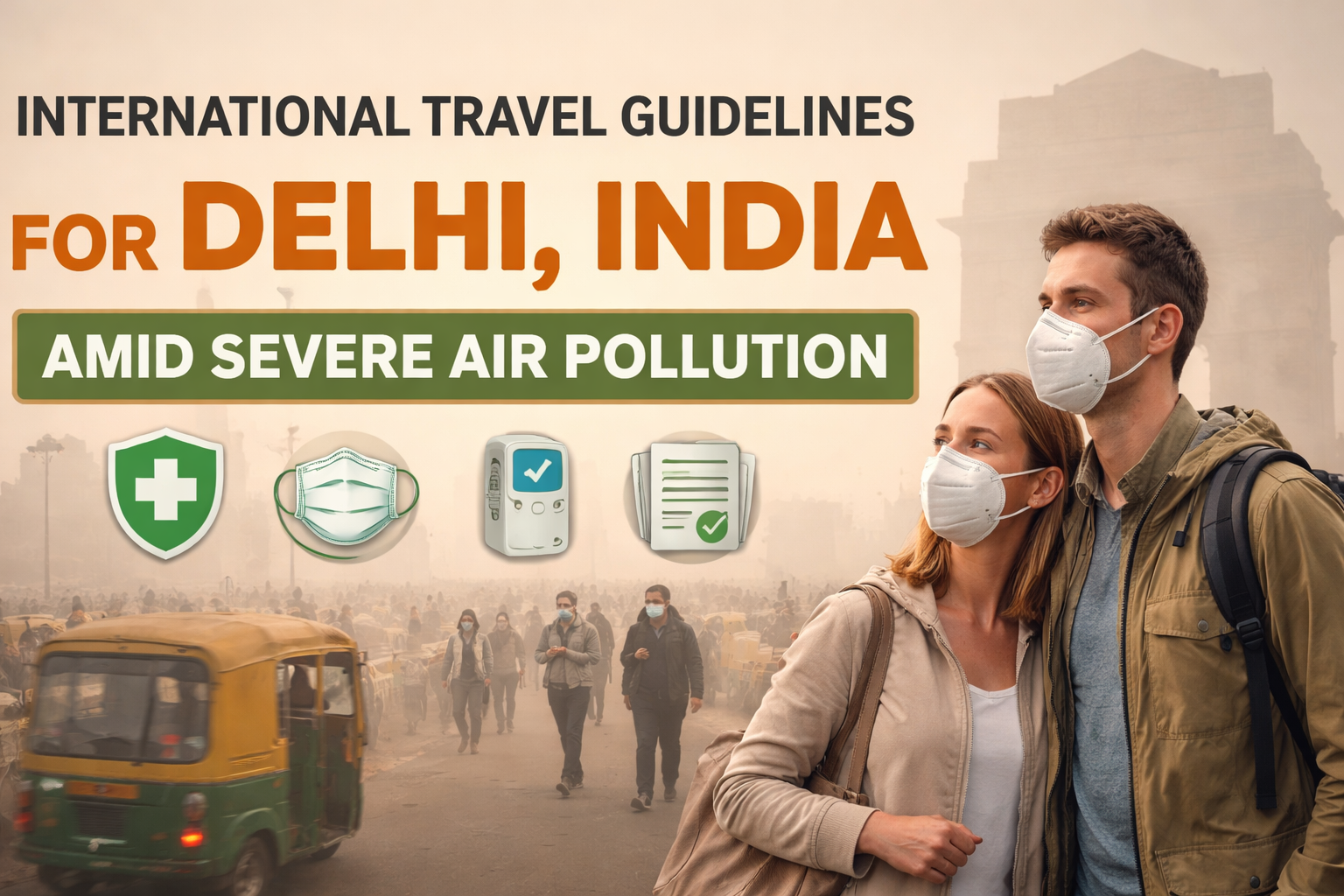
Delhi, the capital of India, is a city of immense cultural heritage, historic landmarks, modern infrastructure, and global business importance. It attracts millions of international travelers every year for tourism, education, diplomacy, and commerce. However, in recent years, severe air pollution has become a major concern, especially during the winter months. Travelers planning a trip to Delhi must be informed, prepared, and cautious to ensure their health and safety.
This comprehensive guide outlines international travel guidelines for Delhi amid severe air pollution, offering practical advice, official recommendations, health precautions, and travel planning tips. Whether you are a tourist, business traveler, or expatriate, this article will help you make informed decisions before and during your visit.
Delhi frequently ranks among the most polluted cities in the world. The primary contributors to air pollution include vehicle emissions, industrial activities, construction dust, crop burning in neighboring states, fireworks, and unfavorable weather conditions. During late October through February, air quality often deteriorates sharply due to temperature inversion and low wind speeds.
Air quality is measured using the Air Quality Index or AQI. An AQI above 300 is considered very poor, while levels above 400 are classified as severe. During peak pollution episodes, visibility drops, outdoor activities become unsafe, and respiratory illnesses increase.
International travelers, especially those with pre existing medical conditions, need to understand the seriousness of the situation and take preventive measures.
Most countries do not issue blanket travel bans for Delhi due to air pollution. However, several governments include air quality warnings in their travel advisories for India. These advisories typically recommend travelers monitor air quality reports and take health precautions.
Travelers are encouraged to check official government websites such as foreign ministries or state departments before departure. Airlines, travel insurance providers, and embassies may also issue guidance during extreme pollution events.
It is important to note that air pollution advisories do not usually affect visa issuance or entry permissions. Flights continue to operate normally, although occasional delays may occur due to low visibility.
Choosing the right travel period can significantly reduce exposure to hazardous air quality.
The months of March to September generally have better air quality due to higher temperatures, rainfall, and stronger winds. July and August see monsoon rains that help clear pollutants from the air.
The most severe pollution occurs between late October and January. Travelers planning non essential visits should avoid this period if possible. If travel during these months is unavoidable, extra precautions are necessary.
Exposure to high pollution levels can cause both short term and long term health effects. Common symptoms include coughing, throat irritation, headaches, fatigue, and eye irritation. Prolonged exposure can worsen asthma, bronchitis, cardiovascular disease, and lung conditions.
Children, elderly individuals, pregnant women, and people with respiratory or heart conditions are at higher risk. International travelers who are not accustomed to such pollution levels may experience symptoms more quickly.
Medical facilities in Delhi are well developed, but prevention remains the best strategy.
International travelers should consult their doctor at least four weeks before traveling to Delhi. Discuss any existing health conditions and request advice on managing pollution exposure. Carry sufficient medication, including inhalers or allergy treatments if needed.
Travelers with severe respiratory conditions should reconsider travel during peak pollution periods.
Wearing a high quality mask is one of the most effective ways to reduce pollution exposure. N95 or N99 masks are recommended as they filter fine particulate matter. Cloth masks and surgical masks are not effective against air pollution.
Carry extra masks, especially if staying for an extended period.
Many hotels and serviced apartments in Delhi now offer air purifiers in rooms. Travelers should prioritize accommodations that provide air filtration systems.
Portable air purifiers can also be carried, especially for long stays or for travelers with health vulnerabilities.
Use reliable mobile apps or government websites to track real time AQI levels in Delhi. Limit outdoor activities when AQI levels are very poor or severe.
Plan sightseeing during times when pollution levels are relatively lower, usually mid afternoon.
Delhi’s Indira Gandhi International Airport is equipped to operate even during low visibility conditions. However, severe smog can occasionally cause flight delays or diversions.
International travelers should stay in touch with their airlines and allow extra time for connections. Wearing a mask at the airport and during ground transport is advisable.
Cabins of commercial aircraft are equipped with air filtration systems, so air quality inside flights is generally safe.
Opt for air conditioned taxis, ride hailing services, or private cars rather than open vehicles like auto rickshaws or motorcycles. Keep windows closed and use internal air circulation when possible.
Traffic congestion worsens pollution exposure. Try to travel during non peak hours to reduce time spent in polluted environments.
Outdoor physical activity increases the amount of polluted air inhaled. Avoid long walks, jogging, or cycling when AQI levels are high.
When booking accommodation in Delhi, consider the following factors:
Choose hotels with air purification systems and good ventilation
Request non smoking rooms
Avoid accommodations near major highways or industrial zones
Check reviews that mention air quality management
Luxury and business hotels are more likely to provide air quality control features, but many mid range hotels now do as well.
Delhi offers iconic attractions such as the Red Fort, India Gate, Qutub Minar, Humayun’s Tomb, and bustling markets. While exploring the city:
Limit outdoor sightseeing during early mornings and late evenings when pollution tends to be worse
Take breaks indoors at museums, cafes, or malls
Stay hydrated and avoid alcohol, which can worsen dehydration and irritation
Watch for symptoms like dizziness or breathing difficulty
If pollution levels reach severe categories, consider indoor activities such as shopping malls, cultural centers, or day trips to nearby cities with better air quality.
Business travelers often have limited flexibility. Companies sending employees to Delhi should:
Provide pre travel health briefings
Offer air purifier equipped accommodation
Allow remote meetings when pollution levels are hazardous
Ensure comprehensive travel health insurance
Employers may also consider adjusting travel schedules during extreme pollution alerts.
International travelers should purchase travel insurance that covers medical treatment related to respiratory issues. Review policy details carefully.
Keep emergency contact numbers, embassy details, and hospital information readily accessible. Leading hospitals in Delhi are experienced in handling pollution related health issues.
The Delhi government implements several emergency measures during severe pollution episodes. These may include:
Restrictions on vehicle usage
Temporary construction bans
School closures
Promotion of work from home
International travelers should stay updated on these measures as they may affect mobility and daily plans.
Embassies in Delhi often issue advisories to their citizens during severe pollution periods. Registering with your embassy can ensure you receive timely updates and assistance if needed.
Some embassies provide lists of recommended hospitals and health resources.
For students, diplomats, and long term expatriates:
Invest in high quality home air purifiers
Follow a pollution friendly lifestyle with minimal outdoor exposure
Maintain regular health checkups
Consider short trips out of the city during peak pollution weeks
Many expats also adjust their daily routines, including exercise and commuting schedules, to minimize exposure.
Travel is generally safe if precautions are taken. However, individuals with serious respiratory or heart conditions should avoid travel during peak pollution periods.
Flights are rarely canceled solely due to pollution, but delays can occur due to poor visibility.
Masks are not always legally mandatory, but they are strongly recommended during high pollution days.
Yes, with careful planning, indoor activities, and health precautions, tourists can still have a meaningful experience.
Delhi remains one of the most dynamic and fascinating cities in the world, offering rich history, vibrant culture, and economic opportunity. While severe air pollution presents a serious challenge, informed international travelers can minimize risks by following official guidelines, monitoring air quality, and taking proactive health measures.
By choosing the right travel season, wearing appropriate protective gear, selecting suitable accommodations, and staying updated on local advisories, visitors can navigate Delhi safely even amid environmental concerns.
International travel guidelines for Delhi amid severe air pollution are not meant to discourage travel, but to ensure that visitors remain healthy, prepared, and aware. With responsible planning and adaptability, a trip to Delhi can still be rewarding and safe.

Most Accurate Healthcare AI designed for everything from admin workflows to clinical decision support.