
How to Prevent and Manage Norovirus: What You Need to Know About the Stomach Bug
Norovirus is one of the most common and contagious causes of gastrointestinal illness in the United States. Often referred to as the stomach flu, norovirus is not related to influenza, but it can cause sudden and severe digestive symptoms that disrupt daily life and, in some cases, lead to emergency medical care.
Each year, nearly half a million Americans seek emergency room treatment due to norovirus infections. While most healthy adults recover within a few days, young children, older adults, and people with compromised immune systems face a greater risk of serious complications. Understanding how norovirus spreads, recognizing symptoms early, and taking the right preventive steps can significantly reduce your risk of infection.
This article explains what norovirus is, how it spreads, who is most at risk, and what you can do to prevent and manage the illness effectively.
What Is Norovirus?
Norovirus is a highly contagious virus that causes inflammation of the stomach and intestines, a condition known as viral gastroenteritis. According to the National Institutes of Health, norovirus is the leading cause of vomiting, diarrhea, and foodborne illness in the United States.
The virus spreads rapidly, especially in environments where people are in close contact. Common outbreak settings include nursing homes, schools, childcare centers, hospitals, cruise ships, and shared living spaces.
Unlike many viral illnesses, there is currently no approved antiviral treatment or vaccine for norovirus, although promising research is underway.
How Norovirus Spreads
Norovirus spreads easily and efficiently through several routes. Even a small number of viral particles can cause infection.
You can become infected through:
- Direct contact with an infected person
- Touching contaminated surfaces and then touching your mouth
- Consuming contaminated food or water
- Exposure to vomit or stool from an infected individual
The virus is particularly difficult to control because it can survive on surfaces for days and resists many common disinfectants.
Foodborne outbreaks often occur when infected individuals prepare food or when food comes into contact with contaminated surfaces. Fresh produce, shellfish, and ready‑to‑eat foods are common sources.
Signs and Symptoms of Norovirus
Symptoms typically appear quickly, usually within 12 to 48 hours after exposure. The illness often begins suddenly and may include:
- Diarrhea
- Vomiting
- Nausea
- Stomach or abdominal pain
- Low‑grade fever
- Headache
- Muscle aches and general fatigue
These symptoms can be intense but are usually short‑lived. Most people recover within one to three days, although weakness and dehydration can persist longer.
Who Is Most at Risk?
Although anyone can get norovirus, certain populations are more likely to experience severe illness or complications.
High‑risk groups include:
- Infants and young children
- Adults aged 65 and older
- People with weakened immune systems
- Individuals with chronic medical conditions
In these groups, norovirus can lead to severe dehydration, hospitalization, and in rare cases, life‑threatening complications.
Diagnosis and Treatment Options
Doctors typically diagnose norovirus based on symptoms and the clinical setting, especially during known outbreaks. Laboratory testing is not always necessary unless symptoms are severe or prolonged.
There is no specific medication that cures norovirus. Treatment focuses on managing symptoms and preventing dehydration.
Common treatment approaches include:
- Drinking plenty of fluids such as water, oral rehydration solutions, or electrolyte drinks
- Using over‑the‑counter medications for nausea or diarrhea when recommended by a healthcare provider
- Receiving intravenous fluids in cases of severe dehydration
Antibiotics are not effective against viruses and should not be used to treat norovirus.
Recovery Timeline and When to Seek Medical Help
Most healthy adults begin to feel better within a few days. However, medical help should be sought if symptoms worsen or do not improve.
Seek medical attention if you or a loved one experiences:
- Signs of severe dehydration, such as dark urine or dizziness
- Inability to keep fluids down for more than 24 hours
- High fever
- Bloody stools
- Symptoms lasting longer than three days
Prompt medical care can prevent serious complications, especially in vulnerable individuals.
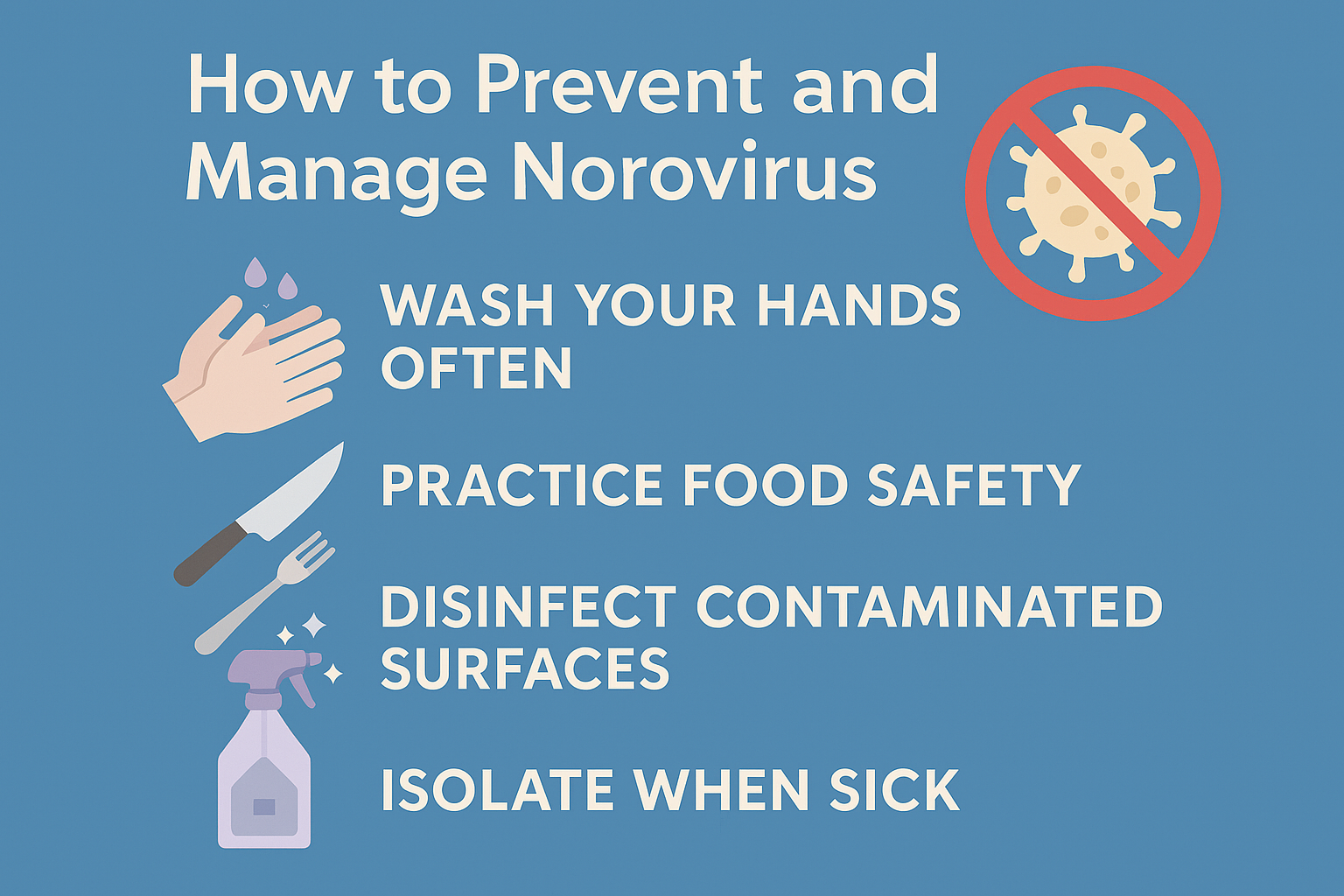
Preventing the Spread of Norovirus
Prevention is the most effective strategy against norovirus. Because the virus spreads so easily, consistent hygiene and safety practices are essential.
Wash Hands Thoroughly
Frequent handwashing with soap and water for at least 20 seconds is one of the most effective ways to prevent infection. Alcohol‑based hand sanitizers are less effective against norovirus and should not replace handwashing.
Practice Food Safety
- Do not prepare food for others while ill and for at least 48 hours after symptoms resolve
- Wash fruits and vegetables thoroughly
- Cook shellfish and other foods to safe internal temperatures
Clean and Disinfect Surfaces
Norovirus can survive on surfaces for extended periods. Use bleach‑based disinfectants to clean contaminated areas, especially after vomiting or diarrhea incidents.
Always wear disposable or rubber gloves during cleanup.
Handle Laundry Properly
- Wash contaminated clothing and linens immediately
- Use hot water and detergent
- Dry on the highest heat setting
Isolate When Sick
If you are sick, stay home for at least 48 hours after symptoms stop. If possible, avoid sharing a bathroom with uninfected individuals.
Research and Vaccine Development
Although no approved vaccine exists yet, scientific research is making progress.
Researchers are studying norovirus using advanced laboratory models, including tiny three‑dimensional structures known as mini‑guts. These models mimic human intestinal tissue and allow scientists to observe how the virus infects cells.
At Baylor College of Medicine, scientists are investigating specific proteins called cell receptors that noroviruses use to enter human cells. Identifying these receptors may help researchers develop vaccines and targeted treatments.
According to leading researchers, understanding how emerging strains attach to human cells is key to preventing future outbreaks.
Why Norovirus Remains a Public Health Challenge
Norovirus evolves quickly, creating new strains that can evade immunity from previous infections. This is one reason repeated infections are common and why controlling outbreaks is difficult.
Additionally, the virus spreads before symptoms appear and continues to spread even after symptoms resolve, making containment challenging in communal environments.
Public health agencies continue to monitor outbreaks and issue safety guidance to reduce transmission.
Key Takeaways
- Norovirus is the leading cause of viral gastroenteritis in the United States
- Symptoms usually appear within 12 to 48 hours and resolve within a few days
- There is no cure, but supportive care and hydration are essential
- Young children, seniors, and immunocompromised individuals are most at risk
- Proper handwashing and surface disinfection are the best prevention tools
- Vaccine research is ongoing and shows promise
Sources
- National Institutes of Health, News in Health, January 2026
Disclaimer
This article is for informational and educational purposes only and does not constitute medical advice. Statistical data reflects general trends and may not apply to individual situations. Health conditions, medications, and risk factors vary widely. Always consult a qualified healthcare professional for diagnosis, treatment, or personalized medical guidance.