
How to Lower Your Risk of Chronic Kidney Disease Before Symptoms Appear
Chronic kidney disease is often called a silent condition because it can develop for years without noticeable warning signs. Millions of adults are affected, yet many remain unaware until kidney function has already declined significantly. The good news is that early awareness and lifestyle changes can make a real difference in slowing progression and protecting long term health.
This article explains what chronic kidney disease is, why it often goes undetected, who is most at risk, and what practical steps you can take today to support kidney health. Understanding the role your kidneys play and how to protect them can help you stay proactive rather than reactive.
What Is Chronic Kidney Disease?
Chronic kidney disease, commonly shortened to CKD, occurs when the kidneys gradually lose their ability to filter waste and excess fluid from the blood. Healthy kidneys act as the body’s natural filtration system, cleaning the blood and balancing fluids, minerals, and hormones. When kidney function declines, harmful substances can build up in the body and affect multiple organs.
CKD is considered chronic because the damage is typically permanent. While it cannot be cured, early diagnosis and proper management can significantly slow its progression and reduce complications.
Health experts estimate that more than one in seven adults in the United States has some level of chronic kidney disease. Alarmingly, many people with early stage CKD feel completely normal and do not realize anything is wrong.
Why Chronic Kidney Disease Is Often Missed
One of the biggest challenges with CKD is the lack of symptoms in its early stages. Most people do not feel sick until kidney function is severely impaired. By that point, treatment options become more limited.
Kidney specialists emphasize that symptoms usually appear only when the kidneys are close to failure. This is why routine testing is critical for people who have risk factors, even if they feel healthy.
As kidney damage progresses, symptoms may eventually include swelling in the legs, ankles, hands, or face, fatigue, nausea, poor appetite, muscle cramps, trouble concentrating, shortness of breath, or chest discomfort. In advanced stages, kidney disease can also strain the heart and brain.
Who Is at Risk for Chronic Kidney Disease?
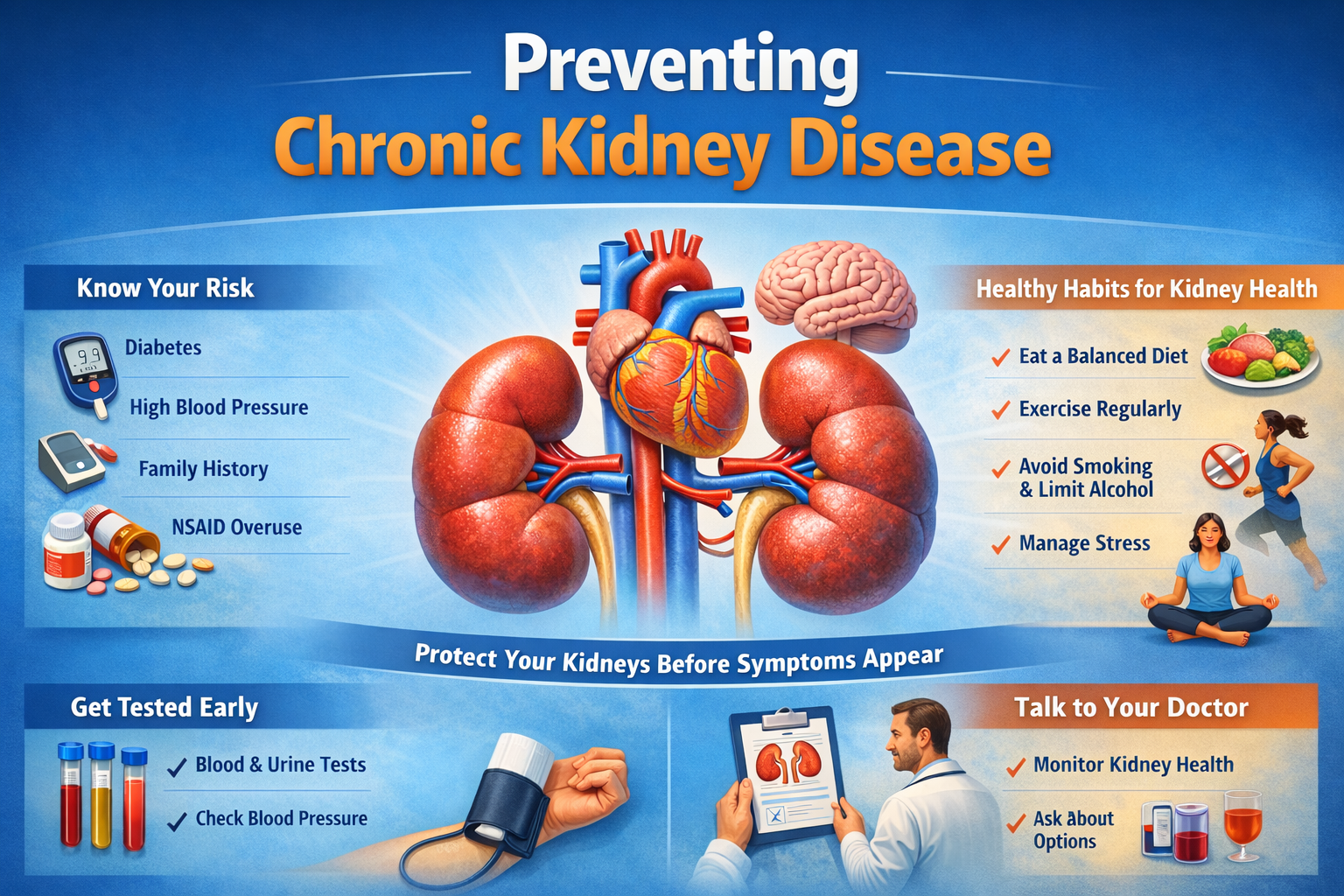
Anyone can develop CKD, but certain factors greatly increase risk. Genetics and family history play an important role. If kidney disease runs in your family, your risk is higher.
Several common health conditions are closely linked to chronic kidney disease. These include:
- High blood pressure
- Diabetes
- Heart disease
These conditions can damage blood vessels in the kidneys over time, reducing their ability to function properly. Managing them early and consistently is one of the most effective ways to prevent kidney damage.
Other risk factors include obesity, certain infections, cancer, and long term use of nonsteroidal anti inflammatory drugs, also known as NSAIDs. Medications such as ibuprofen and naproxen can be harmful to the kidneys when taken in high doses or for extended periods without medical supervision.
Why Kidney Health Matters to the Whole Body
The kidneys do far more than produce urine. They filter roughly 150 quarts of blood every day, sending clean blood back to circulate throughout the body. When this process breaks down, nearly every organ system can be affected.
Poor kidney function increases the risk of anemia, bone disease, nerve damage, and cardiovascular problems. Advanced kidney disease is especially hard on the heart and brain, contributing to fatigue, mental fog, and overall physical decline.
Protecting kidney health is not just about avoiding dialysis. It is about preserving quality of life and reducing the risk of serious complications.
The Importance of Early Testing
Because symptoms often appear late, testing is essential for early detection. Blood and urine tests can reveal how well your kidneys are functioning and whether protein or waste products are building up in your body.
If you have diabetes, high blood pressure, heart disease, or a family history of kidney problems, regular kidney function tests should be part of your routine medical care. Early detection allows doctors to intervene before irreversible damage occurs.
Lifestyle Changes That Support Kidney Health
If you are diagnosed with CKD or are at risk, lifestyle changes become a powerful tool. While medication may be necessary, daily habits play a major role in protecting kidney function.
Eat a Kidney Friendly Diet
Dietary recommendations for CKD vary depending on disease stage and lab results, but common guidance includes reducing sodium, potassium, and phosphorus intake. Excess sodium can raise blood pressure and strain the kidneys, while high potassium and phosphorus levels can become dangerous when kidney function declines.
People with more advanced kidney disease may also need to limit protein intake. While protein is essential, too much can create additional waste that damaged kidneys struggle to remove.
Highly processed foods are often discouraged because they contain hidden sodium and additives that can burden the kidneys. A registered dietitian or kidney specialist can tailor dietary advice to your specific needs.
Nutrition experts emphasize that dietary changes can empower patients. Instead of feeling helpless, many people find that managing their diet helps them take an active role in protecting their health.
Stay Physically Active
Regular exercise supports kidney health by helping control blood pressure, blood sugar, and weight. Even moderate activity such as walking, cycling, or swimming can offer benefits.
Physical activity also improves heart health, which is closely connected to kidney function. Always consult your healthcare provider before starting a new exercise routine, especially if you have existing medical conditions.
Avoid Tobacco and Limit Alcohol
Smoking damages blood vessels throughout the body, including those in the kidneys. Quitting tobacco can slow kidney damage and reduce the risk of heart disease.
Alcohol should be consumed in moderation, if at all. Excessive alcohol intake can raise blood pressure and contribute to dehydration, both of which stress the kidneys.
Manage Stress and Sleep
Chronic stress can worsen blood pressure and blood sugar control. Techniques such as mindfulness, deep breathing, or gentle movement can help support overall health.
Adequate sleep also plays a role in metabolic balance and cardiovascular health, indirectly benefiting kidney function.
Medical Treatment and Monitoring
Doctors often prescribe medications to manage conditions that contribute to kidney damage, such as high blood pressure or diabetes. Some medications are specifically designed to protect kidney function.
It is important to review all medications and supplements with your healthcare provider. Certain drugs may need dose adjustments as kidney function changes.
If kidney disease progresses despite treatment, dialysis may eventually be required. Dialysis uses a machine to filter waste from the blood several times a week. In some cases, patients may be candidates for a kidney transplant.
Questions to Ask Your Doctor
Being proactive means having informed conversations with your healthcare provider. Consider asking:
- How often should my kidney function be tested?
- Are my blood pressure and blood sugar levels well controlled?
- Do any of my medications need to be adjusted?
- What steps can I take to slow kidney disease progression?
- Should I change my diet or see a nutrition specialist?
- Do I need a referral to a nephrologist?
- What other health issues should I watch for?
Taking Control Before It Is Too Late
Chronic kidney disease does not have to progress unchecked. Early awareness, routine testing, and thoughtful lifestyle choices can help preserve kidney function and reduce complications.
If you are at risk, start the conversation with your doctor now. Prevention and early management remain the strongest tools we have against this silent condition.
Sources
- NIH News in Health, January 2026
- National Institutes of Health
- University of California, San Francisco Kidney Research
- Mount Sinai Health System
Medical Disclaimer
This content is for informational and educational purposes only and is not intended as medical advice, diagnosis, or treatment. Health information can vary widely based on individual circumstances. Always consult a qualified healthcare professional regarding personal medical decisions, symptoms, or treatment options.