
How Air Ambulances Are Increasing Survival Rates in Severe Trauma Cases
Severe traumatic injuries remain one of the leading causes of death worldwide, especially among younger populations. From high-speed vehicle collisions to falls and industrial accidents, the moments immediately following a serious injury often determine whether a patient survives. New research from the United Kingdom adds compelling evidence that air ambulance services may significantly improve survival outcomes for critically injured patients.
A large observational study analyzing nearly a decade of trauma cases suggests that patients treated and transported by helicopter emergency medical services, often referred to as HEMS, have higher survival rates than predicted. While the findings do not establish direct causation, they highlight the growing importance of advanced pre-hospital trauma care and rapid transport in modern emergency medicine.
This article explores the study’s findings, explains how air ambulance services operate, and examines why helicopters may offer a survival advantage for patients with life-threatening injuries.
What Are Helicopter Emergency Medical Services
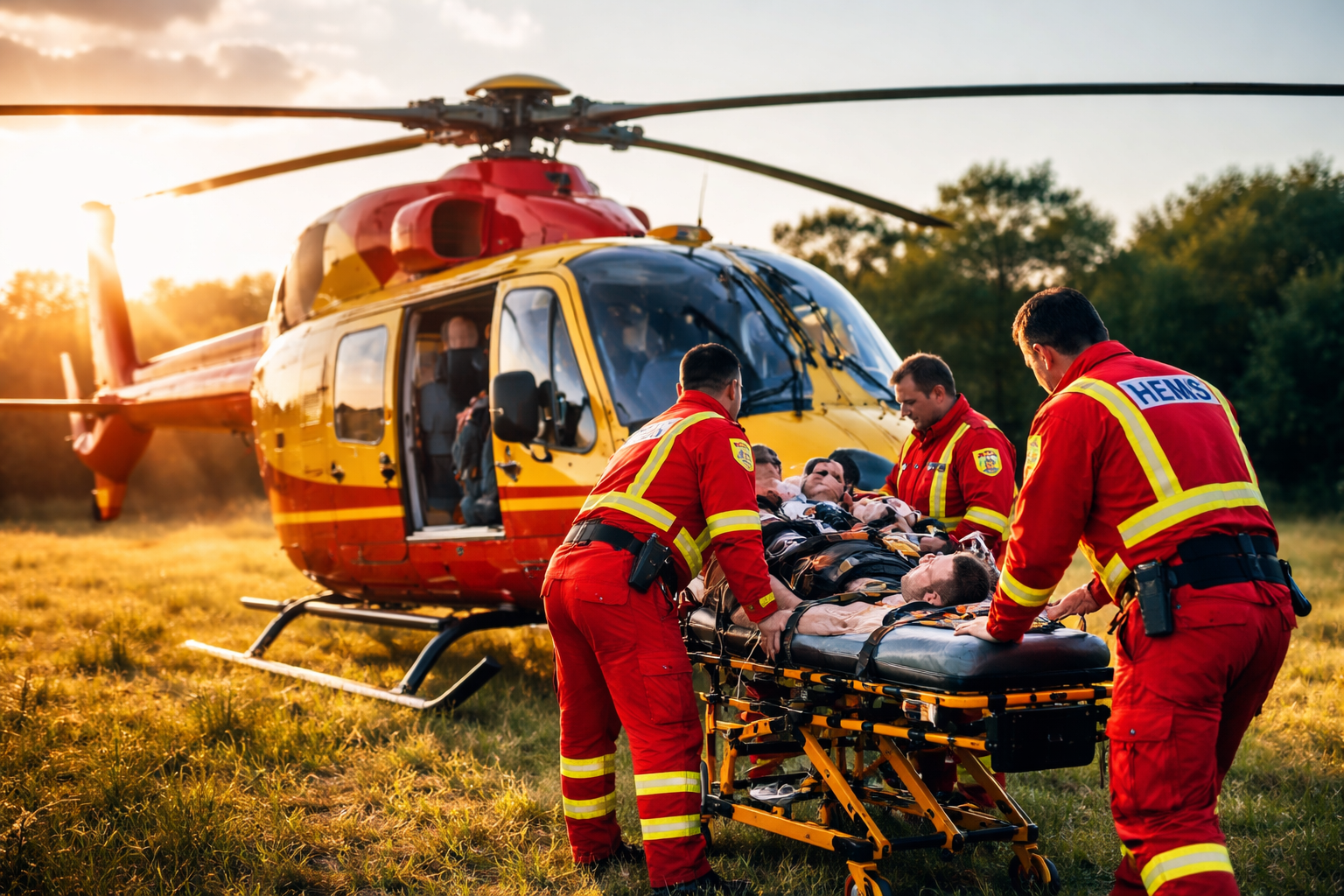
Helicopter Emergency Medical Services are specialized air ambulance teams designed to provide rapid response and advanced medical care at the scene of serious accidents. Unlike standard ground ambulances, HEMS crews typically include highly trained physicians or critical care paramedics who can perform complex medical procedures before the patient reaches a hospital.
Key capabilities of HEMS often include advanced airway management, blood transfusions, chest procedures, and pre-hospital emergency anesthesia. These interventions are especially valuable in rural areas or congested urban settings where transport times by road may be prolonged.
In the United Kingdom, many HEMS programs operate as charity-funded services working closely with the National Health Service. The study discussed here focuses on one such service operating in southeast England.
Overview of the U.K. Air Ambulance Study
The research was conducted by a team led by Joanne Griggs of Air Ambulance Kent Surrey Sussex and was published in the Emergency Medicine Journal. Investigators reviewed trauma cases managed by a single HEMS team between 2013 and 2022.
The dataset included 3,225 trauma patients who received care from helicopter crews across the counties of Kent, Surrey, and Sussex. Researchers used established statistical models to estimate each patient’s predicted chance of survival based on injury severity, age, and clinical factors. These predicted outcomes were then compared to actual survival rates 30 days after injury.
The results suggest that patients treated by air ambulance teams survived at higher rates than expected.
Higher Survival Than Predicted
One of the most notable findings was the difference between predicted and actual survival. According to the study, 85 percent of patients treated by the HEMS team were alive 30 days after injury. Based on injury severity and other factors, the expected survival rate was 81 percent.
That four percent difference translates into approximately five additional survivors for every 100 seriously injured patients. When applied to the typical annual caseload of the service, this could represent as many as 115 extra lives saved each year.
While the numbers may appear modest at first glance, trauma medicine experts note that even small percentage improvements are significant in high-risk patient populations.
The Greatest Benefit Seen in the Most Severe Injuries
The survival advantage associated with helicopter care was most pronounced among patients with extremely severe injuries. For individuals with a predicted survival chance between 25 percent and 45 percent, 35 percent were still alive 30 days later. Even among patients with less than a 50 percent expected chance of survival, nearly 39 percent survived.
These findings suggest that HEMS may be particularly valuable for patients who are closest to the threshold between life and death. In such cases, early advanced interventions and faster access to trauma centers can make a critical difference.
Younger patients and those with higher scores on the Glasgow Coma Scale also showed better outcomes. The Glasgow Coma Scale is a widely used tool to assess consciousness after brain injury, with higher scores indicating better neurological function.
The Role of Pre-Hospital Emergency Anesthesia
One factor strongly associated with improved outcomes in the study was the use of pre-hospital emergency anesthesia. This intervention involves placing a patient into an induced coma to secure the airway, control breathing, and reduce physiological stress after severe trauma.
Pre hospital emergency anesthesia can only be administered by highly trained teams with advanced equipment, which typically limits its use to services like HEMS. For patients with traumatic brain injuries or compromised airways, early anesthesia can prevent secondary injury caused by low oxygen levels or uncontrolled agitation.
The study suggests that access to this level of care before hospital arrival may contribute meaningfully to improved survival rates.
Cardiac Arrest After Trauma and Air Ambulance Outcomes
The researchers also examined outcomes for patients who experienced cardiac arrest following traumatic injury. Among 1,316 such patients, 356 regained circulation during transport. Of those, 46 patients were still alive one month later.
Although survival after traumatic cardiac arrest remains low overall, these results indicate that meaningful recovery is possible, particularly when advanced care is initiated early. The study also found that the likelihood of restoring circulation increased by approximately six percent per year over the study period.
This improvement over time may reflect advances in training, protocols, equipment, and coordination between emergency services and trauma centers.
Why Helicopter Transport May Improve Survival
Several factors may explain why helicopter emergency medical services are linked to better survival outcomes.
First, speed matters. Helicopters can bypass traffic and geographic barriers, allowing faster transport to major trauma centers. In time-sensitive injuries such as severe bleeding or head trauma, minutes can mean the difference between life and death.
Second, the level of care provided by HEMS teams often exceeds that of standard ground ambulances. Advanced procedures performed at the scene or en route may stabilize patients before hospital arrival.
Third, helicopters often transport patients directly to specialized trauma centers rather than the nearest hospital. Receiving definitive care at the right facility from the outset reduces delays in surgery or critical interventions.
Study Limitations and the Question of Causation
Despite the encouraging findings, the authors caution that the study does not prove helicopter care directly causes higher survival rates. As an observational analysis, it cannot fully account for all variables that may influence outcomes.
For example, dispatch criteria, patient selection, and regional trauma system organization may all play a role. Patients chosen for helicopter transport may differ in important ways from those transported by ground ambulance.
The researchers emphasize the need for comparative studies examining alternative care pathways to better understand when and for whom HEMS provides the greatest benefit.
Economic and Social Implications
Beyond clinical outcomes, air ambulance services carry significant economic and social considerations. Helicopter operations are costly, and funding decisions often face public and political scrutiny.
However, previous research has demonstrated that improved survival and reduced long-term disability can generate economic benefits by preserving productivity and reducing long-term healthcare costs. The current study adds to this body of evidence by suggesting a measurable survival advantage in severely injured patients.
The authors argue that their findings support continued investment in helicopter emergency medical services, particularly for patients with life-threatening injuries.
What This Means for Trauma Care Systems
For policymakers and healthcare planners, the study highlights the importance of integrated trauma systems that match patient needs with appropriate resources. Helicopter services should not be viewed as a luxury, but as a targeted tool for specific high-risk scenarios.
For the public, the findings underscore the value of rapid emergency response and specialized trauma care. While most individuals will never require an air ambulance, the availability of such services can have a profound impact when disaster strikes.
Looking Ahead
As trauma care continues to evolve, future research will likely focus on refining dispatch criteria, improving pre-hospital interventions, and identifying which patient groups benefit most from helicopter transport.
Technological advances, including telemedicine integration and improved monitoring equipment, may further enhance the capabilities of air ambulance teams. Combined with ongoing training and system-level improvements, these developments hold promise for saving even more lives.
Conclusion
The U.K. study provides strong evidence that helicopter emergency medical services are associated with higher survival rates among severely injured patients. While causation cannot be definitively established, the data suggest that advanced pre-hospital care and rapid transport play a crucial role in trauma outcomes.
For patients facing the most critical injuries, the sound of helicopter blades may represent not just urgency, but a better chance at survival.
Source
BMJ Group, new release, February 5, 2025
Medical Disclaimer
This article is for informational and educational purposes only. Statistical data in medical articles reflect general trends and do not apply to individual patients. Outcomes can vary widely based on personal health factors, injury severity, and available medical resources. Always seek the advice of qualified healthcare professionals for diagnosis, treatment, and medical decision-making.