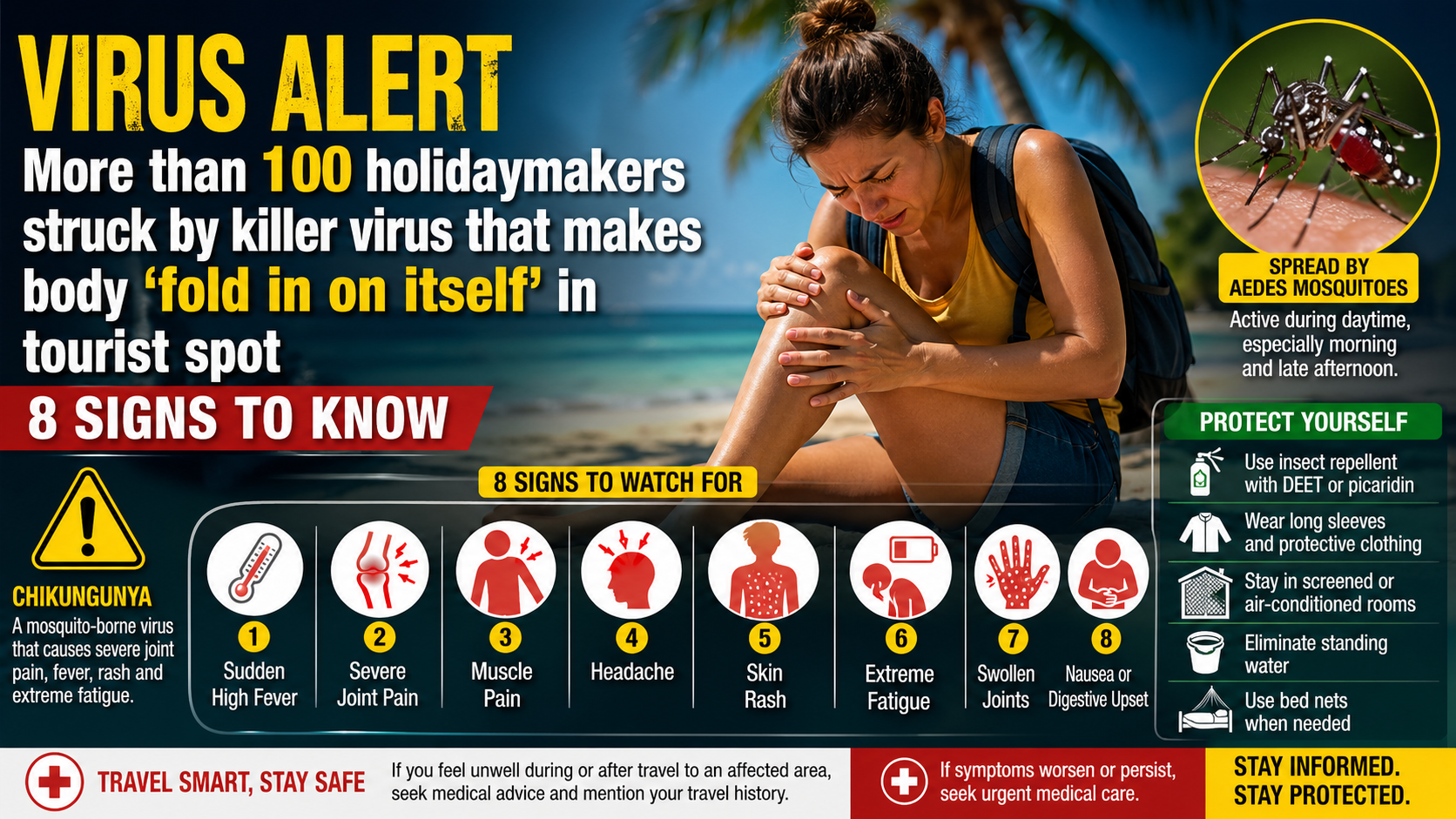
Travelers planning a sunny getaway are being urged to stay informed after more than 100 holidaymakers were reportedly affected by a dangerous mosquito-borne virus in a well-known tourist hotspot. Health officials have raised concerns about the spread of chikungunya, a viral infection that can cause intense joint pain, fever, and exhaustion so severe some sufferers describe their body as “folding in on itself.”
The outbreak has sparked concern among tourists, especially during peak holiday season when international travel increases. If you are planning to visit tropical or subtropical regions, understanding the risks, symptoms, and prevention steps can help protect your health.
Chikungunya is a virus spread primarily through the bite of infected Aedes mosquitoes, the same species linked to dengue fever and Zika virus. These mosquitoes are most active during daylight hours, especially early morning and late afternoon.
The illness is rarely fatal, but it can cause extreme discomfort and lingering symptoms that may last for weeks, months, or in some cases even longer.
The name chikungunya comes from a word meaning “to become contorted,” referencing the bent posture many patients develop because of severe joint pain.
According to reports, more than 100 travelers have been impacted during a recent outbreak in a holiday destination popular with international visitors. Tourist areas with warm climates, standing water, and high mosquito populations can create ideal conditions for transmission.
Travel medicine experts warn that outbreaks can escalate quickly when infected mosquitoes spread the virus among visitors and local residents.
For travelers unfamiliar with the disease, symptoms may initially seem like flu or food poisoning, leading to delayed diagnosis and treatment.
If you develop symptoms during or after travel to an affected region, watch for these warning signs:
A rapid fever often appears within a few days of being bitten. Temperatures can rise quickly and may be accompanied by chills.
This is one of the most common and painful symptoms. Ankles, wrists, knees, fingers, and elbows are often affected.
Many people experience body aches similar to severe flu symptoms.
Persistent headaches are common during the early stages of infection.
A rash may develop on the trunk, arms, legs, or face several days after symptoms begin.
Weakness and exhaustion can be intense, making it difficult to move normally.
Inflammation may cause stiffness and visible swelling, especially in hands and feet.
Some people report nausea, loss of appetite, or stomach discomfort.
Many patients say chikungunya is unlike a normal viral illness because of the joint pain. Some describe being unable to stand upright, walk comfortably, or complete everyday tasks.
This explains why headlines often refer to the body “folding in on itself.” The phrase reflects the intense pain and posture changes caused by inflamed joints rather than a literal physical collapse.
Most people recover within one to two weeks. However, joint pain can continue for months in some cases, especially among older adults or people with pre-existing health conditions.
Fatigue may also linger after the infection clears.
There is no specific antiviral cure for chikungunya. Treatment usually focuses on relieving symptoms through:
Anyone experiencing severe illness, dehydration, breathing issues, or prolonged symptoms should seek urgent medical care.
If you are heading abroad, mosquito bite prevention is the best defense.
Choose a repellent containing DEET, picaridin, or another approved ingredient.
Long sleeves, lightweight trousers, and socks can reduce exposed skin.
Mosquitoes are less likely to enter sealed spaces.
Buckets, plant trays, and puddles can become breeding areas.
Especially useful in accommodations without sealed windows.
If you feel unwell within two weeks of returning from a tropical destination, contact a healthcare provider and mention your travel history. This can speed up diagnosis and help rule out other mosquito-borne diseases such as dengue or malaria.
Early medical advice is especially important if symptoms include fever, rash, intense pain, or weakness.
Not necessarily. Many destinations manage outbreaks quickly, and the risk to travelers can vary by region, season, and personal precautions. Before traveling:
Being prepared is often more effective than cancelling a trip outright.
A chikungunya outbreak affecting over 100 holidaymakers is a reminder that travel health matters as much as passports and luggage. While the virus is not usually deadly, it can cause severe symptoms that ruin holidays and disrupt daily life for weeks.
Knowing the eight warning signs and taking mosquito precautions can significantly reduce your risk. If symptoms appear, prompt medical advice is the smartest next step.
Publicly available reporting on chikungunya outbreaks, guidance from the World Health Organization (WHO), UK Health Security Agency (UKHSA), and travel health resources.
This article is for informational purposes only and does not replace professional medical advice, diagnosis, or treatment. If you are unwell or concerned about symptoms after travel, contact a qualified healthcare professional immediately.

Most Accurate Healthcare AI designed for everything from admin workflows to clinical decision support.