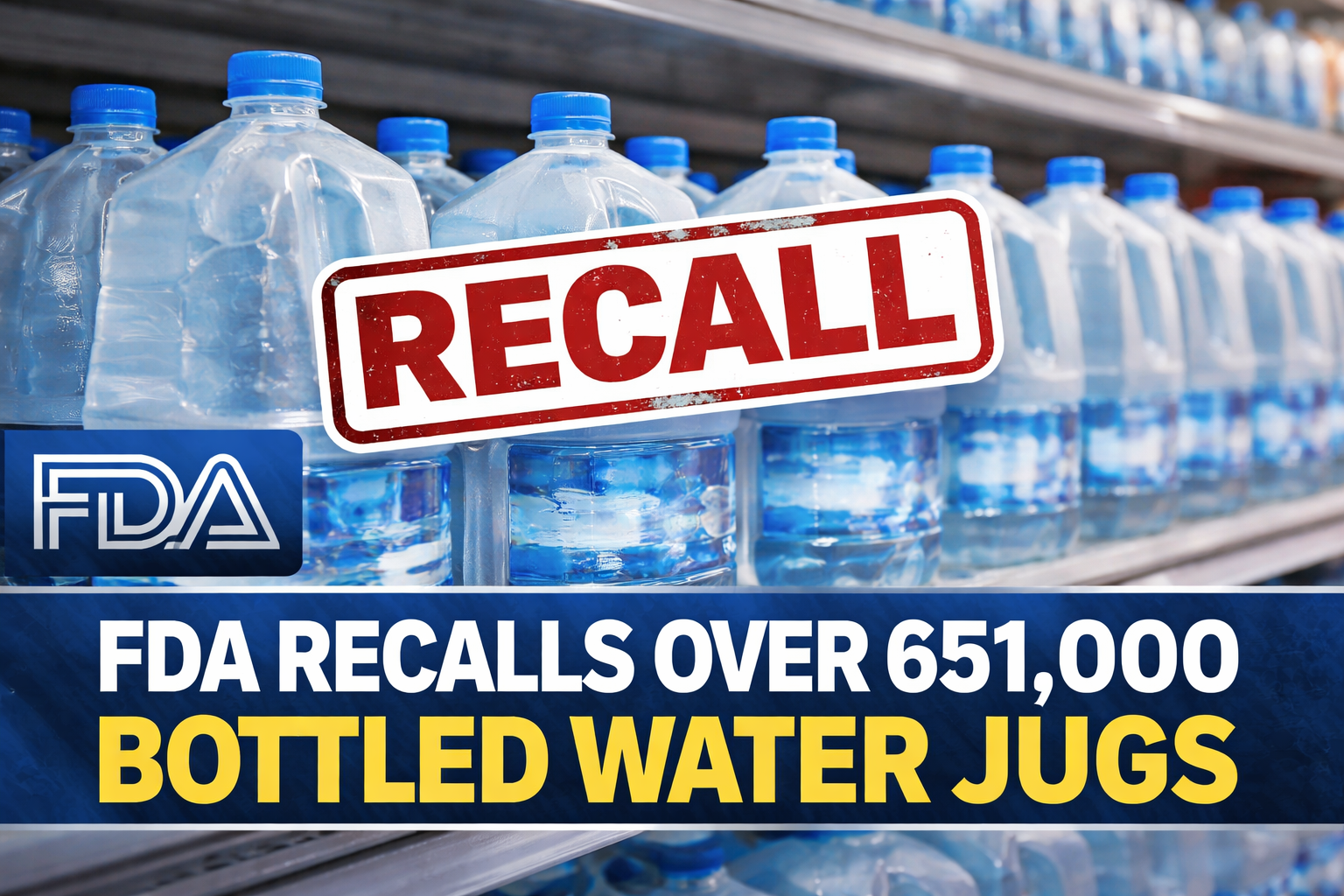
In a significant consumer safety development, the U.S. Food and Drug Administration (FDA) has announced a recall of more than 651,000 bottled water containers due to sanitation concerns. The action affects several varieties of Valley Springs bottled water products and has raised questions among consumers in the Midwest and beyond.
This bottled water recall highlights the importance of product safety oversight and the role of federal agencies in protecting public health. Here is what you need to know about the recall, the affected products, potential health risks, and what steps to take if you purchased the water.
According to the FDA, 651,148 large bottles of water were pulled from shelves after the agency identified what it described as insanitary conditions. While specific details regarding the sanitation violations were not publicly disclosed, the classification of the recall provides some insight into the potential risk.
The FDA categorized this as a Class II recall. A Class II recall means the product may cause temporary or medically reversible adverse health consequences. The likelihood of serious harm is considered remote, but the issue is significant enough to warrant immediate corrective action.
Sanitation concerns in bottled water production can involve contamination risks, improper handling, equipment issues, or facility cleanliness problems. Although bottled water is generally considered safe when manufactured under proper guidelines, lapses in sanitation can introduce bacteria or other harmful contaminants.
The recall impacts multiple Valley Springs branded products. All codes for the following items are included:
These products were sold primarily at retail locations in Illinois and Wisconsin, though distribution may have extended to other areas.
Consumers who recently purchased gallon sized or 2.5 gallon Valley Springs water products are encouraged to verify the label and UPC information to determine whether their purchase is part of the recall.
The FDA confirmed that the recalled bottled water was distributed at retail stores in Illinois and Wisconsin. However, the agency noted that additional distribution outside those states is possible.
Because bottled water is often transported through regional supply chains, consumers in neighboring states should also remain vigilant. If you purchased Valley Springs bottled water recently, especially in large jug format, it is advisable to check store notices or contact the retailer for clarification.
Understanding recall classifications can help consumers assess risk levels.
A Class II recall, as defined by the FDA, involves products that may cause temporary or medically reversible health consequences. While the risk of severe injury is low, the recall signals that the product does not meet safety standards.
Possible symptoms associated with contaminated water could include gastrointestinal discomfort, nausea, vomiting, or diarrhea. Vulnerable populations such as infants, elderly individuals, and those with weakened immune systems may be more susceptible to adverse effects.
The recall includes infant water products, which adds another layer of concern. Infant water is often used in preparing baby formula, making sanitation issues especially important for families with young children.
If you have any of the affected Valley Springs bottled water products, the FDA recommends the following steps:
Consumers with questions can contact the FDA at 888 INFO FDA or 888 463 6332 for additional guidance.
Prompt action helps reduce any potential health risks and supports broader public safety efforts.
The U.S. Food and Drug Administration oversees the safety of food and beverage products sold in the United States, including bottled water. When sanitation issues or contamination risks are identified, the agency works with manufacturers and distributors to remove affected products from the market.
Food and beverage recalls are part of routine regulatory oversight. While recalls can be concerning, they also demonstrate that monitoring systems are functioning as intended.
Manufacturers are required to follow strict sanitation and quality control standards. If inspections reveal deviations from these standards, corrective measures such as recalls are implemented to protect consumers.
Bottled water recalls are relatively uncommon compared to other food products, but they do occur. Causes can include microbial contamination, chemical contamination, labeling errors, or production facility violations.
Consumers often assume bottled water is safer than tap water. In reality, both bottled and municipal water supplies are subject to regulatory standards. Municipal water systems are regulated under the Environmental Protection Agency, while bottled water falls under FDA oversight.
Regular testing, sanitation audits, and facility inspections are essential components of ensuring water safety across both systems.
Although this recall is classified as moderate risk, it serves as a reminder of general water safety practices:
If you rely on bottled water for infant formula preparation, always follow pediatric guidance and ensure that products meet safety labeling requirements.
Staying informed about recalls is an important part of protecting your household. The FDA provides regular updates through its recall database and consumer alerts. Retailers also typically post notices in stores and on their websites.
Consumers can subscribe to recall alerts or follow reliable health news outlets for updates on product safety issues.
In this case, while no widespread illnesses have been reported publicly, the recall underscores the need for vigilance. Sanitation issues, even when categorized as moderate risk, should be taken seriously.
This article is for informational and educational purposes only and is optimized for general consumer awareness regarding the FDA bottled water recall. Statistical data and recall classifications reflect general regulatory guidelines and may not apply to individual circumstances. Individual health factors can vary significantly. Always seek personalized medical advice from a qualified healthcare provider regarding any symptoms or health concerns. This content is not intended to replace professional medical advice, diagnosis, or treatment.

Most Accurate Healthcare AI designed for everything from admin workflows to clinical decision support.