
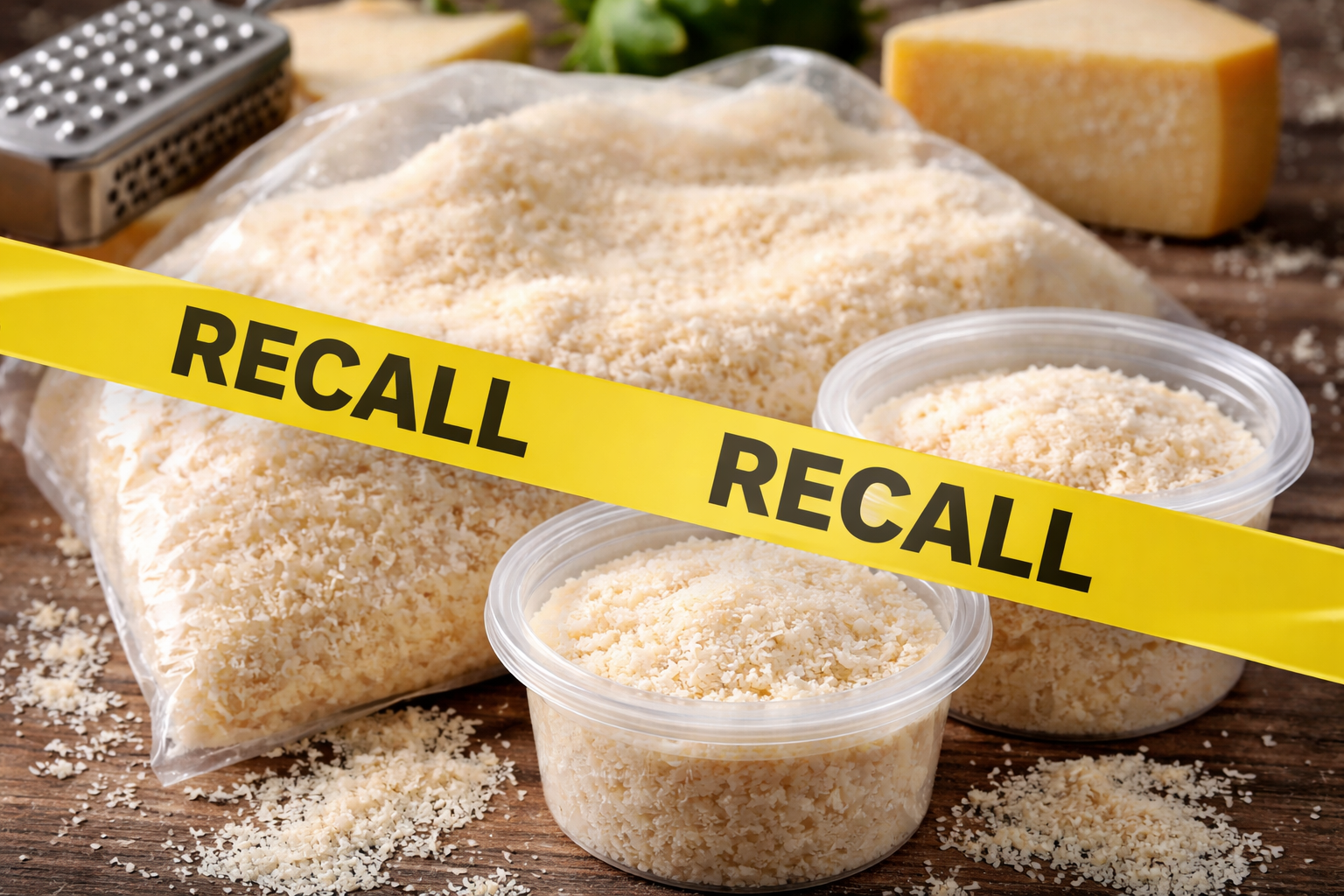
FDA Issues Highest Risk Warning After Listeria Found in Popular Grated Cheese Products
FDA Raises Cheese Recall to Highest Risk After Listeria Found in Grated Pecorino Romano
The U.S. Food and Drug Administration has elevated a nationwide cheese recall to its most serious risk category after confirming contamination with Listeria monocytogenes. The action affects multiple brands of grated Pecorino Romano cheese that were distributed across the United States in both retail and food service channels.
The FDA decision has raised concern among consumers because listeria is a dangerous foodborne bacterium that can cause severe illness and even death in vulnerable populations. While no illnesses have been reported so far, health officials say the risk is significant enough to warrant immediate public attention.
This FDA cheese recall highlights the importance of food safety monitoring, proper handling of recalled products, and awareness of symptoms linked to listeria infection. Below is a detailed breakdown of what happened, which products are affected, and what consumers should do next.
Why the FDA Upgraded the Cheese Recall
On January 6, 2026, the FDA officially upgraded the recall to a Class I designation. This is the highest level of food recall issued by the agency and is reserved for situations where there is a reasonable probability that consuming the product could cause serious health consequences or death.
The escalation followed laboratory confirmation that Listeria monocytogenes was present in grated cheese produced at a New Jersey manufacturing facility operated by The Ambriola Company. The company initially issued a voluntary recall on November 25, 2025, after routine testing detected potential contamination.
Once confirmatory testing verified the presence of listeria, the FDA determined that stronger action was necessary to protect public health. Class I recalls are relatively rare and signal a confirmed and credible risk.
What Is Listeria and Why It Is Dangerous
Listeria monocytogenes is a bacterium that can contaminate food products and survive in cold environments such as refrigerators and freezers. Unlike many bacteria, listeria can continue to grow even at low temperatures, making refrigerated ready to eat foods particularly risky.
Infection with listeria causes an illness known as listeriosis. Symptoms may include fever, muscle aches, headache, stiff neck, confusion, loss of balance, and seizures. In some cases, digestive symptoms such as nausea or diarrhea may also occur.
Certain groups face a much higher risk of severe illness. Pregnant women are especially vulnerable because listeria infection can lead to miscarriage, stillbirth, premature delivery, or life threatening infection in newborns. Older adults and people with weakened immune systems are also at increased risk.
One of the challenges with listeria infection is that symptoms may not appear immediately. In some cases, symptoms can develop several days or even weeks after consuming contaminated food.
How the Cheese Contamination Was Discovered
The contamination was identified during routine food safety testing at the manufacturing facility. Food producers are required to conduct regular environmental and product testing to detect harmful pathogens before products reach consumers.
According to FDA enforcement reports, testing revealed the presence of Listeria monocytogenes in grated cheese produced at the facility. As a precaution, the manufacturer initiated a voluntary recall while further testing was conducted.
After confirmation, federal regulators upgraded the recall classification and released detailed information about affected products, lot numbers, and distribution channels. This process demonstrates how food safety systems are designed to detect risks early, even before illnesses occur.
Scope of the FDA Cheese Recall
The recall affects a wide range of grated Pecorino Romano cheese products sold under different brand names. These products were distributed nationwide, meaning consumers in multiple states may have purchased them.
Both consumer sized retail packages and large bulk packages sold to restaurants, cafeterias, and institutional kitchens are included. Because grated cheese is often used without cooking, the potential risk of exposure is higher.
The FDA has urged all retailers, food service operators, and consumers to review recall notices carefully and remove affected products from circulation.
Consumer Packages Recalled Include
Several grated Pecorino Romano cheese products sold directly to consumers are included in the FDA recall. These items may still be stored in household refrigerators or freezers.
The recalled consumer packages include the following:
Locatelli Grated Pecorino Romano packaged in 4 ounce and 8 ounce plastic cups with lids. These were sold in cases containing 12 units. Approximately 6,632 units were recalled. Affected lot numbers include 1000572472, 1000570734, 1000570735, 1000570736, 1000572482, 1000572483, and 1000572485.
Boar’s Head Grated Pecorino Romano packaged in 6 ounce plastic cups with lids and sold in cases of 12 units. About 2,106 units were recalled. The affected lot number is 1000572486.
Locatelli Grated Pecorino Romano packaged in 8 ounce plastic cups with lids and sold in cases containing 48 units. Approximately 184 units were recalled. Affected lot numbers include 1000570750, 1000572499, and 1000572514.
Consumers who find any of these products should not consume them, even if the cheese appears normal.
Bulk and Food Service Cheese Products Affected
The FDA cheese recall also includes large format products intended for food service use. These products were typically sold by the pound and used in restaurants and commercial kitchens.
Affected bulk products include:
Locatelli Grated Pecorino Romano in 5 pound and 10 pound plastic bags
Pinna Grated Pecorino Romano in 10 pound plastic bags
Member’s Mark Pecorino Romano Grated sold through Sam’s Club in 1.5 pound plastic bags
Boar’s Head Pecorino Romano Grated in 5 pound plastic bags
Ambriola Piccante Grated Pecorino Romano in 5 pound and 10 pound plastic bags
Thousands of bulk units were distributed, increasing the importance of proper recall compliance.
What Consumers Should Do After the Recall
Consumers should take immediate action if they believe they may have purchased a recalled cheese product. First, check the packaging for the brand name, lot number, and package size.
If the product matches any recalled item, do not taste or consume it. The safest option is to discard the product in a sealed bag or return it to the retailer if refunds are offered.
It is also important to clean and sanitize any surfaces, containers, or utensils that may have come into contact with the cheese. Listeria can spread to other foods through cross contamination.
Anyone who develops symptoms such as fever, muscle aches, confusion, or balance issues after consuming recalled cheese should seek medical attention and inform their healthcare provider of possible listeria exposure.
Why Grated Cheese Poses a Higher Risk
Grated cheese products present unique food safety challenges. Because they are ready to eat, they are often consumed without further cooking that could kill bacteria.
The grated form increases surface area, which can allow bacteria to spread more easily if contamination occurs during processing. Combined with listeria’s ability to survive in cold storage, this makes grated cheese recalls particularly concerning.
For these reasons, confirmed listeria contamination in grated cheese often results in swift regulatory action.
Current FDA Status and Monitoring
As of mid January 2026, no illnesses have been reported in connection with this FDA cheese recall. The FDA continues to monitor the situation and may issue additional updates if new information becomes available.
Health officials emphasize that the absence of reported cases does not eliminate the risk. Continued vigilance from consumers and food service operators remains essential.
Conclusion
The FDA decision to raise this cheese recall to a Class I warning reflects the serious health risks associated with listeria contamination. While no illnesses have been confirmed so far, the presence of Listeria monocytogenes in widely distributed grated cheese products requires immediate attention.
By checking product labels, following recall guidance, and practicing safe food handling, consumers can reduce their risk of foodborne illness. This recall also serves as a reminder of the importance of strong food safety systems and transparent communication.
Staying informed about FDA food recalls is one of the most effective ways to protect personal and public health.
Sources
KARE 11, January 11, 2026
U.S. Food and Drug Administration enforcement reports
Disclaimer
This article is for informational purposes only and does not provide medical advice, diagnosis, or treatment. Individual health risks vary. Always consult a qualified healthcare professional with questions about foodborne illness or symptoms related to listeria exposure.