
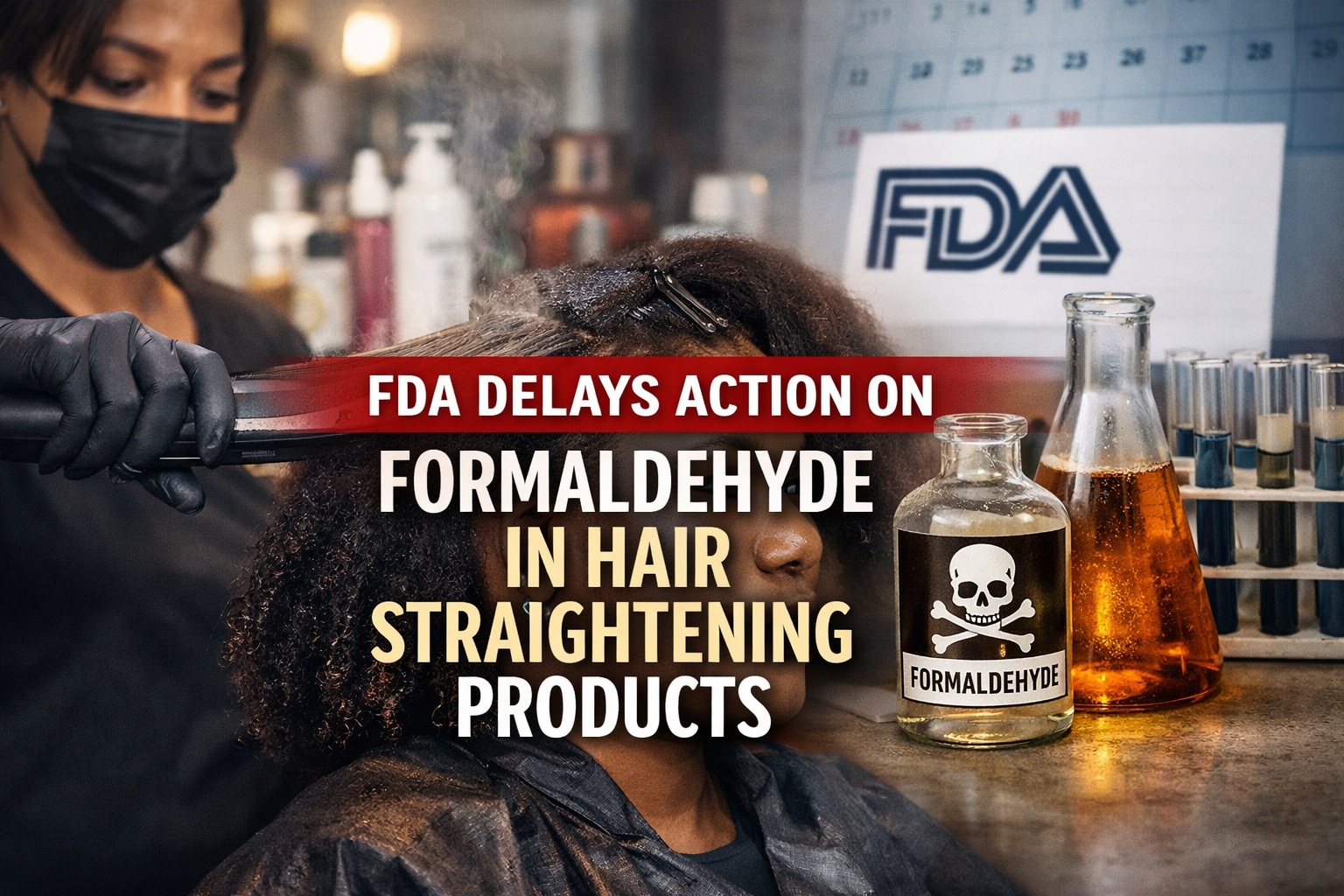
FDA Delays Action on Formaldehyde in Hair Straightening Products as Health Concerns Grow
The U.S. Food and Drug Administration has once again missed its own deadline to propose a ban on formaldehyde and formaldehyde-releasing chemicals in hair straightening and smoothing products. The delay has renewed criticism from scientists, lawmakers, health advocates, and salon workers who warn that continued inaction puts millions of consumers at risk, particularly Black women who are disproportionately exposed to these products.
Formaldehyde is a well-documented carcinogen that has been linked to multiple serious health conditions, including cancer, asthma, respiratory irritation, and skin sensitization. Despite years of scientific evidence and repeated calls for regulatory action, products containing formaldehyde remain widely available in the United States.
Another Missed FDA Deadline
The FDA’s most recent target date to publish a proposed rule addressing formaldehyde in hair straightening products was December 31, 2025. As of early January 2026, no proposed rule has been released.
An FDA spokesperson stated that the rule remains a priority for the agency and that anticipated publication dates may be adjusted when appropriate. This marks the latest delay in a regulatory process that began years ago.
Originally, the FDA planned to release the proposal in October 2023. That timeline was later pushed to April 2024, then November 2024, March 2025, July 2025, and finally December 2025. Each delay has intensified concerns that regulatory inertia is allowing potentially dangerous products to stay on the market indefinitely.
Because the deadline is not legally mandated, the FDA faces no formal penalty for missing it.
Why Formaldehyde in Hair Products Is a Serious Concern
Formaldehyde is classified as a known human carcinogen by major health authorities, including the National Cancer Institute and the World Health Organization. When used in hair straightening treatments, formaldehyde or chemicals that release it are often activated by heat from blow dryers and flat irons. This process can release toxic fumes that are inhaled by both salon workers and clients.
Health risks associated with formaldehyde exposure include:
- Increased risk of certain cancers
- Respiratory irritation and breathing difficulties
- Skin and eye irritation
- Allergic reactions and skin sensitization
- Worsening of asthma symptoms
Salon workers are at especially high risk due to repeated occupational exposure. Many work in poorly ventilated environments and may be exposed to these chemicals daily over the course of many years.
Links to Cancer and Reproductive Health Issues
A growing body of scientific research has linked frequent use of chemical hair straighteners to elevated risks of uterine, ovarian, and breast cancers, as well as uterine fibroids.
Uterine fibroids are noncancerous growths in the uterus that can cause chronic pain, heavy menstrual bleeding, anemia, infertility, and complications during pregnancy. Research shows that Black women are up to three times more likely than white women to develop fibroids, and they often experience more severe symptoms at younger ages.
Epidemiologic studies have raised concerns about the long-term health effects of repeated exposure to chemical hair relaxers, especially when use begins in childhood or adolescence and continues for decades.
In a 2025 study, researchers found that recent use of temporary hair relaxers was more strongly associated with fibroid growth than permanent relaxers. Temporary products are suspected to contain higher levels of formaldehyde and formaldehyde-releasing compounds.
Disproportionate Impact on Black Women
Hair straightening and smoothing products containing formaldehyde are heavily marketed to Black women. Cultural beauty standards, workplace pressures, and social norms have historically encouraged the use of chemical relaxers, often starting at a very young age.
As a result, Black women experience higher cumulative exposure to these products over their lifetimes. Health experts emphasize that this is not simply a personal choice issue but a systemic public health concern shaped by targeted marketing and limited regulation.
Advocates argue that allowing these products to remain on store shelves perpetuates racial health disparities and undermines trust in regulatory agencies tasked with protecting public health.
Calls for Accountability and Regulation
Several members of Congress have publicly urged the FDA to act, including Representatives Shontel Brown of Ohio, Nydia Velázquez of New York, and Ayanna Pressley of Massachusetts.
Lawmakers have expressed frustration with repeated delays, citing a substantial body of scientific evidence linking hair straightening products to serious health risks. They argue that continued inaction sends a message that the health concerns of Black women and salon workers are not being treated with urgency.
Public health advocates warn that every day these products remain on the market increases exposure risks and further erodes confidence in the FDA’s ability to safeguard consumers.
The Role of Advocacy Groups and Scientists
Environmental and health advocacy organizations have been pushing for a ban on formaldehyde in hair straightening products for years. In 2021, salon workers and advocacy groups formally petitioned the FDA to prohibit its use in these products.
Scientists involved in this research emphasize that there is no safe level of exposure to formaldehyde in consumer products that are heated and inhaled, particularly in occupational settings like hair salons.
Experts note that while some manufacturers label products as formaldehyde-free, they may still contain chemicals that release formaldehyde when heated. This makes regulation and enforcement especially important.
What Consumers and Salon Workers Can Do Now
Until federal regulations are enacted, consumers and salon professionals can take steps to reduce potential exposure:
- Read ingredient labels carefully and be cautious of products that claim to be formaldehyde-free but list formaldehyde-releasing chemicals
- Improve ventilation in salons, including the use of local exhaust systems
- Use protective equipment such as masks when working with chemical treatments
- Consider alternative hair styling methods that do not rely on chemical straighteners
- Stay informed about ongoing research and regulatory developments
Health professionals encourage individuals experiencing symptoms such as persistent respiratory irritation, skin reactions, or unusual reproductive health issues to consult a qualified healthcare provider.
The Bigger Picture
The ongoing delays highlight broader questions about chemical safety regulation in the United States. Many consumer products enter the market without comprehensive long-term safety testing, and regulatory agencies often act only after significant evidence of harm emerges.
In the case of formaldehyde in hair straightening products, critics argue that the evidence has been sufficient for years. The absence of decisive action has intensified calls for reform and greater accountability.
As research continues to document links between chemical hair products and serious health outcomes, pressure is mounting on the FDA to follow through on its stated priorities and deliver meaningful protections for consumers and workers alike.
Source
CNN, January 5, 2026
Disclaimer
This article is for informational and educational purposes only and does not constitute medical advice, diagnosis, or treatment. Health information reflects general research findings and may not apply to individual circumstances. Always consult a qualified healthcare professional regarding personal health concerns, medical conditions, or treatment decisions.