
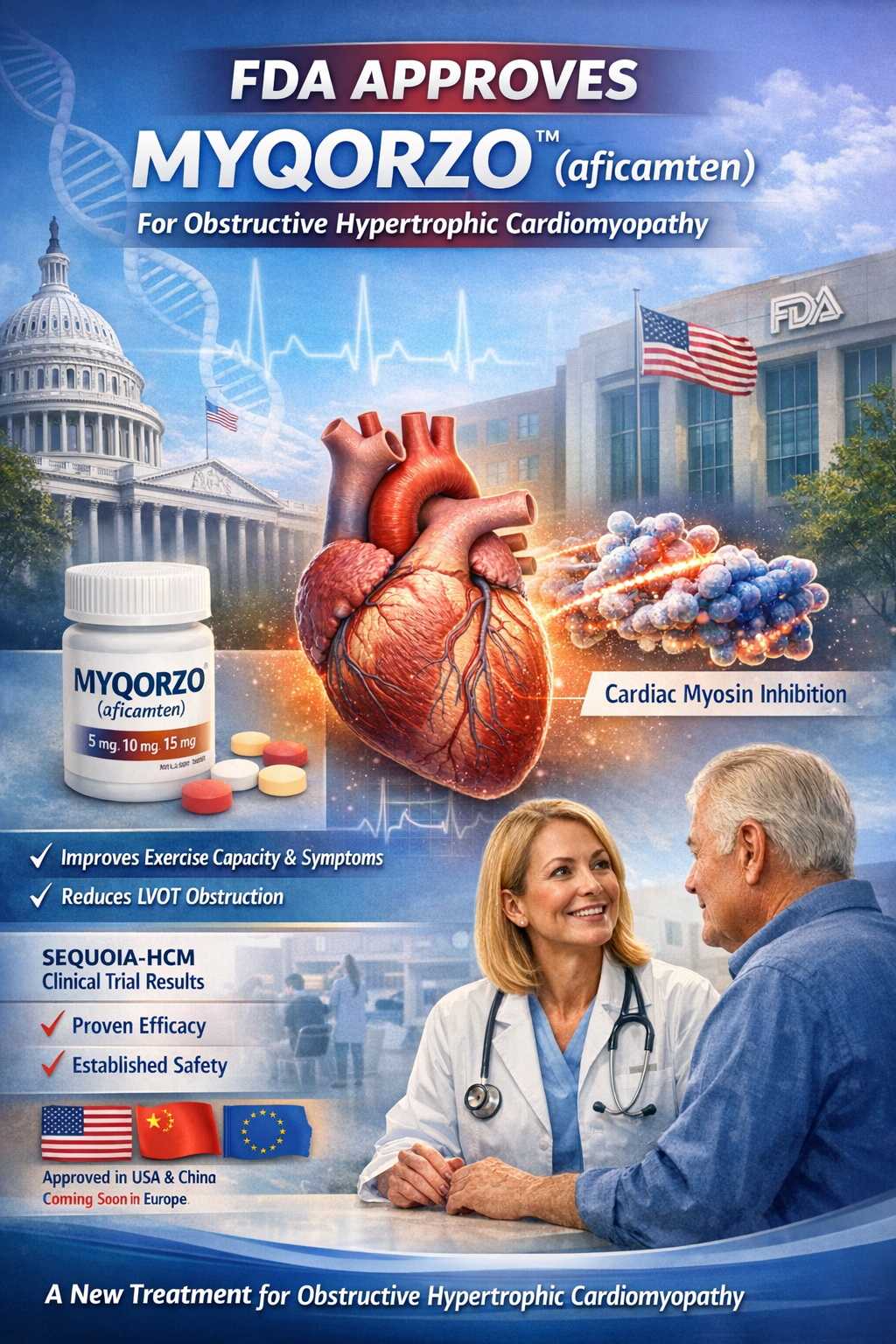
FDA Approves MYQORZO (aficamten), Marking a Major Advance in the Treatment of Obstructive Hypertrophic Cardiomyopathy
The treatment landscape for obstructive hypertrophic cardiomyopathy has reached a significant milestone. In December 2025, the U.S. Food and Drug Administration approved MYQORZO (aficamten), a first in class cardiac myosin inhibitor developed by Cytokinetics. This approval introduces a new therapeutic option designed to directly address the underlying disease mechanism of obstructive hypertrophic cardiomyopathy, offering hope to thousands of patients who continue to experience debilitating symptoms despite existing therapies.
This blog explores what the FDA approval of MYQORZO means, how the drug works, the clinical evidence supporting its use, and why this development is important for patients, clinicians, and the broader cardiovascular community.
Understanding Obstructive Hypertrophic Cardiomyopathy
Hypertrophic cardiomyopathy, commonly known as HCM, is a genetic heart muscle disease characterized by abnormal thickening of the myocardium. In approximately half of patients, this thickening leads to obstruction of blood flow out of the left ventricle, a condition known as obstructive hypertrophic cardiomyopathy or oHCM.
Patients with oHCM often experience shortness of breath, chest pain, dizziness, fatigue, and reduced exercise tolerance. The disease can significantly impair quality of life and, in some cases, lead to serious complications such as atrial fibrillation, stroke, heart failure, and sudden cardiac death.
While beta blockers, calcium channel blockers, and invasive septal reduction therapies have long been used to manage symptoms, these approaches do not specifically target the molecular cause of hypercontractility that drives obstruction in oHCM. MYQORZO was developed to address this unmet need.
What Is MYQORZO and How Does It Work
MYQORZO, with the generic name aficamten, is an allosteric and reversible inhibitor of cardiac myosin. Cardiac myosin is a motor protein responsible for heart muscle contraction. In patients with oHCM, excessive myosin activity leads to hypercontractility, narrowing of the left ventricular outflow tract, and impaired cardiac filling.
By selectively inhibiting cardiac myosin, MYQORZO reduces excessive contractile force. This results in decreased left ventricular outflow tract obstruction, improved cardiac efficiency, and better exercise capacity. Importantly, aficamten was engineered to provide predictable pharmacokinetics, a rapid onset of action, and reversibility, which supports flexible and individualized dosing.
The FDA approved MYQORZO in 5 mg, 10 mg, 15 mg, and 20 mg oral tablet strengths for adults with symptomatic obstructive hypertrophic cardiomyopathy to improve functional capacity and symptoms.
FDA Approval Based on the SEQUOIA-HCM Trial
The FDA decision was supported by robust clinical data from SEQUOIA-HCM, a pivotal Phase 3 randomized, placebo-controlled trial published in the New England Journal of Medicine. The study evaluated the efficacy and safety of MYQORZO over 24 weeks in adults with symptomatic oHCM.
Key Efficacy Results
Patients treated with MYQORZO demonstrated a statistically significant improvement in exercise capacity compared with placebo. Peak oxygen uptake, measured by cardiopulmonary exercise testing, increased by 1.8 mL per kilogram per minute from baseline in the MYQORZO group, while no improvement was observed in the placebo group. The least square mean difference of 1.74 mL per kilogram per minute was highly significant.
Beyond exercise capacity, MYQORZO showed clinically meaningful improvements across multiple endpoints, including symptoms, hemodynamics, and biomarkers. The benefits were consistent across prespecified subgroups such as age, sex, baseline disease characteristics, and use of background beta blocker therapy.
Safety and Tolerability
MYQORZO was generally well tolerated in the trial. Treatment emergent serious adverse events occurred less frequently in the MYQORZO group compared with placebo. A small proportion of patients experienced reductions in left ventricular ejection fraction below 50 percent, which underscores the importance of careful monitoring.
Hypertension was the only adverse reaction occurring in more than 5 percent of patients and was more common in the MYQORZO group. Investigators noted that increases in blood pressure were consistent with relief of outflow tract obstruction and improved cardiac output.
Important Safety Considerations and REMS Program
The prescribing information for MYQORZO includes a boxed warning for the risk of heart failure due to systolic dysfunction. Because the drug reduces cardiac contractility, it can lower left ventricular ejection fraction and precipitate heart failure in susceptible patients.
To mitigate this risk, echocardiographic monitoring is required before and during treatment. Initiation of MYQORZO is not recommended in patients with an ejection fraction below 55 percent. Dose adjustments or treatment interruption are required if ejection fraction declines or if symptoms of heart failure develop.
MYQORZO is available only through a Risk Evaluation and Mitigation Strategy program known as the MYQORZO REMS Program. Prescribers, patients, pharmacies, and distributors must all be enrolled and certified to ensure appropriate use and monitoring.
What This Approval Means for Patients
For patients living with symptomatic obstructive hypertrophic cardiomyopathy, the approval of MYQORZO represents a meaningful advance. Many patients continue to experience limitations in daily activities despite optimal medical therapy. Others may not be candidates for invasive procedures or prefer to avoid them.
MYQORZO offers a disease targeted oral therapy that addresses the root cause of hypercontractility rather than simply managing symptoms. Improvements in exercise capacity and symptom burden can translate into better quality of life, increased independence, and improved physical functioning.
Cytokinetics has also announced the MYQORZO & You program, which is designed to support patients through education, treatment navigation, and assistance with insurance and financial access. MYQORZO is expected to become available in the United States in the second half of January 2026.
Broader Implications for Cardiovascular Medicine
The FDA approval of MYQORZO is also significant from a scientific and industry perspective. It marks Cytokinetics’ first FDA approved medicine and validates decades of research in muscle biology and cardiac myosin modulation.
Cardiac myosin inhibitors represent a new therapeutic class with the potential to reshape how cardiomyopathies are treated. Beyond obstructive HCM, aficamten is currently being studied in non obstructive HCM and pediatric populations, although it is not yet approved for those indications.
This approval may also encourage further innovation in precision cardiovascular medicine, where therapies are designed to target specific molecular mechanisms underlying disease.
Global Regulatory Progress
In addition to U.S. approval, MYQORZO has recently achieved important regulatory milestones globally. China’s National Medical Products Administration approved aficamten for obstructive HCM in December 2025. The European Medicines Agency’s Committee for Medicinal Products for Human Use has issued a positive opinion, with a final decision from the European Commission expected in the first quarter of 2026.
These developments suggest that access to MYQORZO may soon expand to patients worldwide.
Looking Ahead
The approval of MYQORZO signals a new chapter in the management of obstructive hypertrophic cardiomyopathy. As clinicians gain experience with this therapy in real world settings, additional insights will emerge regarding optimal patient selection, long term outcomes, and integration with existing treatment strategies.
For now, MYQORZO stands as a promising new option for adults with symptomatic oHCM who are seeking improved functional capacity and symptom relief through a targeted, mechanism based approach.
Source
Cytokinetics, Incorporated. “Cytokinetics Announces FDA Approval of MYQORZO (aficamten) for the Treatment of Adults with Symptomatic Obstructive Hypertrophic Cardiomyopathy to Improve Functional Capacity and Symptoms.” Press release dated December 19, 2025.
Disclaimer
This blog is intended for informational and educational purposes only. It does not constitute medical advice, diagnosis, or treatment recommendations. Readers should consult qualified healthcare professionals for personalized medical guidance. The information presented is based on publicly available sources as of the date of publication and may change as new data emerge.