
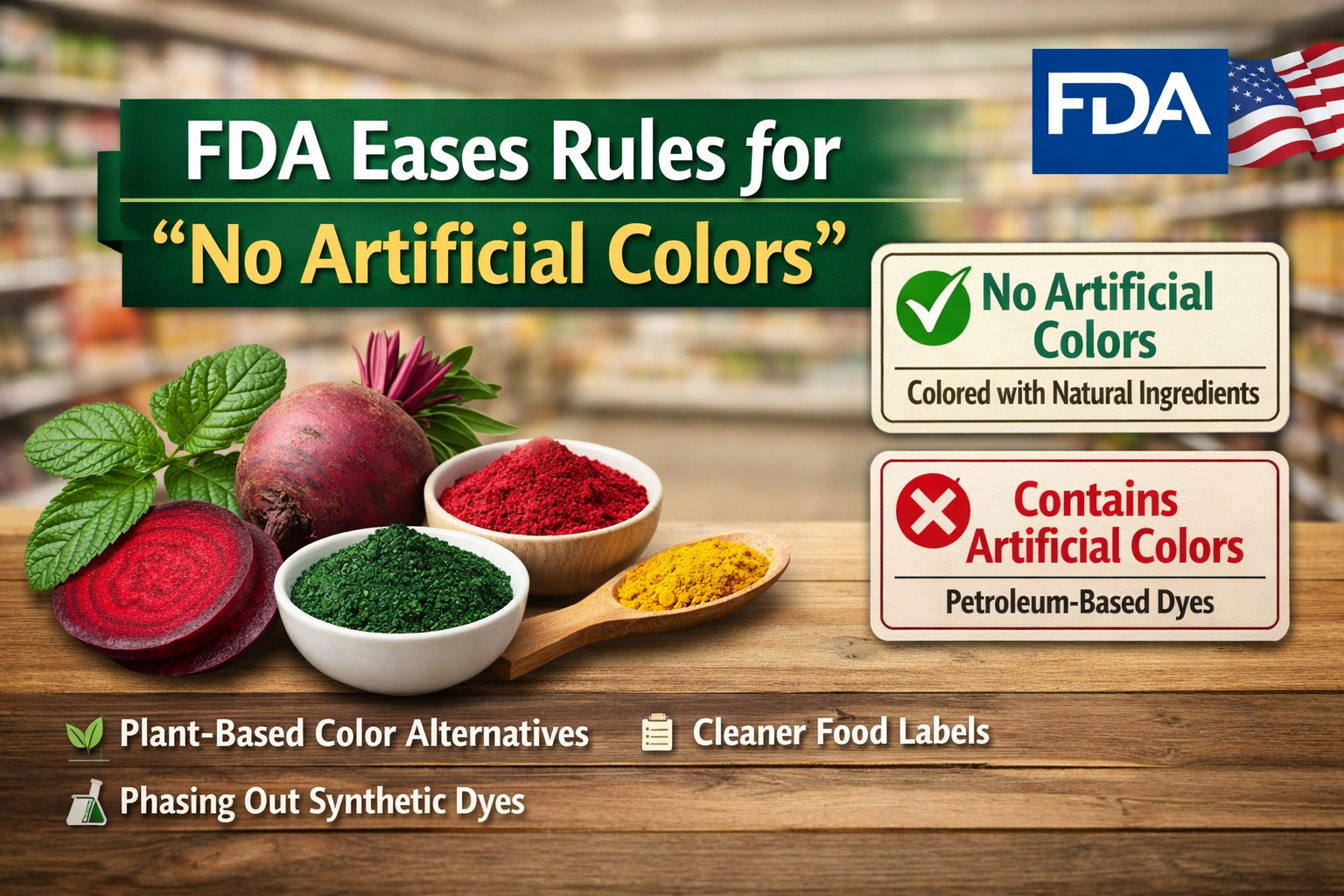
FDA Allows “No Artificial Colors” Labels for Foods Using Natural Ingredients
The way food labels describe color additives in the United States is officially changing. In February 2026, the U.S. Food and Drug Administration announced a major update that allows food manufacturers to label products as having no artificial colors, even when those foods contain coloring from natural plant based sources. This shift represents a meaningful step in food transparency and reflects growing consumer demand for cleaner labels and healthier ingredient choices.
For years, shoppers scanning ingredient lists and nutrition labels have struggled with confusing terminology around food dyes and coloring agents. Under the previous rules, even naturally derived colors from vegetables, algae, or fruits could disqualify a product from using the no artificial colors claim. That is no longer the case. With this new policy, the FDA is signaling a broader push away from petroleum based dyes and toward safer, naturally sourced alternatives.
This article breaks down what the FDA decision means, why it matters, how it affects food companies, and what consumers should know when reading labels going forward.
What Changed in the FDA Food Labeling Rules
Under the FDA’s updated guidance, food manufacturers may voluntarily label products as having no artificial colors as long as the product does not contain petroleum based synthetic dyes. These dyes include commonly used artificial colors such as Red 40, Yellow 5, Yellow 6, Blue 1, and similar additives derived from petroleum.
Previously, the rules were far more restrictive. A product could only use the no artificial colors label if it contained no added color at all. That meant foods colored with beet juice, spirulina, turmeric, or other natural ingredients still failed to qualify. This created confusion for consumers and discouraged companies from switching to natural alternatives.
The FDA is now applying what it calls enforcement discretion. This means the agency will not penalize companies that use the updated labeling language, provided their products meet the new criteria. Participation is voluntary, but the change removes a major regulatory barrier that previously limited cleaner label claims.
Why the FDA Says the Old Rules Were Confusing
FDA Commissioner Dr. Marty Makary stated that the previous labeling framework often misled shoppers. Calling plant based or naturally derived colors artificial did not align with how most consumers understand the word artificial.
From a public health standpoint, the FDA acknowledged that the old approach unintentionally discouraged innovation. Companies had little incentive to invest in natural color alternatives if they still could not advertise the benefit on packaging.
By revising the labeling guidance, the FDA aims to better reflect common sense consumer expectations while encouraging the food industry to move away from synthetic dyes that have raised health concerns over the years.
The Push Away From Petroleum Based Food Dyes
Petroleum based dyes have been under increased scrutiny from scientists, consumer advocacy groups, and public health officials. While these dyes are still considered legal and approved for use, research has raised questions about their potential links to behavioral issues in children, allergic reactions, and other health effects.
In April 2025, federal health leaders announced plans to encourage food manufacturers to phase out petroleum based dyes altogether. The FDA has since been tracking which companies have pledged to remove these dyes from their products.
U.S. Health Secretary Robert F. Kennedy Jr. praised the new labeling rule as a step toward healthier food systems. He emphasized that making it easier to market products without artificial dyes helps accelerate the transition to naturally derived colors and supports broader efforts to improve public health and dietary quality.
Newly Approved Natural Food Colors
Alongside the labeling change, the FDA also approved new natural color additives and expanded the use of existing ones. These approvals increase the range of plant based options available to manufacturers and reduce reliance on synthetic dyes.
One of the newly approved additives is beetroot red, a color derived from beets that produces a vibrant red hue. The FDA also expanded the approved uses of spirulina extract, a blue green coloring derived from algae that is already popular in natural and organic foods.
With these additions, the FDA has approved six new food color options under the current administration. This signals a clear regulatory trend toward supporting naturally sourced ingredients while maintaining safety and purity standards.
What This Means for Food Manufacturers
For food companies, the updated guidance provides both flexibility and opportunity. Brands that have already invested in natural colors can now highlight that choice more clearly on packaging. Those that have not yet made the switch may find the change encourages reformulation.
The FDA emphasized that companies remain fully responsible for ensuring all color additives meet safety requirements. Natural does not mean unregulated. Every approved color additive must still comply with strict standards for purity, manufacturing quality, and intended use.
Manufacturers that choose to adopt the new labeling language must also ensure that their claims are truthful and not misleading. Products labeled no artificial colors must still avoid petroleum based dyes entirely.
How Consumers Should Read Food Labels Now
For shoppers, the change makes food labels easier to understand, but it does not eliminate the need for careful reading. A no artificial colors claim now generally means the product avoids petroleum based synthetic dyes, but it may still contain color from fruits, vegetables, or algae.
Consumers who prefer minimal processing or specific dietary standards should still review the ingredient list. Natural color additives may appear under names like beet juice concentrate, turmeric extract, spirulina extract, or annatto.
The update does not change how ingredients are listed, but it improves alignment between marketing language and ingredient reality. This helps shoppers make faster and more confident decisions in the grocery aisle.
The Broader Impact on Clean Label Trends
The FDA decision reflects a larger shift in the food industry toward clean label products. Clean label generally refers to foods with shorter ingredient lists, recognizable components, and fewer synthetic additives.
Consumer demand for transparency has grown rapidly over the past decade. Many shoppers actively seek products free from artificial colors, flavors, and preservatives. By modernizing labeling rules, the FDA is responding to evolving expectations and helping regulatory language catch up with market behavior.
Industry experts expect more brands to reformulate products in the coming years as natural coloring technology continues to improve. Advances in food science have made plant based colors more stable, vibrant, and versatile than in the past.
Safety and Regulation Still Apply
While the move toward natural colors is widely welcomed, the FDA made it clear that safety oversight remains unchanged. All color additives, whether synthetic or natural, must be approved for specific uses and meet strict safety criteria.
Natural origin does not automatically guarantee safety. Some naturally derived substances can cause allergic reactions or interact with other ingredients. The FDA continues to evaluate color additives based on scientific evidence, toxicity data, and exposure levels.
Consumers should view the labeling update as a transparency improvement rather than a safety endorsement of every individual product.
What to Expect Next From the FDA
The FDA has indicated that it will continue working with the food industry to accelerate approvals for alternative color sources. Officials have also stated that they are committed to facilitating the phase out of petroleum based dyes over time.
Public tracking of company commitments adds accountability and allows consumers to see which brands are actively responding to the call for change. As more companies transition, no artificial colors labeling may become increasingly common across grocery store shelves.
This change could also influence international markets, as U.S. labeling standards often affect global food production and packaging decisions.
Final Thoughts
The FDA’s decision to allow no artificial colors labeling for foods colored with natural ingredients marks a meaningful step toward clearer communication and healthier food choices. By removing outdated restrictions, the agency has reduced confusion, encouraged innovation, and aligned labeling language with consumer understanding.
For shoppers, the update makes it easier to identify products that avoid petroleum based dyes. For manufacturers, it removes a barrier to reformulation and honest marketing. And for public health advocates, it represents progress toward a food system that prioritizes transparency and safety.
As always, informed choices begin with reading labels carefully and understanding what claims truly mean. This update makes that task a little simpler for everyone.
Sources
U.S. Food and Drug Administration, News Release, February 5, 2026
Disclaimer
This article is for informational and educational purposes only. It does not provide medical advice, diagnosis, or treatment. Nutritional needs and health conditions vary widely between individuals. Always consult a qualified healthcare professional or registered dietitian for personalized dietary or medical guidance.