
Does exercise positively impact hormonal imbalance in polycystic ovarian syndrome?
Introduction
About 5-15% women of reproductive age are affected by polycystic ovarian syndrome (PCOS) from as early as teenage years.
How is PCOS diagnosed?
Rotterdam criteria for polycystic ovarian syndrome (PCOS) are defined by the presence of two out of three of the following criteria: oligo‐anovulation, hyperandrogenism and polycystic ovaries (≥ 12 follicles measuring 2‐9 mm in diameter and/or an ovarian volume > 10 mL in at least one ovary). Clinical presentation may include:
- Acne
- Hirsutism
- Male pattern hair loss
- Irregular menstrual cycles
Subfertility
PCOS impacts endocrine health, reproductive health, cardiometabolic health and psychological health. Long-term risks of PCOS include obesity, type 2 diabetes, cardiovascular disease, non-alcoholic fatty liver, anxiety, depression and mood disorders.
Why research exercise benefits in PCOS?
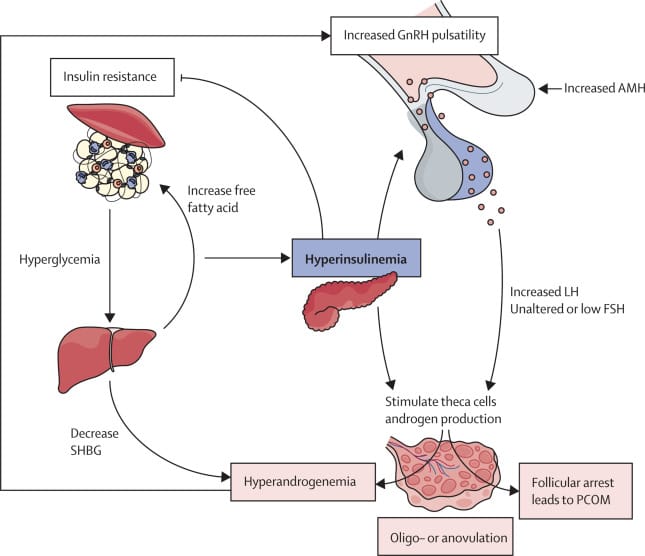
Hormonal imbalance in PCOS involves elevated androgens, insulin resistance and hyperinsulinemia. Reciprocal relationship between androgens and insulin, with their individual impact on PCOS symptoms make the treatment challenging. Additionally, altered levels of several adipokines may also add to the hormonal imbalance in PCOS, thus increasing overall cardiometabolic risk.
Weight management is one of the first lines of treatment for the treatment of PCOS. The researchers aimed at evaluating study design and results of hormonal investigations before and after an exercise program, previously studied in females with PCOS.
The researchers intended that, results from this review can be utilized to guide therapeutic recommendations for women with PCOS, and to highlight the need for future studies.
Study methodology
Comprehensive literature search was done using PubMed database from 2 March 2020 to 14 April 2020 using the relevant key terms. 2924 articles were identified and screened using the inclusion criteria for the current review. 46 full-text studies were finalized to be included for qualitative data synthesis. Studies were categorized according to type of exercise intervention i.e.
- Aerobic exercise
- Combination exercise
- High intensity interval training
- Exercise + diet
- Progressive resistance training or strength training
- Yoga
- Single bout exercise
Randomized control trails (RCTs), non-RCTs, case-control studies, single arm prospective studies with pre and post intervention measurements were included. Full text articles fulfilling the inclusion criteria were reviewed and following data was extracted independently by three investigators:
- Participant demographic information
- Criteria used to confirm PCOS
- Study design
- Number of participants in final data analysis
- Protocol for exercise intervention, i.e. frequency, duration and type
- Pre and post hormonal level investigations
Key findings
- Aerobic exercise with a specified target VO2max preferably at higher intensities, appeared to improve measures of insulin responsiveness and sensitivity. The improvement was sustained over habitual increased fuel demand by the muscles during aerobic exercises.
- Yoga improved fasting insulin (FI) and Homeostatic model assessment of insulin resistance (HOMA-IR) in adolescent girls but not in adult women who had greater BMI compared to adolescent girls.
- None of the exercise interventions reviewed in the current research changed luteinizing hormone or follicular stimulating hormone levels.
- There were no significant changes in Atrial natriuretic peptice or adiponectin in a few studies included in the review warranting further research into effects of all types of exercise on different types of adipokines in PCOS.
- The researchers found ambiguous results on effects of exercises on Anti-Mullerian hormone levels. Further research to investigate the impact of longer-term exercise interventions on AMH levels may provide some insight into improvements in fertility and ovarian function.
- The researchers also found that females diagnosed with PCOS and obesity were less inclined towards physical activity compared with their age-matched normal counterparts. As a result, they may be deprived of metabolic benefits with respect to FI and HOMA-IR, as well as the potential benefits on androgen levels.
Clinical implications
The researchers favour the incorporation of regular physical activity and PCOS screening in adolescent and obese females. The exercise duration should be at least 30 minutes a day, at least thrice per week, with vigorous intensity at a minimum of ≥60% VO2max to obtain insulin-related benefits.
Additionally, counselling to overcome challenges and address fear to achieve targeted physical activity goals. Women should also be educated regarding importance of exercise intensity in improving hormone and metabolic health.
Limitations
This research has largely seen the benefits of aerobic exercise on PCOS. Further research is required to examine the effects of progressive resisted training, strength training, high intensity interval training and yoga on improving androgen levels and improving insulin sensitivity.
Studies with larger sample size allowing subgroup analysis to determine the impact of age, BMI and weight loss can further help understand the effects of specific exercise program.
SOURCE: JOURNAL OF FUNCTIONAL MORPHOLOGY AND KINESIOLOGY, Volume 5, Issue 2, published in May 2020.
Link: https://doi.org/10.3390/jfmk5020035
Authors: Grei Shele, Jessica Genkil, Diana Speelman; Department of Biochemistry, Lake Erie College of Osteopathic Medicine, Erie, PA 16509, USA.