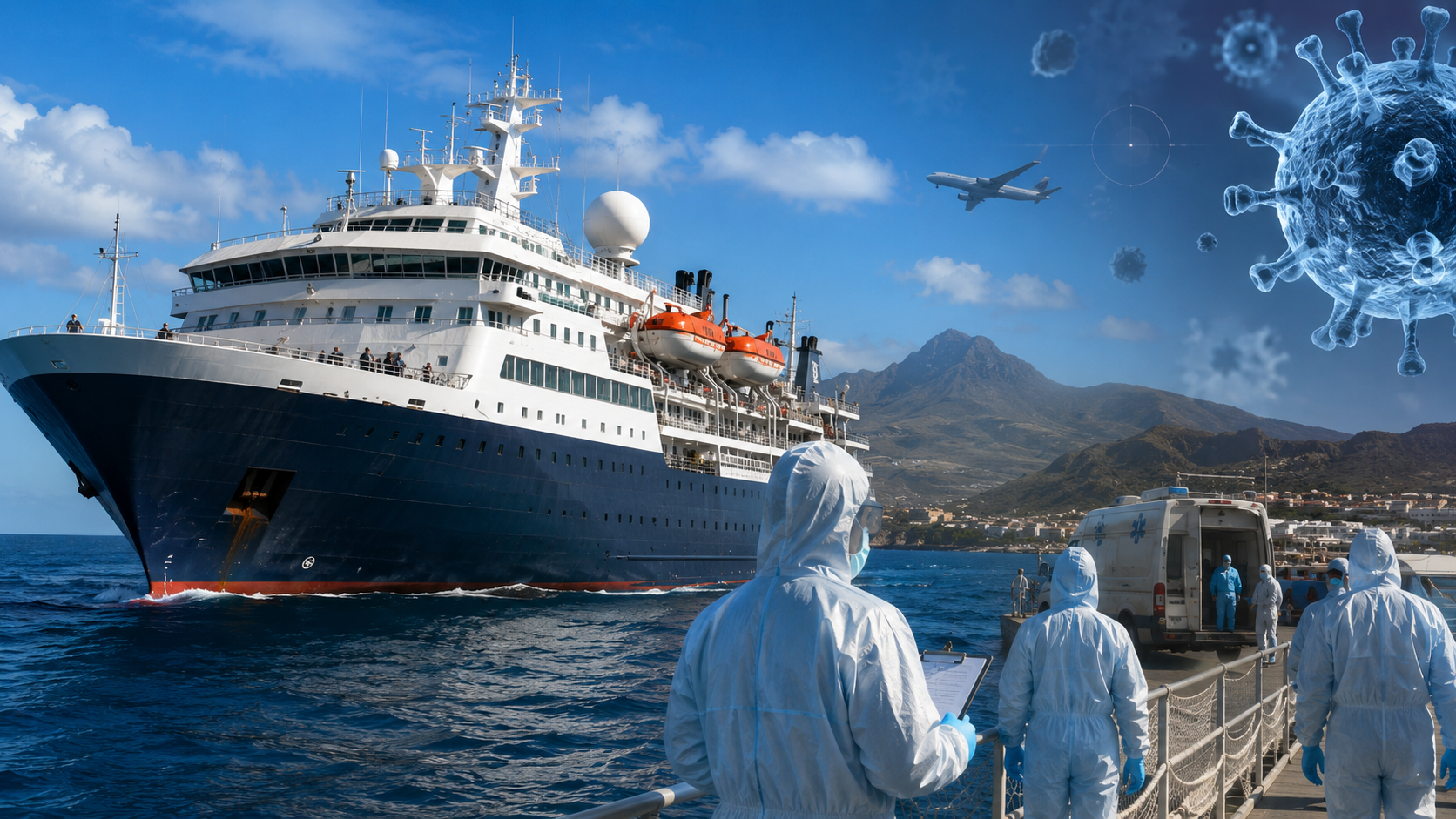
A cruise journey across the Atlantic Ocean has taken an unexpected and serious turn after several cases of hantavirus were reported onboard a Dutch-operated expedition ship. Health authorities are now coordinating efforts to manage the situation, protect passengers, and ensure proper medical care for those affected.
This article breaks down the situation in clear terms, explains what hantavirus is, and outlines what happens next for passengers and crew.
A cruise ship traveling from South America toward Europe has reported multiple suspected and confirmed cases of hantavirus infection. The vessel had been docked in Cape Verde while authorities assessed the situation and determined the next steps.
Three passengers have died during the voyage, raising concern among health officials and prompting international coordination. While not all deaths have been confirmed as directly linked to hantavirus, the presence of the virus onboard has triggered strict health measures.
Seven cases have been identified so far, including both confirmed and suspected infections. Among these, a confirmed case involved a European passenger who later died, while another confirmed case required urgent medical evacuation for treatment.
Medical teams have prioritized evacuating individuals in critical condition. Two crew members, including a ship doctor, were scheduled for urgent air transfer to receive advanced medical care. Another individual linked to one of the deceased passengers was also set for evacuation.
Authorities worked to determine which passengers required immediate attention while ensuring that the remaining individuals onboard stayed under controlled conditions.
The ship is now expected to continue its journey to the Canary Islands, where better healthcare infrastructure is available. Upon arrival, passengers and crew will undergo medical evaluations before being allowed to return home.
The decision to route the ship to the Canary Islands was based on logistical and medical capability. Local authorities determined that Cape Verde did not have the necessary resources to handle a potential outbreak of this nature.
Spain’s health system is equipped to manage infectious diseases safely, making the Canary Islands the closest viable destination. Special arrangements are being put in place to ensure that passengers can disembark without posing a risk to the local population.
This includes controlled transport, isolation protocols, and dedicated healthcare facilities.
At the time of reporting, nearly 150 people from more than 20 countries remained onboard. Strict health protocols have been enforced to limit further spread of the virus.
Passengers have described a tense environment, with restricted movement and heightened monitoring. Crew members have implemented precautionary measures, including isolation of suspected cases and enhanced sanitation practices. Despite these challenges, authorities have emphasized that the risk to the general public remains low.
Hantavirus is a rare but potentially serious illness typically transmitted through contact with rodents or their droppings. It can cause severe respiratory issues and, in some cases, can be fatal.
In this case, health experts believe the strain involved may allow limited human-to-human transmission, particularly among individuals in close contact. This is uncommon but has been observed in specific variants.
While hantavirus is not typically associated with cruise ships, the confined environment may have contributed to transmission among close contacts.
Health officials are still investigating how the initial infection occurred. Possible factors include:
The situation highlights how quickly illnesses can spread in enclosed environments like ships.
Authorities have taken several steps to control the outbreak and prevent further infections:
These measures aim to protect both passengers and the communities receiving them.
Health organizations have reassured the public that the overall risk remains low. The outbreak is considered contained due to the controlled environment of the ship and the rapid response by authorities.
Experts stress that while the situation is serious for those onboard, it does not pose a widespread threat.
This incident also highlights the importance of global cooperation in managing infectious diseases, especially in international travel settings.
This timeline shows how the situation developed over several weeks before being fully recognized as a potential outbreak.
Once the ship arrives in the Canary Islands, several steps will follow:
Authorities will also likely conduct a detailed investigation to understand how the outbreak began and how similar incidents can be prevented in the future.
This event may influence how cruise operators handle health risks moving forward. Potential changes could include:
The cruise industry has already faced challenges in recent years related to health concerns, and this situation reinforces the need for preparedness.
BBC News
This blog post is a rewritten and summarized version of publicly available news content for informational and educational purposes. It does not provide medical advice or official health guidance. For accurate and up-to-date information, readers should consult official health authorities or trusted news organizations.

Most Accurate Healthcare AI designed for everything from admin workflows to clinical decision support.