
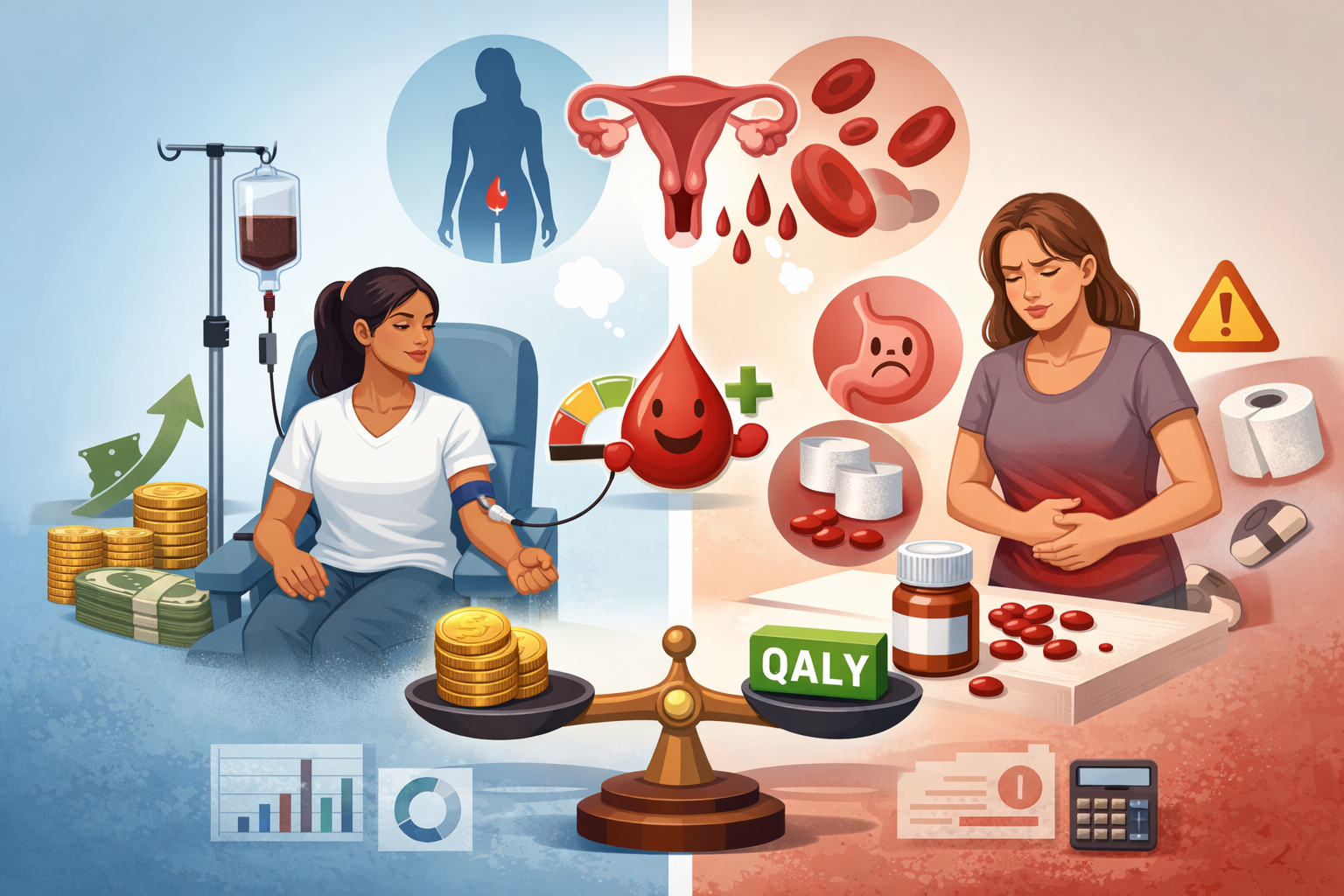
Cost-Effectiveness of First-Line IV Versus Oral Iron for Iron Deficiency Anemia in Women with Heavy Menstrual Bleeding
Iron deficiency anemia affects millions of women worldwide. Many of these women experience heavy menstrual bleeding. Heavy menstrual bleeding is a leading cause of iron deficiency anemia for women of reproductive age. A recent research article published in Blood Advances on January 8 2026 evaluates the cost effectiveness of first line intravenous iron therapy compared with standard oral iron therapy in women with heavy menstrual bleeding related iron deficiency anemia. This article provides important evidence that may change the way clinicians and patients think about treating this very common condition. It also has implications for health policy and access to care.
In this blog post we will explore the key findings of the study, what these findings mean for women with heavy menstrual bleeding, and how this research may shape future clinical practice.
Overview of Iron Deficiency Anemia and Heavy Menstrual Bleeding
Iron deficiency anemia occurs when the body does not have enough iron to produce healthy red blood cells. Iron is needed for hemoglobin production. Hemoglobin carries oxygen throughout the body. When iron levels are low the body cannot make sufficient hemoglobin and anemia develops. Symptoms of iron deficiency anemia include fatigue low energy shortness of breath and decreased quality of life.
Heavy menstrual bleeding is defined as menstrual bleeding that lasts longer than seven days or results in the loss of more than 80 milliliters of blood per cycle. It is a common problem affecting many women of reproductive age. Heavy menstrual bleeding increases the risk of iron deficiency anemia because of chronic loss of blood. Women with this condition often struggle with fatigue and reduced productivity at work and home.
Standard treatment for iron deficiency anemia includes oral iron supplements such as ferrous sulfate. However oral iron is often associated with gastrointestinal side effects. These side effects can include nausea constipation and abdominal pain. Because of these side effects many women stop taking oral iron before their iron levels fully improve. Intravenous iron therapy has been used when oral iron fails or when anemia is severe. IV iron provides iron directly into the bloodstream allowing faster and more complete replenishment of iron stores.
Purpose of the Study
The recent Blood Advances research article focused on whether first line intravenous iron therapy is more cost effective than first line oral iron therapy for women with heavy menstrual bleeding and iron deficiency anemia. The researchers used a Markov model to simulate a cohort of women from age 18 to age 51. A Markov model is a statistical model used to estimate long term outcomes and costs by simulating health states over time.
The authors compared several iron treatment options. These included first line intravenous iron dextran first line intravenous ferumoxytol first line intravenous iron sucrose and first line oral ferrous sulfate. The main outcomes of interest were cost and quality adjusted life years or QALYs. QALYs combine both quality and quantity of life into a single measure. One QALY equates to one year in perfect health.
The analysis was performed from a societal perspective. This means that not only direct medical costs were considered but also indirect costs such as lost productivity. The study results were then analyzed to determine which treatment provided the best value for money.
Key Findings
The research study revealed that first line intravenous iron dextran provided greater quality adjusted life years compared with oral ferrous sulfate. Women treated with IV iron dextran had estimated 19.26 QALYs over their reproductive lifetime compared with 19.10 QALYs for women receiving oral iron. Although intravenous iron dextran had higher total costs compared with oral iron the incremental cost per additional QALY gained was $28 600. This value falls well within generally accepted willingness to pay thresholds in health care.
The study also compared different intravenous iron formulations. Intravenous ferumoxytol and intravenous iron sucrose were more expensive and did not provide additional QALY benefit compared with intravenous iron dextran. This suggests that intravenous iron dextran is the dominant intravenous option in terms of cost effectiveness.
In all sensitivity analyses the findings remained consistent. Even when assumptions were varied around costs effectiveness ratios and quality of life estimates intravenous iron dextran remained the most cost effective first line treatment.
These findings suggest that first line intravenous iron dextran is a cost effective strategy for treating iron deficiency anemia in women with heavy menstrual bleeding. The implications are significant because oral iron is often the default first line therapy despite known barriers to adherence.
Clinical Implications
For clinicians the research highlights the importance of reevaluating current treatment paradigms for iron deficiency anemia in women with heavy menstrual bleeding. Traditionally clinicians prescribe oral iron first because it is inexpensive and easy to administer. However oral iron is poorly tolerated by many women. Side effects lead to poor adherence and suboptimal treatment outcomes. Intravenous iron offers a way to rapidly restore iron levels. This can improve energy fatigue and quality of life sooner.
Clinicians should consider discussing first line intravenous iron therapy with women who have documented iron deficiency anemia due to heavy menstrual bleeding. Shared decision making is essential. Women should understand the benefits and potential risks of intravenous iron therapy compared with oral iron.
It is also important for clinicians to recognize that not all forms of intravenous iron are equal in terms of cost effectiveness. According to this research intravenous iron dextran provides the best value at commonly accepted willingness to pay thresholds.
Health Policy and Access to Care
The study also has implications for health policy. Insurance coverage and reimbursement policies often influence which treatments patients receive. Because intravenous iron therapy is more expensive upfront payers may require patients to try oral iron first before approving intravenous iron. This practice is called step therapy. While step therapy can reduce short term costs it may lead to delays in effective treatment.
The research suggests that first line intravenous iron therapy is cost effective over a woman’s lifetime even when accounting for higher initial costs. This evidence could be used to support changes in coverage policies that allow women earlier access to intravenous iron therapy without requiring failed oral iron treatment.
Health systems may also consider investing in resources to administer intravenous iron more efficiently. This includes staff training and infusion center capacity. Improving access may reduce overall burden of disease and improve patient outcomes.
Patient Perspective
From a patient perspective the findings are encouraging. Women with heavy menstrual bleeding often struggle with fatigue and reduced quality of life. Persistent anemia can affect daily functioning and wellbeing. An effective treatment that improves iron levels faster and improves quality of life may be worth considering early in the treatment journey.
Patients should discuss with their health care providers whether intravenous iron therapy is appropriate for their individual situation. Understanding personal priorities such as speed of recovery tolerance for side effects and convenience can help women make informed choices.
Future Research
While this study provides robust evidence on cost effectiveness there are still areas for future research. Studies that evaluate real world outcomes of first line intravenous iron therapy compared with oral iron in diverse patient populations would strengthen the evidence base. Research into patient preferences and barriers to accessing intravenous therapy can also help tailor interventions that improve uptake.
Conclusion
Iron deficiency anemia remains a significant health concern for women with heavy menstrual bleeding. Traditional reliance on oral iron therapy has limitations that impact treatment adherence and outcomes. The Blood Advances study demonstrates that first line intravenous iron dextran is a cost effective treatment strategy over the reproductive lifespan compared with oral iron and other intravenous formulations. These findings should prompt clinicians health systems and policy makers to consider broader use of first line intravenous iron therapy for women with heavy menstrual bleeding related anemia.
Source
Cost Effectiveness of First Line IV Versus Oral Iron for Iron Deficiency Anemia in Women with Heavy Menstrual Bleeding. Daniel Wang et al. Blood Advances January 8 2026
Disclaimer
This blog is intended for general informational purposes only. It is not medical advice and should not replace consultation with a qualified health care professional. Always seek the advice of your physician or other qualified health provider with any questions you may have regarding a medical condition or treatment.