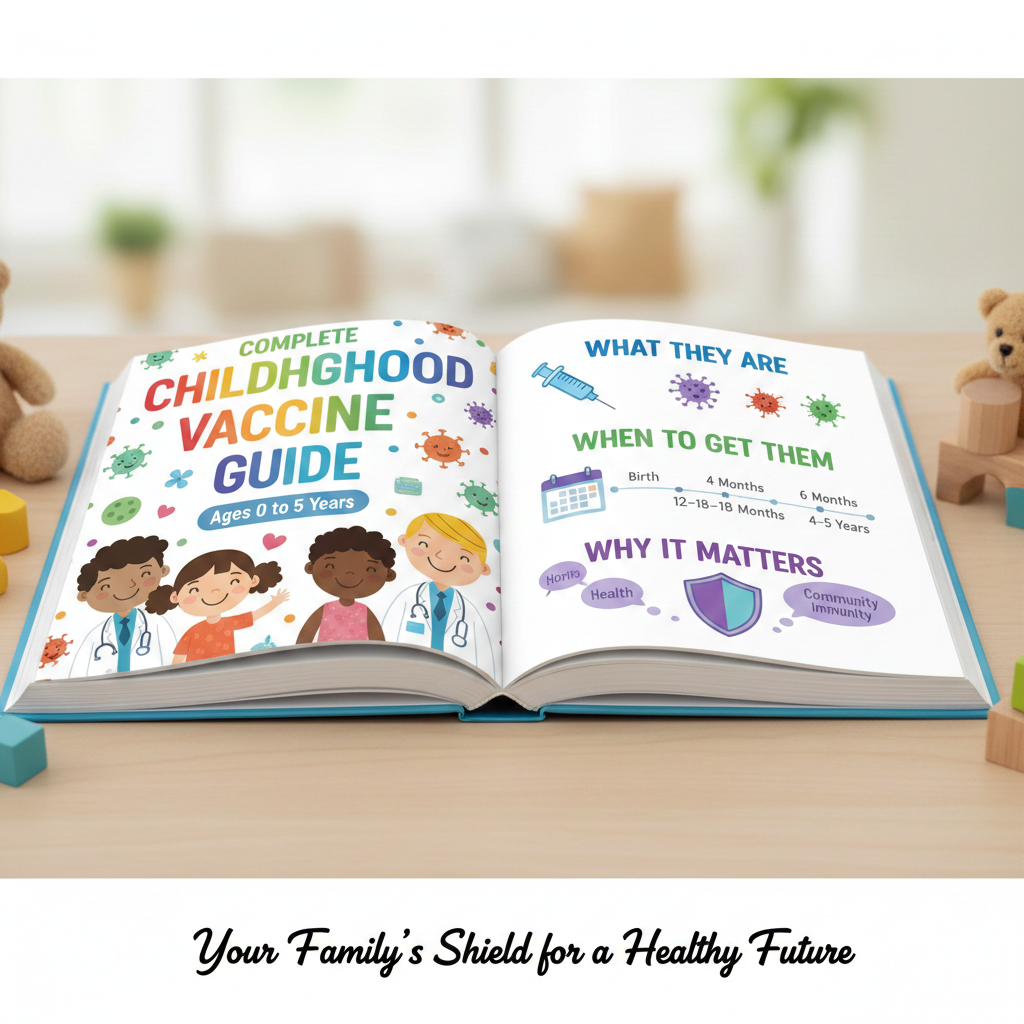
Vaccination is one of the most effective ways to protect your child from serious and sometimes life-threatening diseases. From birth through age five, a series of vaccines is offered to support a developing immune system.
This guide explains:
• What vaccines children typically receive from 0 to 5 years
• When each vaccine is usually given
• What diseases each vaccine protects against
• Why following the schedule on time matters
We also include a detailed table and official government sources to help you stay informed.
Vaccines train the immune system to recognise and fight infections without causing disease.
• Protects babies and young children from serious illnesses
• Reduces the spread of disease in childcare and school settings
• Helps provide “herd immunity” in the community
• Reduces long-term health complications from infections
Following the recommended schedule ensures your child receives the best protection at the right time.
Schedules vary slightly by country. Below is the UK NHS government schedule, updated in 2026. For U.S. guidance, see CDC official schedules.
| Age | Vaccines Given | Diseases Prevented |
|---|---|---|
| 8 weeks | 6‑in‑1 (1st), Rotavirus (1st), MenB (1st) | Diphtheria, tetanus, pertussis, polio, Hib, hepatitis B, rotavirus, meningococcal B |
| 12 weeks | 6‑in‑1 (2nd), Rotavirus (2nd), MenB (2nd) | Same as 8 weeks |
| 16 weeks | 6‑in‑1 (3rd), Pneumococcal (1st) | Same as 8 weeks, plus pneumococcal disease |
| 1 year | MMRV (1st), Pneumococcal (2nd), MenB (3rd) | Measles, mumps, rubella, chickenpox, pneumococcal disease, meningococcal B |
| 18 months | 6‑in‑1 (4th), MMRV (2nd) | Booster doses for protection from earlier vaccines |
| Annual (from 2 yrs) | Childhood flu vaccine | Seasonal influenza |
| 3 yrs 4 months | Pre‑school 4‑in‑1 booster | Diphtheria, tetanus, pertussis, polio |
Sources:
🔗 NHS official vaccination schedule
🔗 UK Health Security Agency schedule changes
• Combines protection against six diseases in one injection
• Prevents diphtheria, tetanus, pertussis (whooping cough), polio, Hib, and hepatitis B
• Given at 8, 12, and 16 weeks and boosted at 18 months
• Protects against severe diarrhoea and vomiting in infants
• Given orally in early infancy to reduce dehydration and hospitalisation
• Protects against meningococcal group B, which can cause meningitis and sepsis
• Given in infancy and boosted according to schedule
• Protects against pneumococcal disease, including meningitis, pneumonia, and bloodstream infections
• Doses given at 16 weeks and around 1 year
• Protects against measles, mumps, rubella, and chickenpox
• Given at 1 year and 18 months
• Replaces older MMR and varicella vaccines in the UK
• Administered annually during flu season
• Recommended from 6 months of age
• Reduces risk of severe influenza and hospitalisation
The CDC provides an official age-based vaccine schedule for children in the U.S.
• Hepatitis B
• DTaP (diphtheria, tetanus, pertussis)
• Hib (Haemophilus influenzae type b)
• IPV (polio)
• PCV (pneumococcal)
• RV (rotavirus)
• MMR (measles, mumps, rubella)
• Varicella (chickenpox)
• Influenza (yearly)
For 2026, some vaccines in the U.S. have moved to shared decision-making, meaning parents discuss timing and necessity with their clinician.
🔗 CDC vaccines by age schedule
• Infants and young children are most vulnerable in the first year
• Early vaccines provide protection before exposure to dangerous diseases
• Delayed vaccination increases the risk of preventable illness
• High immunisation coverage protects the wider community
Healthcare providers track records and can schedule catch-up doses if a vaccine is missed.
• All vaccines on official schedules are rigorously tested for safety and efficacy
• Common side effects are mild and include:
• Soreness at injection site
• Low-grade fever
• Fussiness or tiredness
• Serious reactions are extremely rare
• Keep your child’s vaccination record up to date
• Attend all scheduled appointments
• Ask about catch-up vaccines if a dose is missed
• Discuss any concerns with your clinician
• Use official government resources for accurate information
• NHS vaccinations and when to have them
• UK Health Security Agency — 2026 schedule changes
• CDC vaccines by age (US)
This blog is for informational purposes only and is not medical advice. Vaccination schedules differ by country and change over time. Always consult a qualified healthcare provider, paediatrician, or local health authority for personalised guidance.

Most Accurate Healthcare AI designed for everything from admin workflows to clinical decision support.