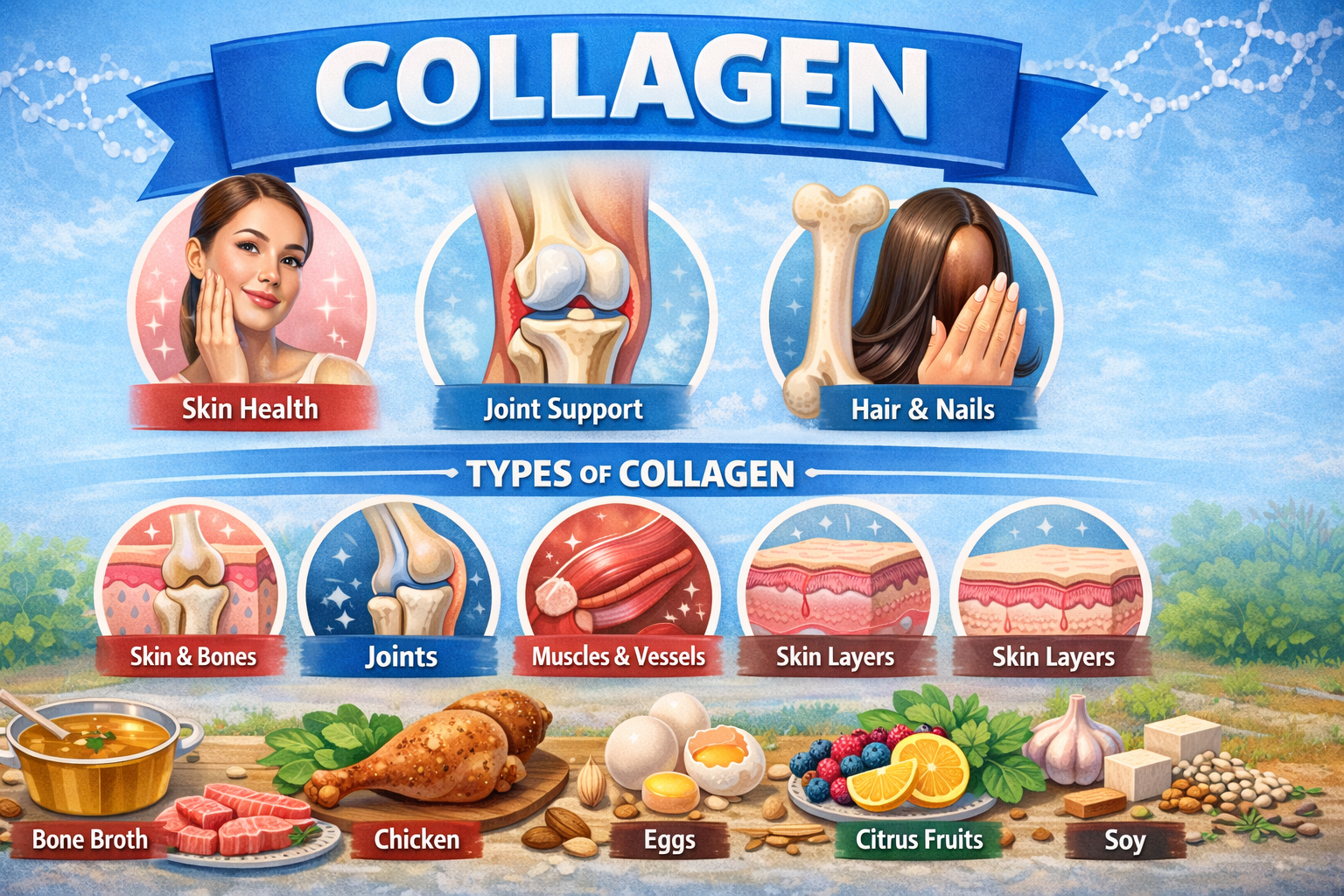
Collagen is one of the most important proteins in the human body. It supports skin, joints, bones, and connective tissues. Many people are now searching for ways to boost collagen naturally because its production decreases with age. This guide explains collagen benefits, types of collagen, and the best natural sources to help you maintain healthy levels.
Collagen is a structural protein made from amino acids such as glycine, proline, and hydroxyproline. It acts as a building block for skin, muscles, tendons, ligaments, and bones. Collagen gives strength, elasticity, and firmness to tissues.
As you age, collagen production slows down. This can lead to wrinkles, joint pain, weaker bones, and reduced skin elasticity. External factors such as sun exposure, smoking, poor diet, and lack of sleep can also reduce collagen levels.
Collagen plays a major role in keeping skin smooth and firm. Higher collagen levels improve hydration and elasticity.
Benefits for skin include:
Many people use collagen for anti aging and skin rejuvenation.
Collagen is a major component of cartilage, which protects joints. Low collagen levels can lead to stiffness and discomfort.
Benefits for joints include:
Collagen is often used by athletes and older adults for joint health.
Collagen supports keratin production, which is essential for hair and nails.
Benefits include:
Bones rely on collagen for structure and strength. It works alongside calcium to maintain bone density.
Benefits include:
Collagen contains amino acids that support muscle repair and growth. It may improve strength when combined with exercise.
Collagen helps maintain the lining of the digestive tract. It may support better digestion and reduce gut issues.
There are many types of collagen, but the following are the most important for health:
This is the most abundant type in the body.
This type is mainly found in cartilage.
This type works with Type I collagen.
This type is found in layers of the skin.
This type is less common but still important.
You can increase collagen naturally by eating the right foods. These foods either contain collagen or help your body produce it.
Bone broth is one of the best sources of collagen. It is made by simmering bones and connective tissue.
Benefits:
Chicken contains connective tissues that provide collagen, especially in the skin and cartilage.
Fish skin and scales are rich in collagen. Marine collagen is easily absorbed by the body.
Egg whites contain proline, an amino acid needed for collagen production.
Vitamin C is essential for collagen synthesis. Foods like oranges, lemons, and grapefruits help boost natural production.
Spinach and kale contain nutrients that protect collagen and support its production.
Berries are rich in antioxidants and vitamin C, which help maintain collagen levels.
These foods provide zinc and copper, which are important for collagen formation.
Garlic contains sulfur, which supports collagen production and prevents breakdown.
Soy foods contain compounds that may help increase collagen levels.
To maintain healthy collagen levels, follow these lifestyle tips:
Collagen is essential for healthy skin, joints, bones, and overall wellness. As natural production declines with age, it becomes important to support collagen through diet and lifestyle choices.
By including collagen rich foods and nutrients that promote collagen synthesis, you can improve skin health, reduce joint discomfort, and support long term health. A consistent approach to nutrition and healthy habits can help maintain strong collagen levels and improve your quality of life.

Most Accurate Healthcare AI designed for everything from admin workflows to clinical decision support.