Cardiac Arrhythmia: Symptoms, Causes, Diagnosis, and Treatment
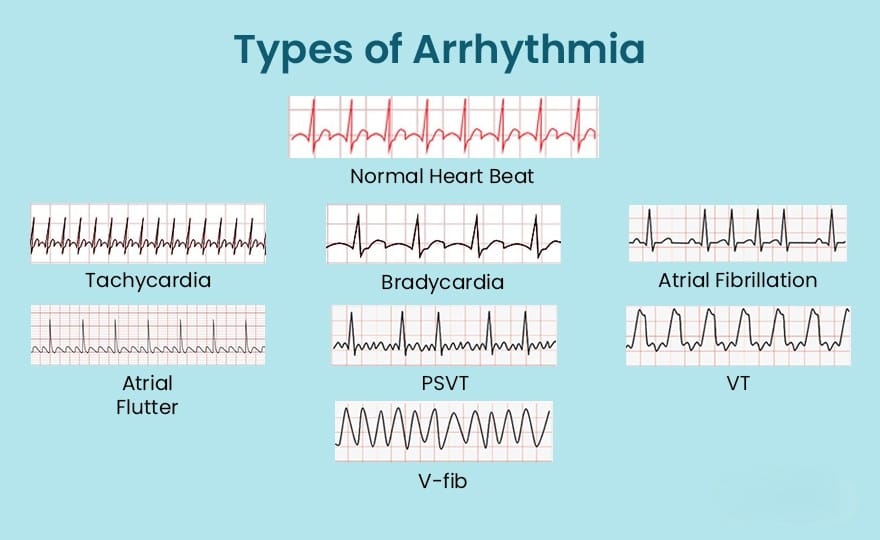
A cardiac arrhythmia is an abnormal heartbeat resulting from malfunctioning electrical impulses that govern your heartbeat. With a cardiac arrhythmia, your heart may be beating too slowly, too quickly, or irregularly. This can feel like your heart is fluttering or racing in your chest.
It is normal for your heart rate to speed up during physical activity and to slow down while resting or sleeping. It is also normal to feel as if your heart skips a beat occasionally. But a frequent irregular rhythm may mean that your heart is not pumping enough blood to your body which may lead to symptoms such as faintness or dizziness .[1]
What are the types of arrhythmias?
- Tachycardia - rapid heartbeat with a rate of more than 100 beats per minute.
- Bradycardia - a slow heartbeat with a rate of less than 60 beats per minute.
- Ventricular arrhythmias - irregular heartbeats that originate in the lower chambers or ventricles.
- Supraventricular arrhythmias - irregular heartbeats that originate in the heart’s upper chambers or atria.
- Bradyarrhythmia - slow heartbeats that may be caused by disease.
What are the symptoms of cardiac arrhythmia?
- Heart palpitations
- Chest pain or pounding in the chest
- Dizziness
- Shortness of breath and anxiety
- Sweating
- Lightheadedness
- Weakness or fatigue
- Fainting [2]
How common is arrhythmia?
An estimated 1.5% to 5% of people have arrhythmias. However, some people don’t have symptoms, making it difficult to estimate how many people actually have arrhythmias. In the U.S., atrial fibrillation is the most common type of arrhythmia.
What causes arrhythmia?
- Irritable tissue in your heart (due to genetic or acquired causes).
- High blood pressure
- Changes in heart muscle (cardiomyopathy)
- Valve disorders
- Electrolyte imbalances in blood
- Injury from heart attack
- Healing process after heart surgery
- Other medical conditions
Coronary artery disease
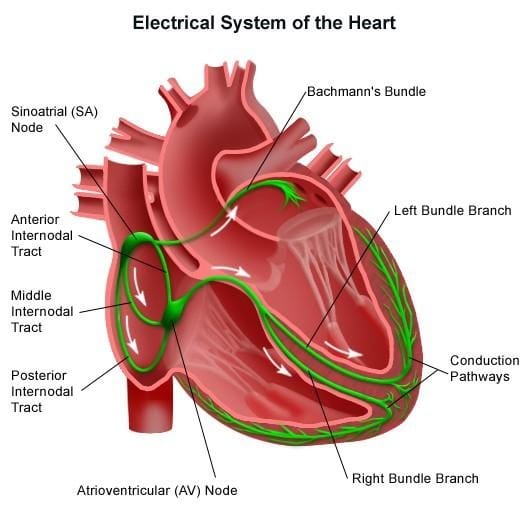
The cause of most arrhythmias lies in issues with heart’s arteries, valves or muscles.
What increases the risk of getting arrhythmia?
- Drinking alcohol
- Using tobacco products or smoking
- Consuming drinks and foods that have caffeine
- Taking stimulants like cold medicines or herbal supplements
- Having high blood pressure
- Having a BMI (body mass index) higher than 30
- Having high blood sugar
- Having sleep apnoea
What are the complications of arrhythmia?
Untreated arrhythmias can lead to weakening of heart muscles (cardiomyopathy), cardiac arrest or stroke. [3]
How is cardiac arrhythmia diagnosed?
- Holter monitor: or a continuous ambulatory electrocardiographic monitor as a small, portable electrocardiogram (EKG or ECG) recorder gives health care professionals a “movie” of the heart’s electrical activity, as opposed to the much shorter glimpse provided by an EKG.
Your health care professional may ask you to keep a diary of your activities and symptoms. Later, the Holter monitor results can be compared to your daily log to see how your activities or symptoms correspond to your measured heart rhythm.
- Cardiac event recorder: can be advised to those with suspected arrhythmias that occur infrequently or pass quickly.
- Stress test/ Exercise stress test: Walking or running on a treadmill or ride a stationary bicycle while your heart rate and rhythm are monitored can detect exercise-induced arrhythmia.
- Tilt-table test: can be recommended to detect position-change induced arrhythmias.
- Electrophysiologic testing: In this procedure, performed under local anaesthesia, temporary electrode catheters are threaded through peripheral veins (or arteries) into the heart. These catheters are positioned in the atria, ventricles or both. They record the heart’s electrical signals and “map” the path of electrical impulses during each heartbeat.
This test can cause known but infrequent arrhythmias, allowing them to be diagnosed. It can help trigger hidden tachycardia (fast heart rate) or bradycardia (slow heart rate)
- Transesophageal electrophysiologic procedure: Proximity of the naso-esophageal catheter to heart gives more accurate results than a normal EKG.
- Echocardiogram: This painless procedure uses ultrasound waves to reveal the heart’s size, structure and motion. The most common type of echocardiogram is transthoracic echocardiography (TTE). [4]
How is cardiac arrhythmia treated?
MEDICINES
- Medicines are prescribed based on the type of arrhythmia for example, most people with tachycardia are given medicine to control the heart rate and rhythm. For those with atrial fibrillation, blood thinners may be given to prevent blood clots.
THERAPIES
- Some types of arrhythmias may respond to Vagal maneuvers such as coughing, bearing down as if having a bowel movement and putting an ice pack on the face. Stimulating the vagal nerve may help control the heartbeat.
- In cardioversion treatment, paddles or patches on the chest are used to give an electrical shock to the heart and help reset the heart rhythm.
- Pacemaker: A pacemaker is a small device that's placed in the chest to help control the heartbeat.
- Implantable cardio-verter defibrillator: This device is placed under the skin near the collarbone. It continuously checks the heart rhythm. If the device finds an irregular heartbeat, it sends out low- or high-energy shocks to reset the heart's rhythm.
- Coronary bypass graft surgery: In case of severe coronary artery disease with an irregular heartbeat, you may need this type of heart surgery. The surgery creates a new path for blood to flow around a blocked or partially blocked artery in the heart.
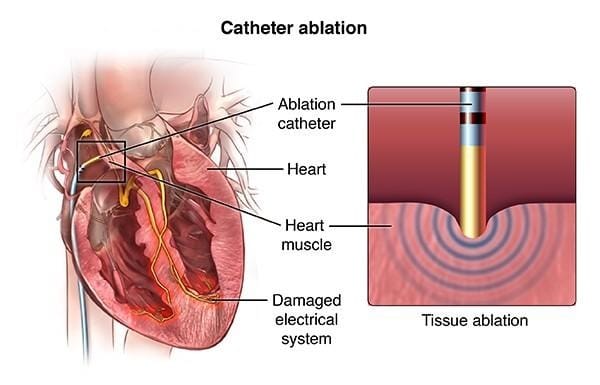
Catheter ablation: Sensors at the tips of catheters inserted through blood vessels to reach the heart uses heat or cold energy to scar out the tissues causing irregular heart beats. [5]