
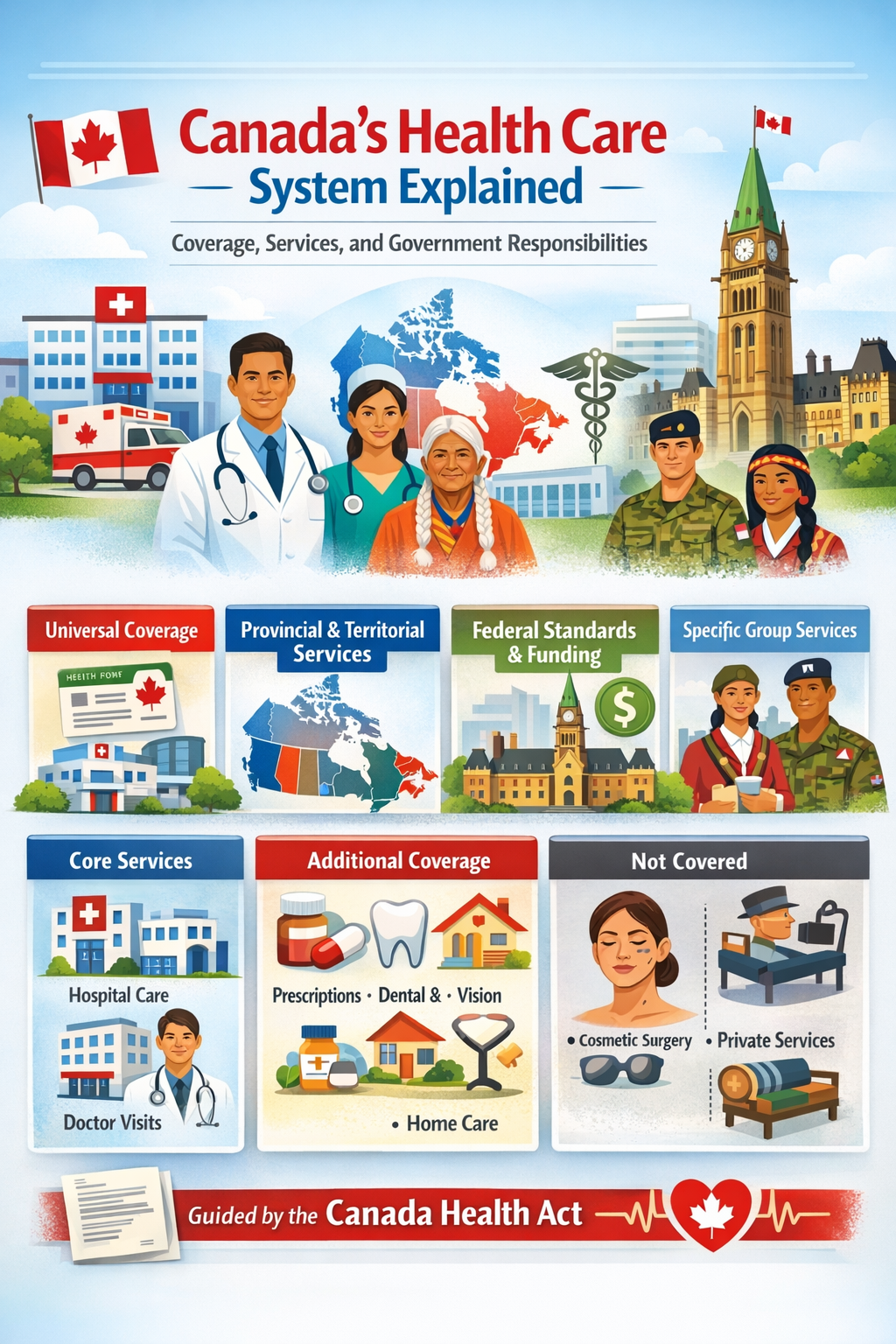
Canada’s Health Care System Explained: Coverage, Services, and Government Responsibilities
Canada’s health care system is recognized globally for its universal access and publicly funded structure. Designed to ensure fairness and accessibility, the system allows eligible residents to receive medically necessary health services without paying at the point of care.
This comprehensive guide explains how Canada’s health care system works, what services are covered, what is not included, and how responsibilities are shared between federal, provincial, and territorial governments. It also provides links to official resources, embedded behind descriptive anchor text for easy reading.
Overview of Canada’s Universal Health Care System
Canada has a universal health care system funded primarily through taxes. Eligible residents can apply for public health insurance that covers essential medical services. Health care is delivered by provincial and territorial governments rather than through a single national program.
Although each plan operates independently, all provincial and territorial plans must meet national standards for health care, ensuring residents receive consistent access to medically necessary care across the country.
Eligibility for Public Health Insurance in Canada
Eligibility rules are set by each province and territory. Generally, eligible individuals include Canadian citizens, permanent residents, and certain temporary residents with legal status. To qualify, individuals must make their home in the province or territory where they apply. Some regions impose a waiting period, during which private insurance may be recommended.
You can learn more about health insurance cards and coverage.
How Health Care Is Delivered in Canada
Health care delivery is a shared responsibility between federal and provincial or territorial governments.
Provincial and Territorial Responsibilities
Provinces and territories manage hospitals and clinics, fund and organize health services, regulate health professionals, and determine which services are medically necessary. They also issue health insurance cards.
If you have concerns about a physician, contact your provincial or territorial ministry of health or the appropriate College of Physicians and Surgeons.
Core Services Covered by Public Health Care
All provinces and territories must provide a standard set of medically necessary services.
Hospital Services
Insured hospital services include emergency care, inpatient and outpatient services, diagnostic testing, surgical procedures, and nursing care. More details are available on hospital services in Canada.
Physician Services
Visits to family doctors and specialists, diagnosis, treatment, and follow-ups are covered. Patients do not pay out of pocket for these services when presenting a valid health card.
Surgical Dental Services in Hospitals
Dental services performed in a hospital for medical reasons are covered. Routine dental care outside hospitals is not included.
Primary Health Care and First Contact Services
Primary health care focuses on prevention, diagnosis, treatment, and ongoing management. Services include family doctor visits, nurse practitioner care, preventive measures such as vaccinations, chronic disease management, and referrals. These services guide patients from initial diagnosis to long-term care.
Additional Health Coverage for Certain Populations
Some provinces provide additional benefits for seniors, children, and individuals receiving social assistance. Covered services may include prescription drugs, home care, vision care, dental care, and ambulance services. People not eligible for these programs may use private insurance or pay out of pocket.
Services Not Covered by Public Health Insurance
Services not insured by provincial or territorial plans include cosmetic procedures, medical certificates, private duty nursing, physician testimony in legal matters, and preferred hospital accommodation unless medically required. Private insurance is commonly used to cover these costs.
The Federal Government’s Role in Health Care
The federal government sets standards, provides funding, delivers services to specific populations, and supports public health initiatives.
National Standards Under the Canada Health Act
The Canada Health Act establishes five principles for provincial and territorial plans:
- Public Administration: Plans must be administered on a non-profit basis.
- Universality: All eligible residents must be covered.
- Portability: Coverage continues during travel or temporary relocation.
- Accessibility: Services must be based on medical need, not ability to pay.
- Comprehensiveness: All medically necessary hospital and physician services are insured.
Federal Health Care Funding
The federal government provides funding through the Canada Health Transfer and other fiscal transfers to support health system improvements.
Health Care Services for Specific Groups
Certain groups receive federally delivered health care services:
- Veterans (health services for veterans)
- Canadian Armed Forces members (health care for military members)
- Inmates (health services in federal penitentiaries)
- Refugees (interim health coverage for refugees)
- First Nations and Inuit (non-insured health benefits)
Other Federal Health Supports
Health Canada supports medical research, disease prevention, health promotion, and public safety initiatives. Canadians also benefit from health-related tax measures, including medical expense and disability tax credits.
Health Canada regulates food, pharmaceuticals, medical devices, cosmetics, pesticides, consumer products, and radiation-emitting devices.
More details are available on Health Canada’s main page.
Collaboration to Improve Health Care
Federal, provincial, and territorial governments work together to improve access to care, manage costs, and respond to emerging health challenges. Learn more about collaboration on working together to improve health care in Canada.
Conclusion
Canada’s health care system is built on universality, accessibility, and shared responsibility. Provinces and territories deliver care, while the federal government provides standards, funding, and public health support. Understanding the system helps residents make informed health decisions.
For official information and resources, consult Government of Canada Health Services.