
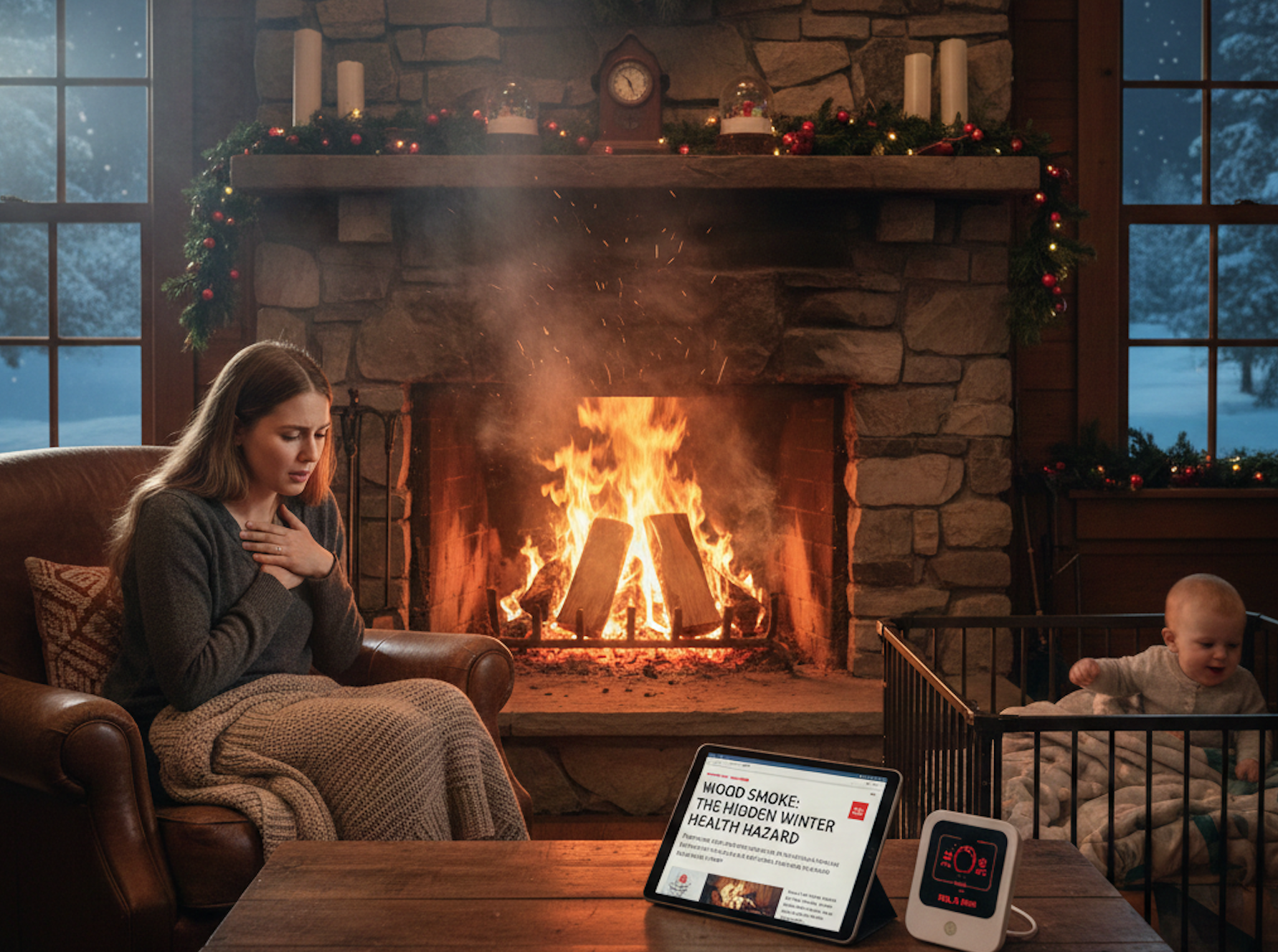
Burning Wood Indoors May Be a Bigger Health Risk Than You Think
Why wood smoke pollution is emerging as a major winter health concern
Lighting a fire in the fireplace is often associated with warmth, comfort, and tradition. During cold winter months, many households turn to wood stoves and fireplaces to create a cozy atmosphere or reduce heating costs. However, new scientific research suggests that burning wood indoors may pose a much greater health risk than most people realize, even for those who never light a fire themselves.
A recent study from Northwestern University highlights how residential wood burning contributes significantly to fine particle air pollution across the United States during winter. The findings challenge common assumptions about air quality, home heating, and who is most affected by pollution from wood smoke.
This article explores what the study found, why wood smoke is dangerous, how it affects urban and vulnerable communities, and what homeowners and policymakers can do to reduce health risks.
What Is PM2.5 and Why It Matters
Fine particulate matter, commonly known as PM2.5, refers to airborne particles that are 2.5 micrometers in diameter or smaller. These particles are extremely tiny, about 30 times smaller than the width of a human hair.
Because of their size, PM2.5 particles can bypass the body’s natural defenses. When inhaled, they travel deep into the lungs and can even enter the bloodstream. Once inside the body, they contribute to inflammation and damage that affects multiple organ systems.
Long-term exposure to PM2.5 has been strongly linked to serious health conditions, including:
- Heart disease and heart attacks
- Stroke
- Chronic obstructive pulmonary disease
- Asthma and worsened respiratory symptoms
- Lung cancer
- Premature death
According to public health experts, PM2.5 is one of the most dangerous forms of air pollution because people often cannot see or smell it, yet it has measurable effects on health even at relatively low concentrations.
Residential Wood Burning and Air Pollution
The Northwestern University study found that residential wood burning is responsible for approximately 22 percent of outdoor PM2.5 pollution during winter months in the United States. This is a striking figure, especially when compared with how few households actually rely on wood for heating.
Only about 2 percent of U.S. households use wood as their primary heat source. Despite this small percentage, emissions from fireplaces and wood stoves have an outsized impact on winter air quality.
Researchers estimate that pollution from residential wood burning is linked to around 8,600 premature deaths every year. These deaths are attributed to long-term exposure rather than short-term smoke inhalation.
The study was published on January 23, 2026, in the peer-reviewed journal Science Advances.
How Wood Smoke Travels Beyond the Home
One of the most surprising findings from the research is that urban areas experience some of the highest health impacts from wood smoke, even though wood burning is more common in suburban and rural neighborhoods.
Smoke released from residential chimneys does not remain localized. Instead, it can travel significant distances depending on weather conditions, wind patterns, and geography. In many cases, smoke from suburban homes drifts into nearby cities where population density is much higher.
This means that city residents who do not own fireplaces or wood stoves may still be exposed to elevated levels of PM2.5 simply by breathing outdoor air during winter.
Using detailed Environmental Protection Agency data and advanced computer models, the researchers tracked how fine particles move from neighborhood to neighborhood. Their analysis showed that residential wood burning is one of the largest contributors to wintertime fine particle pollution nationwide.
Disproportionate Impact on Communities of Color
The study also highlights a major environmental justice issue. Although people of color tend to burn less wood overall, they often experience higher exposure to pollution from wood smoke and suffer worse health outcomes as a result.
In the Chicago metropolitan area, for example, Black communities experienced more than 30 percent higher health impacts from residential wood burning compared to the citywide average.
Researchers attribute this disparity to a combination of factors, including historical housing segregation, proximity to pollution sources, and increased vulnerability to environmental stressors due to long-standing discriminatory policies.
Assistant professor Daniel Horton, a senior author of the study, emphasized that pollution does not respect neighborhood boundaries. When smoke travels into densely populated urban areas, more people are exposed, and communities that already face health inequities bear a greater burden.
Wood Smoke vs Wildfire Smoke
Wildfire smoke often dominates headlines during summer and fall, and for good reason. Wildfires can cause sudden and severe spikes in air pollution that affect millions of people.
However, the study suggests that everyday residential wood burning may be an underappreciated source of chronic air pollution. Unlike wildfires, which are episodic, wood burning occurs regularly throughout the winter heating season.
This repeated exposure contributes to sustained levels of PM2.5 that can quietly damage health over time. Because the pollution comes from familiar household activities, it is often overlooked or considered harmless.
Researchers note that while wildfire smoke is widely recognized as dangerous, the health consequences of burning wood for heat receive far less attention from the public and policymakers.
Indoor Air Quality Was Not Even Counted
Another important point is that the study focused only on outdoor air pollution. It did not account for indoor smoke exposure, which can be substantial for people who burn wood inside their homes.
Indoor exposure can occur through:
- Leaks from wood stoves and fireplaces
- Poor ventilation
- Opening fireplace doors
- Backdrafts caused by weather conditions
Indoor PM2.5 levels can become much higher than outdoor levels, especially in smaller or poorly ventilated homes. Children, older adults, and people with asthma or heart disease are particularly vulnerable to indoor air pollution.
This means the total health impact of residential wood burning is likely even greater than current estimates suggest.
Why Alternatives to Wood Burning Matter
Lead author Kyan Shlipak, an undergraduate mechanical engineering student at Northwestern University, emphasized that reducing residential wood burning could significantly improve air quality.
Using alternative heating methods, such as electric heat pumps or high-efficiency gas systems, can dramatically reduce emissions of fine particles. Modern heating technologies are not only cleaner but often more energy efficient over the long term.
In areas where wood burning remains common, upgrading to EPA-certified wood stoves and using properly seasoned wood can help reduce emissions. However, even cleaner wood stoves still produce PM2.5 and are not risk-free.
Local regulations, public education campaigns, and incentives for cleaner heating options can all play a role in reducing pollution from residential wood burning.
What Homeowners Can Do Now
While large-scale policy changes take time, individuals can take steps to protect their health and reduce pollution:
- Limit fireplace and wood stove use, especially on days with poor air quality
- Avoid burning wood for recreational purposes when cleaner heating options are available
- Use EPA-certified stoves and follow proper maintenance guidelines
- Never burn trash, treated wood, or damp wood
- Improve home ventilation and seal leaks around fireplaces
- Monitor local air quality alerts during winter
Even small reductions in wood burning can make a meaningful difference when adopted across communities.
The Bigger Picture on Winter Air Pollution
The findings from Northwestern University add to a growing body of evidence that everyday activities can have large and unexpected impacts on public health.
Residential wood burning may feel traditional and harmless, but its contribution to fine particle pollution is significant, widespread, and unequal in its effects. Urban residents, people of color, and those with existing health conditions are often the most affected.
Recognizing wood smoke as a serious air pollution source is an important step toward improving winter air quality and reducing preventable deaths.
Conclusion
Burning wood indoors may be far more harmful than many people realize. New research shows that residential wood burning is a major contributor to winter PM2.5 pollution in the United States and is linked to thousands of premature deaths each year.
The health risks extend beyond the households that burn wood, affecting entire communities, especially densely populated urban areas and marginalized groups. While fireplaces and wood stoves may feel comforting, their hidden health costs are becoming harder to ignore.
Reducing residential wood burning and transitioning to cleaner heating alternatives could have a substantial positive impact on public health, air quality, and environmental equity.
Sources
- Northwestern University, News Release, January 26, 2026
- Shlipak K et al. Science Advances, published January 23, 2026
- U.S. Environmental Protection Agency, PM2.5 Health Effects
Disclaimer
This article is for informational and educational purposes only. It does not provide medical advice, diagnosis, or treatment. Statistical data and population-level findings do not apply to individuals in the same way. Health risks vary based on personal factors and environmental conditions. Always consult a qualified healthcare professional for personalized medical guidance.