
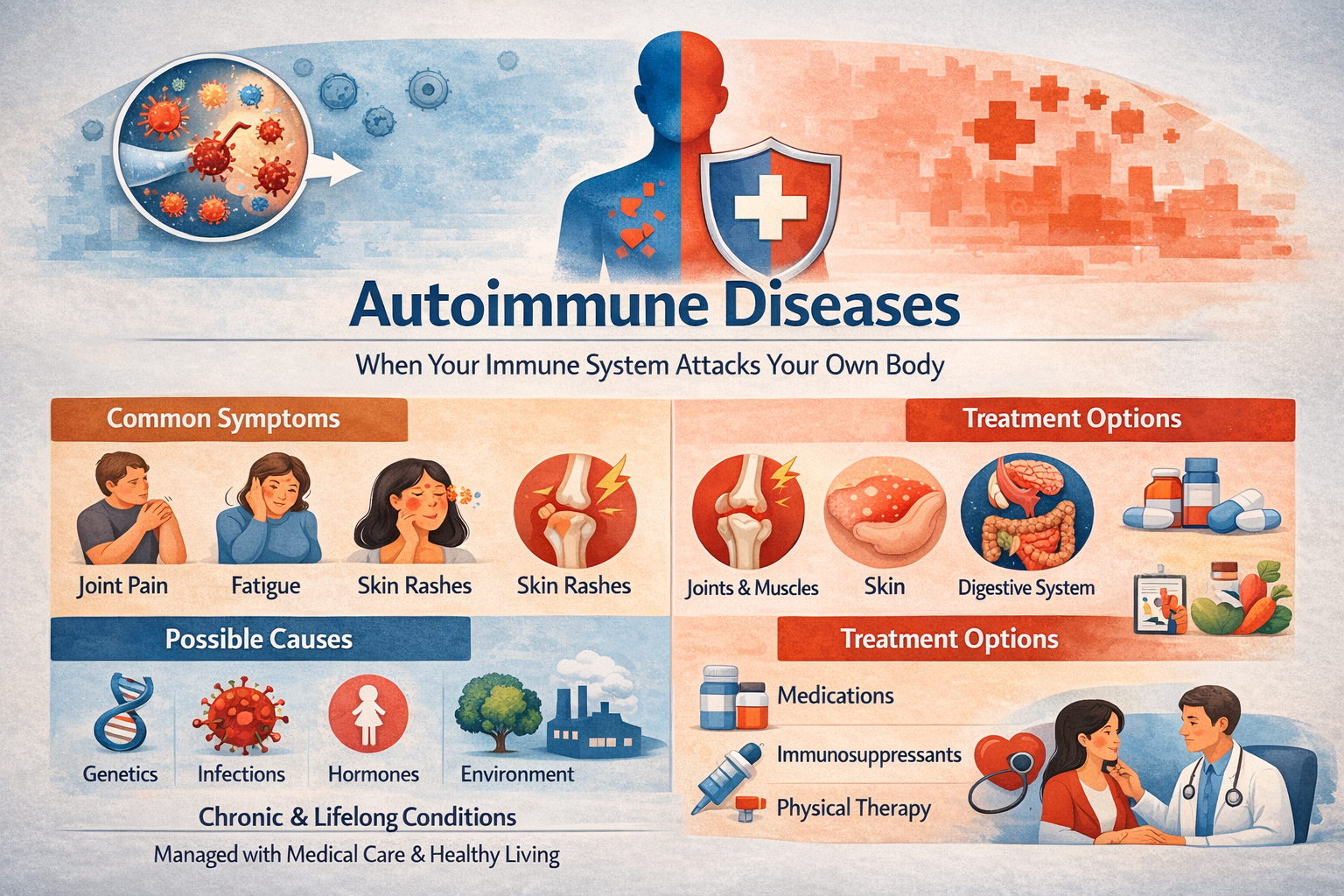
Autoimmune Diseases Explained: Symptoms, Causes, Diagnosis, and Long-Term Management
Autoimmune diseases affect millions of people worldwide and can impact nearly every system in the human body. These chronic conditions occur when the immune system, which is designed to protect the body from harmful invaders like bacteria and viruses, mistakenly attacks healthy tissues. While there is currently no cure for autoimmune diseases, modern medicine offers many ways to manage symptoms and improve quality of life.
Understanding autoimmune diseases is essential for early diagnosis, effective treatment, and long-term care. This comprehensive guide explains what autoimmune diseases are, how common they are, their symptoms and causes, how they are diagnosed, and how people can live well while managing them.
What Are Autoimmune Diseases?
Autoimmune diseases are medical conditions in which the immune system malfunctions and attacks the body instead of defending it. Healthcare providers may also refer to these conditions as autoimmune disorders.
Under normal circumstances, the immune system acts like a security system. It identifies harmful substances such as viruses, bacteria, and toxins and sends white blood cells to destroy them. In people with autoimmune diseases, this system becomes overactive and confused. Instead of targeting threats, it attacks healthy cells, tissues, or organs.
Autoimmune diseases are considered chronic conditions. This means they typically last a lifetime and require ongoing management. Symptoms may fluctuate over time, with periods of remission followed by flare-ups when symptoms become more noticeable or severe.
How Common Are Autoimmune Diseases?
Autoimmune diseases are more common than many people realize. Experts estimate that approximately 1 in 15 people in the United States has an autoimmune disease. Because there are more than 100 known autoimmune conditions, they collectively affect a significant portion of the population.
These diseases can occur at any age, though many are diagnosed in adulthood. Some autoimmune diseases are more common in women than men, and having one autoimmune condition can increase the risk of developing another.
Types of Autoimmune Diseases
Autoimmune diseases can affect nearly any part of the body, depending on where the immune system attacks. Below are some major categories and examples.
Autoimmune Diseases Affecting Joints and Muscles
- Rheumatoid arthritis
- Lupus
- Myositis
These conditions often cause joint pain, stiffness, swelling, muscle weakness, and fatigue.
Autoimmune Diseases Affecting Skin and Blood Vessels
- Psoriasis
- Psoriatic arthritis
- Sjögren’s syndrome
- Dermatomyositis
- Scleroderma
- Vasculitis
- Vitiligo
Skin-related autoimmune diseases may cause rashes, discoloration, dryness, inflammation, or changes in blood vessels.
Autoimmune Diseases Affecting the Digestive System
- Crohn’s disease
- Ulcerative colitis
- Celiac disease
- Autoimmune gastritis
Digestive autoimmune diseases often lead to abdominal pain, diarrhea, malabsorption of nutrients, and weight changes.
Autoimmune Diseases Affecting the Endocrine System
- Type 1 diabetes
- Hashimoto’s thyroiditis
- Graves’ disease
- Addison’s disease
These conditions interfere with hormone production and regulation, affecting metabolism, blood sugar levels, and energy balance.
Autoimmune Diseases Affecting the Nervous System
- Multiple sclerosis
- Myasthenia gravis
- Guillain-Barré syndrome
- Chronic inflammatory demyelinating polyneuropathy
Neurological autoimmune diseases can impact movement, sensation, vision, and coordination.
Symptoms of Autoimmune Diseases
Autoimmune diseases cause a wide range of symptoms, depending on which tissues or organs are affected. Symptoms may develop gradually or appear suddenly.
Common Symptoms Include:
- Fatigue
- Joint pain and stiffness
- Muscle weakness
- Swelling
- Skin rashes or discoloration
- Digestive issues
- Vision problems
- Numbness or tingling
- Fever or feeling unwell
Many autoimmune diseases cause inflammation, which may lead to redness, warmth, pain, and swelling. Symptoms often come and go, with periods of flare-ups followed by times when symptoms are less noticeable.
Listening to your body is essential. New or unexplained symptoms should always be discussed with a healthcare provider, especially if they persist or worsen.
What Causes Autoimmune Diseases?
The exact cause of autoimmune diseases is still unknown. Researchers understand that the immune system mistakenly attacking healthy tissue leads to the symptoms people experience, but what triggers this immune malfunction remains under study.
Autoimmune diseases are believed to result from a combination of genetic, environmental, and hormonal factors rather than a single cause.
Risk Factors for Autoimmune Diseases
Certain factors may increase the likelihood of developing an autoimmune disease.
Common Risk Factors Include:
- Being female, as women are more likely to develop autoimmune conditions
- Family history of autoimmune diseases
- Having one autoimmune disease already
- Viral infections such as COVID-19 or Epstein-Barr virus
- Exposure to environmental chemicals
- Smoking or tobacco use
These factors do not guarantee that someone will develop an autoimmune disease, but they may increase overall risk.
How Are Autoimmune Diseases Diagnosed?
Diagnosing autoimmune diseases can be challenging because many symptoms overlap with other conditions. Healthcare providers use a combination of methods to identify autoimmune disorders.
Diagnostic Steps May Include:
- Physical examination
- Review of medical history
- Discussion of symptoms and family history
- Blood tests to detect immune markers
- Imaging tests such as X-rays, MRI, CT scans, or ultrasound
Autoimmune diseases are often diagnosed through a process called differential diagnosis. This involves ruling out other conditions until the correct diagnosis is identified.
Early diagnosis can help prevent complications and allow treatment to begin sooner.
Treatment Options for Autoimmune Diseases
There is currently no cure for autoimmune diseases, but many treatments are available to manage symptoms and reduce immune system activity.
Common Treatments Include:
- Pain relievers
- Anti-inflammatory medications such as NSAIDs or corticosteroids
- Immunosuppressant drugs
- Physical therapy
- Occupational therapy
- Intravenous immunoglobulin therapy
Treatment plans are highly individualized. For example, people with Type 1 diabetes require insulin therapy, while those with celiac disease must follow a strict gluten-free diet.
Outlook and Prognosis
Autoimmune diseases are lifelong conditions, but many people are able to manage their symptoms effectively and maintain a good quality of life. Some autoimmune diseases may enter remission, meaning symptoms lessen or disappear for a period of time.
Remission is not a cure, but it can significantly reduce the impact of the disease on daily life.
The long-term outlook depends on the specific condition, its severity, and how well it responds to treatment.
Can Autoimmune Diseases Be Prevented?
Currently, there is no known way to prevent autoimmune diseases. Since the exact causes are not fully understood, prevention strategies are limited.
However, maintaining a healthy lifestyle, avoiding smoking, managing stress, and seeking medical care for infections may support overall immune health.
Living With an Autoimmune Disease
Living with an autoimmune disease can be physically and emotionally challenging. Daily routines may need to be adjusted based on symptoms, energy levels, and treatment requirements.
Self-Care Tips Include:
- Following your treatment plan
- Attending regular medical appointments
- Adjusting physical activity as needed
- Eating a balanced diet appropriate for your condition
- Asking for emotional and social support
Open communication with healthcare providers is essential. If symptoms worsen or treatments stop working effectively, adjustments may be necessary.
When to Seek Medical Attention
You should contact your healthcare provider if you experience new or worsening symptoms that interfere with daily activities.
Seek emergency care if you experience:
- Difficulty breathing
- Severe chest pain
- Sudden weakness or inability to move
- Severe dizziness
- Intense or sudden headaches
Prompt medical care can be life-saving in severe cases.
Emotional Impact and Support
Receiving a diagnosis of an autoimmune disease can feel overwhelming. It is normal to experience fear, frustration, or sadness. Many people find comfort in support groups, counseling, or connecting with others who share similar experiences.
Autoimmune diseases do not define who you are. They are one part of your health journey, and with the right care and support, many people lead fulfilling lives.
Frequently Asked Questions to Ask Your Healthcare Provider
- Which tests do I need?
- Is this condition genetic?
- What treatments are best for my symptoms?
- How will this condition affect my daily life?
Being informed and proactive can help you feel more in control of your health.
Conclusion
Autoimmune diseases are complex, chronic conditions that affect millions of people worldwide. While there is no cure, advancements in medical research and treatment options allow many individuals to manage their symptoms effectively.
Early diagnosis, personalized treatment, and ongoing care play a crucial role in improving outcomes. If you suspect an autoimmune condition or have unexplained symptoms, consult a healthcare provider promptly.
Knowledge, support, and medical guidance can empower individuals to live well with autoimmune diseases.
Disclaimer
This blog is for informational and educational purposes only and does not constitute medical advice. It is not intended to diagnose, treat, cure, or prevent any disease. Always consult a qualified healthcare provider regarding any medical condition, symptoms, or treatment decisions. Never disregard professional medical advice or delay seeking care based on information found in this article.