
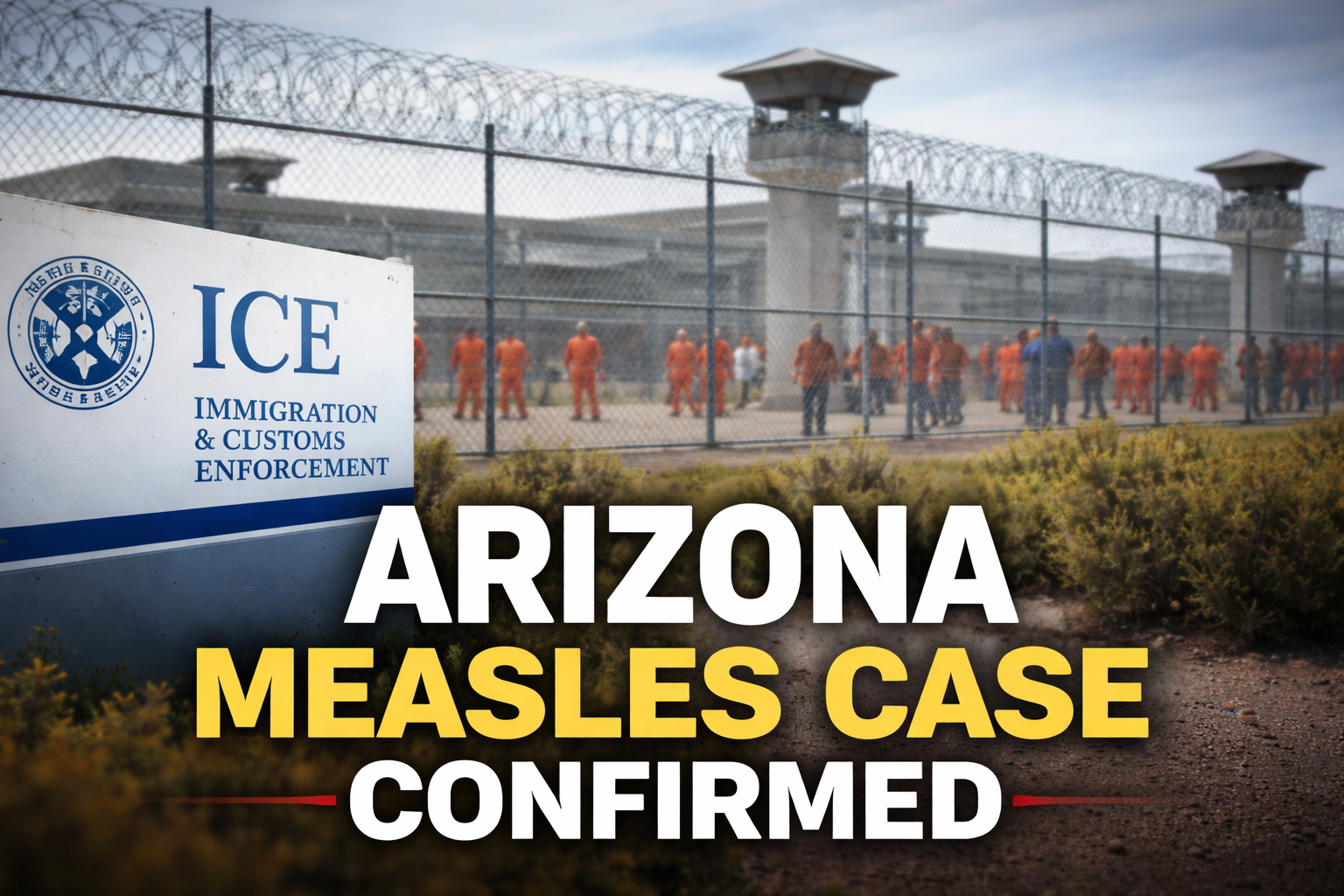
Arizona Confirms Measles Case in ICE Custody as Statewide Numbers Continue to Rise
Arizona health officials have confirmed a measles case involving a person held at an Immigration and Customs Enforcement detention facility, adding to growing concerns about the resurgence of this highly contagious disease. The case, reported in early February 2026, highlights ongoing public health challenges related to measles outbreaks across the United States. Once declared eliminated in the country, measles is now reappearing at alarming rates, driven largely by declining vaccination coverage and increased population movement.
This latest development in Arizona has prompted swift response efforts from state and federal agencies, including quarantine measures within the detention facility and coordination with local public health departments. While officials say the overall risk to the general community remains low, the situation underscores broader national trends that have public health experts increasingly concerned.
Measles Case Confirmed at Arizona ICE Detention Facility
According to the US Department of Homeland Security, the Arizona Department of Health Services confirmed an active measles infection in a Mexican national detained at the Florence Detention Center in Pinal County. The Florence facility is operated by CoreCivic, a private company contracted to provide detention and medical services for individuals in ICE custody.
Once the infection was identified, ICE Health Services Corp initiated immediate containment protocols. These actions included halting all movement within the facility and quarantining individuals who may have come into contact with the infected detainee. Such measures are standard practice when dealing with airborne infectious diseases like measles, which can spread rapidly in congregate settings.
Additional Measles Cases Identified in Pinal County
Following the initial case at the detention center, two additional measles cases were confirmed in Pinal County. Local officials emphasized that they are working closely with state health authorities to manage the situation.
Jassmin Castro, spokesperson for the Pinal County Public Health Services District, stated that three confirmed cases are currently under investigation and that public health teams are following established protocols. These include contact tracing, isolation of confirmed cases, and monitoring of potentially exposed individuals.
At present, county officials maintain that the risk to the broader community remains low. However, they continue to urge residents to verify their vaccination status, particularly those who may be at higher risk of exposure.
Role of CoreCivic and Facility Health Measures
CoreCivic, the private operator of the Florence Detention Center, released a statement emphasizing its commitment to detainee health and safety. The company reports that individuals in ICE custody have daily access to medical and mental health services, as well as around the clock emergency care.
Brian Todd, a spokesperson for CoreCivic, noted that the organization works closely with ICE and public health officials to ensure appropriate care and containment during infectious disease events. Detention centers present unique challenges during outbreaks due to close living quarters, making rapid intervention essential to prevent further spread.
A History of Measles in Arizona Detention Centers
This is not the first time Arizona has dealt with measles outbreaks linked to ICE detention facilities. In 2016, a significant outbreak occurred in Pinal County, resulting in more than 30 measles cases among detainees and nine cases among staff members. That outbreak required extensive public health intervention and highlighted vulnerabilities in congregate living environments.
The recurrence of measles in similar settings raises questions about vaccination coverage, screening procedures, and preventive strategies within detention facilities. Public health experts stress that high vaccination rates are critical in preventing outbreaks, particularly in environments where social distancing is difficult.
Statewide Measles Numbers Continue to Increase
As of late January 2026, Arizona health officials reported at least 24 measles cases statewide. These cases are spread across multiple counties, including Pinal, Mohave, Maricopa, and Pima.
Dr Joel Terriquez, medical director for Arizona’s Bureau of Infectious Diseases and Immunizations, explained that a significant portion of the cases are linked to an ongoing outbreak in Mohave County that began last year. Additional cases have appeared in urban areas such as Maricopa County, underscoring that measles transmission is not limited to rural or isolated communities.
Updated statewide case counts are expected to be released soon, and officials continue to monitor the situation closely.
National Measles Trends Raise Alarm
Arizona’s situation reflects a troubling national pattern. In 2025, the United States recorded 2,267 measles cases, the highest number since the disease was declared eliminated in 2000. Prior to 2025, the country averaged approximately 180 cases per year.
By early 2026, at least 588 measles infections had already been confirmed nationwide, suggesting that this year could rival or surpass previous records if current trends continue. Health experts attribute the surge to several factors, including decreased childhood vaccination rates, misinformation about vaccine safety, and increased international travel.
Why Measles Is So Dangerous
Measles is one of the most contagious viral diseases known. It spreads through respiratory droplets and can remain airborne for up to two hours after an infected person leaves an area. Individuals who are not vaccinated have a very high risk of infection if exposed.
Symptoms typically begin with fever, cough, runny nose, and red eyes, followed by a characteristic rash. While many people recover, measles can cause serious complications, particularly in young children, pregnant individuals, and those with weakened immune systems. Complications may include pneumonia, encephalitis, and in severe cases, death.
Vaccination remains the most effective way to prevent measles. The measles, mumps, and rubella vaccine is highly effective, providing long term protection for most individuals who receive the recommended doses.
Public Health Response and Prevention Efforts
Arizona public health agencies continue to emphasize vaccination as the cornerstone of measles prevention. Officials encourage residents to review their immunization records and consult healthcare providers if they are unsure about their vaccination status.
In outbreak situations, health departments may recommend additional measures such as post exposure vaccination, immune globulin for high risk individuals, and temporary exclusion from school or work for those who are unvaccinated and exposed.
The current response in Pinal County demonstrates the importance of rapid identification, isolation, and communication in limiting the spread of measles. Coordination between local, state, and federal agencies is essential, particularly when cases involve detention facilities or other high density settings.
Broader Implications for Public Health Policy
The resurgence of measles has reignited debates about vaccination policies, public health funding, and outbreak preparedness. Experts warn that continued declines in vaccination rates could lead to the loss of the nation’s measles elimination status, a milestone achieved more than two decades ago.
Healthcare providers, policymakers, and community leaders play a critical role in rebuilding public trust in vaccines and ensuring access to immunization services. Clear communication, evidence based guidance, and proactive outreach are key components of effective disease prevention strategies.
Conclusion
The confirmed measles case in an Arizona ICE detention facility serves as a reminder that measles remains a serious public health threat in the United States. While officials report that the risk to the general public is currently low, rising case numbers statewide and nationwide highlight the importance of vigilance.
Vaccination, rapid response, and coordinated public health efforts are essential to preventing further spread. As Arizona and other states confront increasing measles cases, the situation underscores the need for sustained investment in immunization programs and infectious disease surveillance.
Sources
CNN, January 28, 2026
Arizona Department of Health Services
US Centers for Disease Control and Prevention
Disclaimer
This article is for informational and educational purposes only and does not constitute medical advice, diagnosis, or treatment. Statistical data and public health information reflect general trends and may not apply to individual circumstances. Always consult a qualified healthcare professional for personalized medical guidance.