
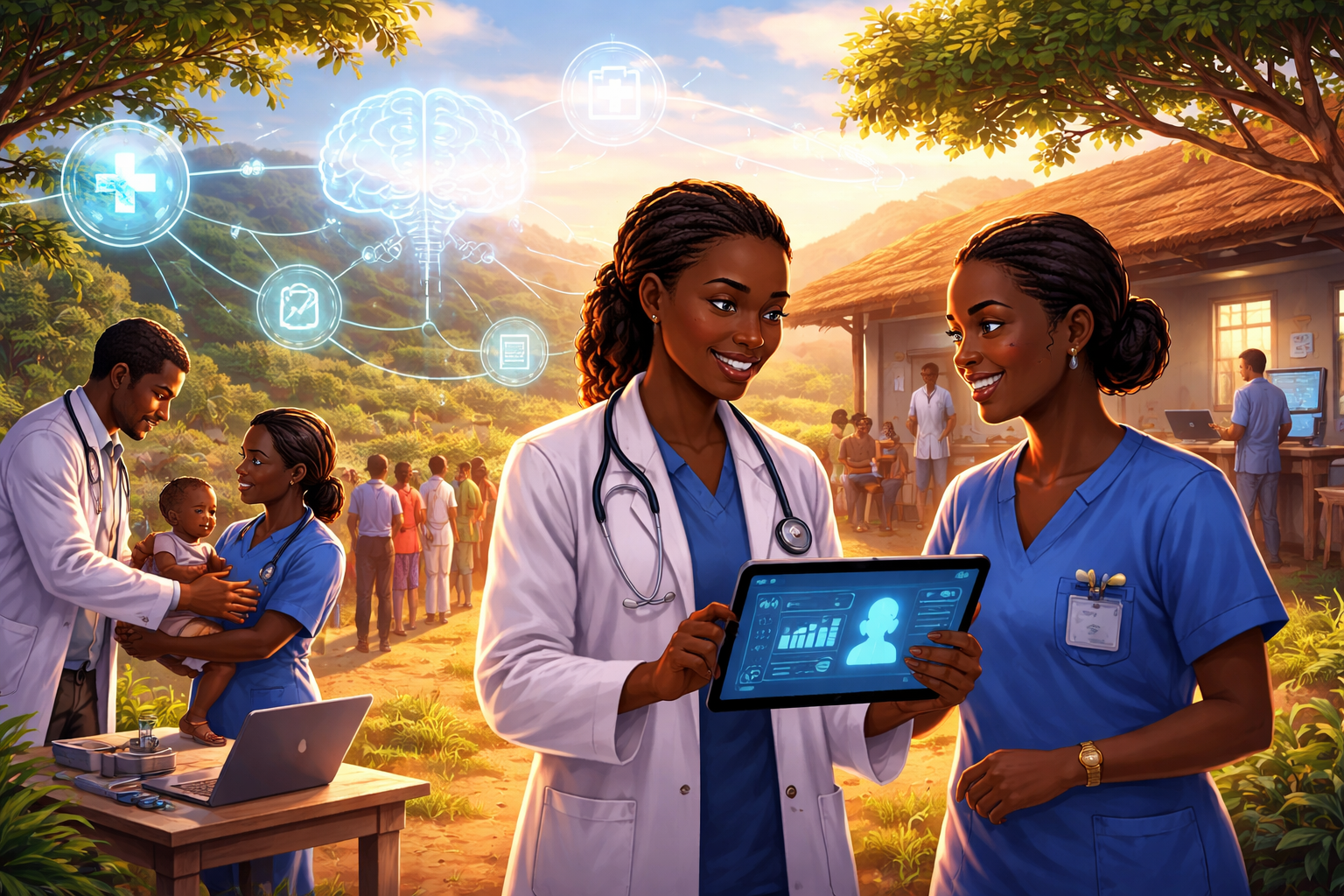
AI and Global Health: How the Gates Foundation and OpenAI Are Partnering to Transform Healthcare in Africa
Artificial intelligence is rapidly reshaping industries around the world, and healthcare is no exception. While much of the discussion around AI in medicine focuses on advanced hospitals in developed countries, a new global initiative is shifting attention toward low and middle income regions. A partnership between the Bill and Melinda Gates Foundation and OpenAI aims to apply artificial intelligence to strengthen healthcare systems across African countries.
This collaboration highlights how AI can support doctors, nurses, and clinics that operate with limited resources. By focusing on efficiency, accessibility, and decision support, the initiative seeks to improve healthcare delivery for millions of people while addressing long-standing structural challenges.
This article explores the partnership, the healthcare challenges it addresses, how AI can help, and what this development means for the future of global health.
Healthcare Challenges in African Countries
Healthcare systems across Africa face multiple interconnected challenges. While progress has been made over the past two decades, many regions still struggle to deliver consistent and high quality care.
Shortage of Healthcare Workers
One of the most critical issues is the shortage of trained healthcare professionals. Many African countries have far fewer doctors and nurses per capita compared to global standards. This leads to overcrowded clinics, long waiting times, and limited patient follow-up.
Healthcare workers often manage large patient volumes while handling extensive paperwork. This administrative burden reduces the time available for direct patient care and increases burnout among medical staff.
Funding Constraints and Aid Reductions
Another major challenge is declining international health funding. Recent reductions in global aid budgets have disrupted essential health programs. According to global health reports, these funding cuts have contributed to setbacks in child health outcomes and disease prevention efforts.
With limited financial resources, healthcare systems must find new ways to improve efficiency and outcomes without significantly increasing costs.
Access Gaps Between Urban and Rural Areas
Urban centers often have better healthcare infrastructure than rural communities. Many rural clinics lack access to specialists, advanced diagnostics, and reliable digital systems. Patients in remote areas may need to travel long distances to receive proper care, which delays treatment and worsens outcomes.
These challenges create an urgent need for scalable and cost-effective solutions.
The Gates Foundation and OpenAI Partnership
The partnership between the Gates Foundation and OpenAI represents a strategic effort to apply artificial intelligence to real-world healthcare problems. The initiative involves a fifty-million-dollar commitment aimed at supporting one thousand primary healthcare clinics across Africa by 2028.
The program begins in Rwanda, where a digital health and AI innovation hub has already been established. Rwanda has invested heavily in technology-driven development and offers a supportive environment for testing new healthcare tools. The initiative is expected to expand to other African countries over time.
The core objective is not to replace healthcare workers but to support them. AI tools are designed to act as assistants that help clinicians make better decisions, manage information more efficiently, and deliver more consistent care.
How Artificial Intelligence Can Improve Healthcare Delivery
Artificial intelligence can support healthcare systems in several practical ways when implemented responsibly and locally.
Reducing Administrative Burden
Healthcare workers spend a large portion of their time on documentation, record management, and reporting. AI-powered systems can automate data entry, summarize patient histories, and organize medical records.
By reducing paperwork, clinicians can focus more on diagnosing patients, providing treatment, and offering personalized care. This improves productivity and job satisfaction while enhancing patient experience.
Supporting Clinical Decision Making
AI tools can assist healthcare workers by analyzing patient data and highlighting potential risks. For example, AI systems can flag warning signs, suggest diagnostic possibilities, and recommend treatment pathways based on established medical guidelines.
These tools are especially valuable in clinics where highly specialized expertise may not be available. AI does not replace human judgment but provides additional insights to support better decision-making.
Improving Patient Follow-Up and Continuity of Care
In many clinics, patient records are fragmented or incomplete. This makes it difficult to track chronic conditions, manage follow-up visits, and ensure treatment adherence.
AI systems can help track patient histories, generate reminders for follow-up appointments, and identify patients who may need additional attention. This is particularly important for maternal health, child healthcare, and chronic disease management.
Overcoming Language and Literacy Barriers
Africa is home to a vast number of languages and cultural contexts. Many digital health tools are not accessible to patients or providers who do not speak global languages.
Localized AI solutions can be designed to understand and respond in regional languages. Voice-based tools can also support patients with limited literacy, improving access to healthcare information and guidance.
Extending Care to Remote Areas
AI tools can help bridge the gap between urban and rural healthcare. Primary care providers in remote clinics can use AI-supported systems to receive guidance, triage patients, and determine when referrals are necessary.
When combined with mobile technology, AI can bring expert-level support closer to communities that previously lacked access to advanced care.
The Broader Impact of AI on Global Health
The Gates Foundation and OpenAI initiative reflect a broader trend in global health innovation. Artificial intelligence is increasingly being used to improve disease surveillance, optimize supply chains, and support public health planning.
AI can analyze large datasets to detect patterns, predict outbreaks, and allocate resources more effectively. In low-resource settings, even small improvements in efficiency can have a significant impact on population health.
In addition to clinical care, AI can support training and education for healthcare workers. Digital tools can help standardize care protocols and provide continuous learning opportunities.
Key Challenges and Ethical Considerations
While the potential benefits of AI in healthcare are substantial, there are important challenges that must be addressed.
Data Privacy and Security
Healthcare data is highly sensitive. Strong data protection measures are essential to prevent misuse or unauthorized access. Countries involved in AI health initiatives must establish clear data governance frameworks to protect patient privacy and build trust.
Bias and Model Accuracy
AI systems rely on data for training. If training data does not reflect local populations, disease patterns, and healthcare conditions, AI outputs may be inaccurate or biased.
Ensuring that AI models are trained on diverse and representative data is critical for safe and effective deployment.
Infrastructure Limitations
Reliable electricity, internet connectivity, and digital devices are not universally available across all regions. Without adequate infrastructure, AI tools may not function as intended.
This highlights the importance of integrating AI initiatives with broader investments in digital and healthcare infrastructure.
Trust and Adoption by Healthcare Workers
For AI tools to succeed, healthcare workers must trust and understand them. Proper training, transparency, and user-friendly design are essential to encourage adoption and effective use.
AI systems should be seen as supportive tools rather than replacements for human expertise.
Long-Term Sustainability and Local Ownership
Sustainable AI solutions require strong local involvement. Governments, institutions, and local technology ecosystems must play a central role in development, deployment, and governance.
Building local AI talent and innovation capacity helps ensure that solutions remain relevant and adaptable over time.
The Road Ahead for AI-Powered Healthcare in Africa
The success of the Gates Foundation and OpenAI initiative will depend on careful implementation, ongoing evaluation, and meaningful collaboration with local stakeholders.
Pilot programs will provide valuable insights into what works and what needs adjustment. Measuring health outcomes, efficiency gains, and user satisfaction will be critical for scaling the initiative responsibly.
If successful, the program could serve as a global model for how advanced technology can support healthcare systems in resource-constrained environments.
Conclusion
The partnership between the Gates Foundation and OpenAI represents a significant step forward in the use of artificial intelligence for global health. By focusing on real-world challenges faced by healthcare workers and patients in Africa, the initiative moves beyond theory into practical application.
Artificial intelligence alone cannot solve systemic healthcare challenges. However, when combined with human expertise, strong governance, and local collaboration, it can become a powerful tool for improving access, quality, and efficiency.
As healthcare systems worldwide face growing pressure, initiatives like this demonstrate how technology can be used not just for innovation but for impact and equity.