
Why is Vitamin D important?
Vitamin D is an essential pre-requisite nutrient in the body for enhancing calcium absorption. It not only helps for healthy bones but also regulates many other cellular functions in the body. Its anti-inflammatory, antioxidant, and neuroprotective properties support immune health, muscle function, and brain cell activity.
How much vitamin D intake is required?
(https://ods.od.nih.gov/factsheets/VitaminD-Consumer/)
What are the sources of vitamin D?
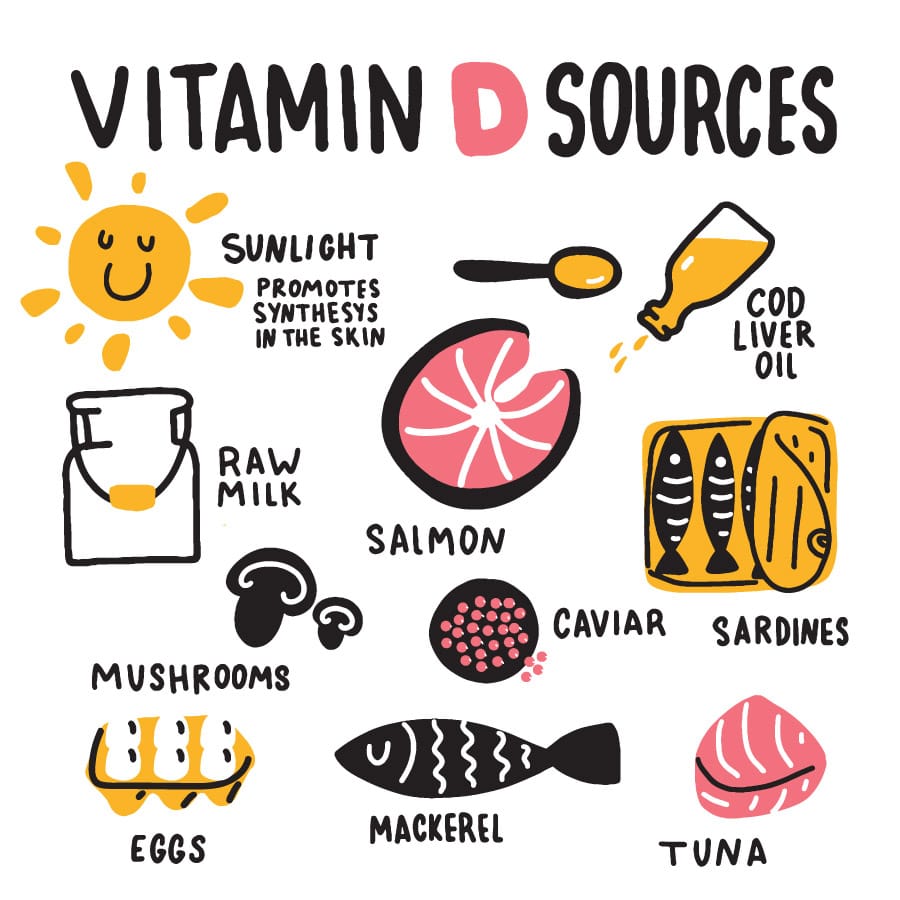
Vitamin D isn't naturally found in many foods, but you can get it from fortified milk, fortified cereal, and fatty fish such as salmon, mackerel and sardines. Your body also makes vitamin D when direct sunlight converts a chemical in your skin into an active form of the vitamin (calciferol). (https://www.mayoclinic.org/drugs-supplements-vitamin-d/art-20363792)
What are the symptoms of vitamin D deficiency?
Severe lack of vitamin D in children causes rickets. Symptoms of rickets include:
- Incorrect growth patterns due to bowed or bent bones
- Muscle weakness
- Bone pain
- Joint deformities
- Children with a mild vitamin deficiency may just have weak, sore and/or painful muscles
Signs and symptoms of vitamin D deficiency in adults include:
- Fatigue
- Bone pain
- Muscle weakness, muscle aches or muscle cramps
- Mood changes like depression
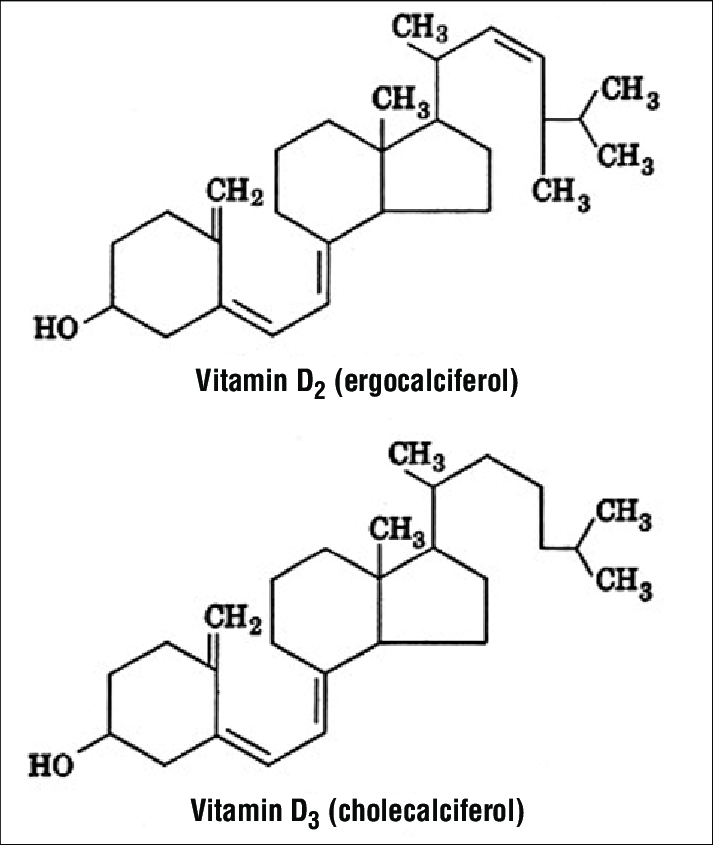
Vitamin D comes in two forms: D2 and D3. D2 (ergocalciferol) comes from plants. D3 (cholecalciferol) comes from animals. You need a prescription to get D2. D3, however, is available over the counter. Your body more easily absorbs D3 than D2.
Who are at risk of getting vitamin D deficiency?
- Age: Your skin's ability to make vitamin D decreases with age, so people over the age of 65 years are especially at risk for vitamin D deficiency. Infants are also at risk of not receiving enough vitamin D. This is especially true for infants who are only fed breast milk, as it contains only a small amount of vitamin D.
- Skin colour: It’s more difficult for dark-coloured skin to make vitamin D from sunlight than light-coloured skin, so people with darker skin are at a higher risk for vitamin D deficiency.
- Mobility: People who are homebound or rarely go outside (for example, people in nursing homes and other facilities) aren’t able to use sun exposure as a source of vitamin D. Thus, they’re at a higher risk for vitamin D deficiency.
(https://my.clevelandclinic.org/health/diseases/15050-vitamin-d-vitamin-d-deficiency)
How does exercise/physical activity help?
Exercise may influence 25(OH)D levels in the circulation by regulating either the vitamin D metabolites stored in tissues or the utilization by target tissues. The effects of exercise on 25(OH)D levels in the circulation may be dependent on many factors, such as the vitamin D nutritional status, exercise type and intensity, and gender. (https://pmc.ncbi.nlm.nih.gov/articles/PMC9268447/)
Close et al. found a significantly positive correlation between vitamin D3 supplementation (5000 IU per day for 8-weeks) and the improvement of musculoskeletal performance, especially in vertical jump height and 10-m sprint times.
A research review by Wicinski et al done in 2019, shows a positive correlation between sports performance parameters among athletes and their serum vitamin D levels. (https://pmc.ncbi.nlm.nih.gov/articles/PMC6893541/pdf/nutrients-11-02826.pdf)