
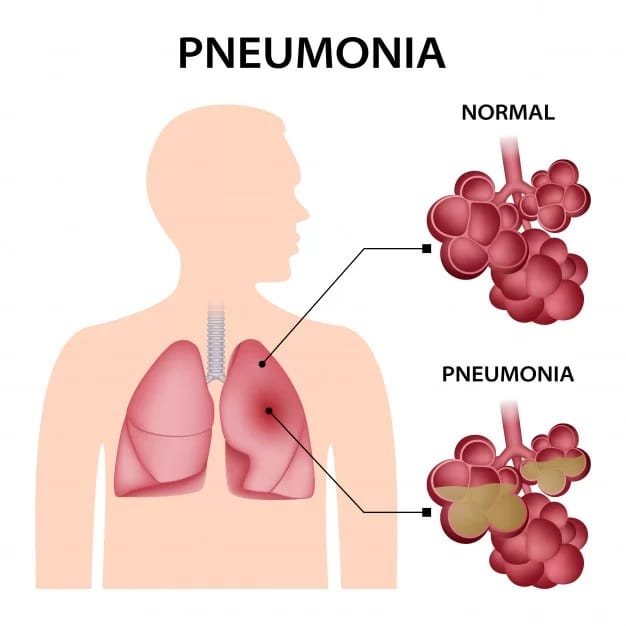
PNEUMONIA and Symptoms
Pneumonia is an infection that inflames the air sacs in one or both lungs caused by bacteria, viruses or fungi. The air sacs may fill with fluid or pus (purulent material), causing cough with phlegm or pus, fever, chills, and difficulty breathing. (https://www.mayoclinic.org/diseases-conditions/pneumonia/symptoms-causes/syc-20354204)
- Lobar pneumonia affects one or more sections (lobes) of the lungs.
- Bronchial pneumonia (also known as bronchopneumonia) affects patches throughout both lungs.
Pneumonia can range in seriousness from mild to life-threatening. It is most serious for infants and young children, people older than age 65, and people with health problems or weakened immune systems.
What are the different causes of pneumonia?
There are more than 30 different causes of pneumonia, and they’re grouped by the cause such as:
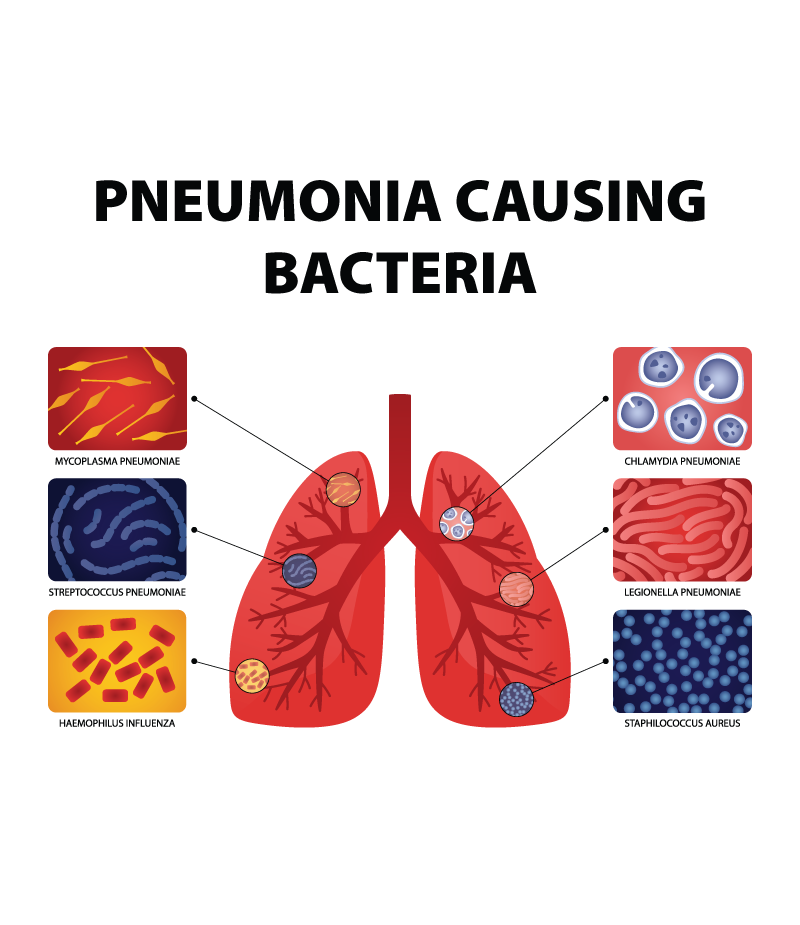
- Bacterial pneumonia: The most common bacterial pneumonia is caused by Streptococcus pneumoniae. It affects infants, elderly, and immunocompromised individuals more than relatively healthy adults. The risk further increases with alcohol abuse, smoking, having a pre-existing respiratory tract infection, or diabetes.
- Viral pneumonia: This type is caused by various viruses, including the flu (influenza), and is responsible for about one-third of all pneumonia cases. You may be more likely to get bacterial pneumonia if you have viral pneumonia.
- Mycoplasma pneumonia: This is also referred to as “atypical pneumonia”. It is caused by the bacterium Mycoplasma pneumonia. It generally causes a mild, widespread pneumonia that affects all age groups.
- Other pneumoniae: There are other less common pneumonias that may be caused by other infections including fungi. (https://www.hopkinsmedicine.org/health/conditions-and-diseases/pneumonia)
Some of the types of pneumonia are:
- Community-acquired pneumonia
- Hospital-acquired pneumonia
- Healthcare-associated pneumonia
- Ventilator-associated pneumonia
- Aspiration pneumonia (https://my.clevelandclinic.org/health/diseases/4471-pneumonia)
What are the symptoms of bacterial pneumonia?
- High fever (up to 105 F or 40.55 C).
- Cough, with yellow, green or bloody mucus.
- Tiredness (fatigue).
- Rapid breathing.
- Shortness of breath.
- Rapid heart rate.
- Sweating or chills.
- Chest pain and/or abdominal pain, especially with coughing or deep breathing.
- Loss of appetite.
- Bluish skin, lips or nails (cyanosis).
- Confusion or altered mental state.
What are the symptoms of viral pneumonia?
- Dry cough
- Headache
- Muscle pain
- Extreme tiredness or weakness
What are the symptoms of pneumonia in children vs older adults?
(https://my.clevelandclinic.org/health/diseases/4471-pneumonia)