
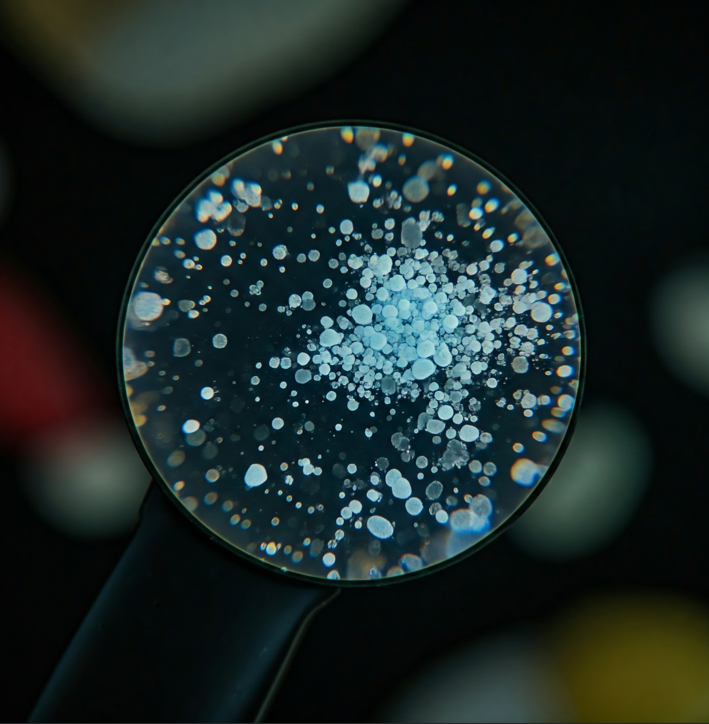
Microplastics found inside the body – are they a health hazard?
Microplastics are plastic particles smaller than 5 millimeters, defined by the National Oceanic and atmospheric administration. They have been detected in human lungs as well as blood samples, sparking further research into their effects on human health.
Why are microplastics environmental pollutants?
Most plastics are known to be nonbiodegradable. Microplastics fragmenting to nano plastics to 1-1000 nm may take decades or centuries longer than natural fiber like cotton or linen to decompose completely. This has led to accumulation of 1.3 million metric tons of microplastics just in the ocean as per a 2016 report from Pew Charitable trust.
How are microplastics entering human bodies?
- Ingestion: As per a 2019 article in Environmental Science and technology, humans consumed up to an estimated 52 000 microplastic particles annually via bottled water, chicken eggs, fish, beer, slat, plastic tea bags or tap water.
A study published in early 2022, in Environment International found polymer particles between 700 nm and 500 000 nm in 17 out of 22 blood samples from healthy donors.
- Inhalation: Few studies in past have reported plastic detection in autopsied lungs. Science of the total environment conducted a pilot study which used micro-Fourier transform infrared spectroscopy. It confirmed the presence of microplastics in 11 out of 13 deep lung tissue samples.
To investigate threats on human health due to microplastic exposure, scientists have escalated urgency to do more research to which companies like Patagonia, and plastics Europe are making contributions. Despite ongoing research, scientists have evidence of red blood cell deformation and dysfunction due to clinging of microplastics on the cell membrane. The polyfluoroalkyl substances which are used to manufacture nonstick cookware and water-resistant clothes, are linked to a litany of health problems, including cancer, dyslipidaemia, and thyroid dysfunction.
What worsens this issue?
Plastic particles can act as vectors for not only chemical pollutants, but also human pathogens. Results of an experimental study in `Environmental pollution` determined that some microbes, including rotavirus SA11, can stick to microplastics in freshwater for at least 2 days. This indicates that the viruses survived longer when attached to synthetic particles, which shielded the pathogens from chlorine, ozone, and UV irradiation.
Are we nearing a solution for this emerging crisis?
According to a study in 2017 in `Science Advances`, humans have produced an estimated 8.3 billion metric tons of plastic materials since the 1950s, with approximately 6.3 billion metric tons having become waste. If the trend continues, we will end up with approximately 12 billion metric tons of discarded plastic which will further pollute landfills or the environment by 2050.
Due to outdated policies for managing plastic debris, the United States government has lagged on microplastic regulation. A bill introduced to the House of Representatives in 2020, aimed at removing microplastics from the environment and preventing further waste is still waiting to be actioned further.
This article was published on JAMA open network on August 17, 2022 and authored by Melissa Suran, PhD, MSJ.