
England and Wales Heatwave Warning: Emergency Alerts Issued Over Rising Wildfire Risk
Millions across England and Wales are receiving emergency alerts warning of a very high wildfire risk as hot, dry conditions continue. Find out what the warning means and how to stay safe.
England and Wales face heightened wildfire risk as heatwave continues
Millions of people across England and Wales are being warned about the growing risk of wildfires as hot and dry weather continues to create dangerous conditions across large parts of the country.
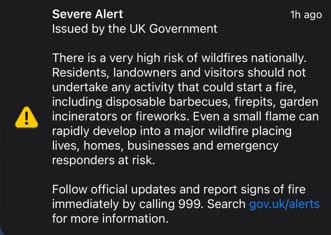
An emergency alert is being sent to mobile phones on Friday evening, August 14, warning residents, visitors and landowners that even a small fire could quickly become a major incident.
The alert is being issued nationally because of the unusually high wildfire risk. It represents one of the most extensive uses of the UK's Emergency Alerts system since it was introduced, highlighting the seriousness of the current conditions.
Authorities are urging people to avoid activities that could accidentally start fires, including the use of disposable barbecues, firepits, garden incinerators and fireworks.
The warning comes as prolonged dry weather leaves vegetation and grassland highly vulnerable to ignition. In these conditions, a fire that might normally be relatively easy to control can spread rapidly, particularly when combined with warm temperatures, low humidity and wind.
What does the emergency alert say?
The emergency message warns that there is a very high risk of wildfires across the country.
People are being asked not to carry out activities that could start a fire and to follow official guidance. The message also stresses that a wildfire can put lives, homes, businesses and emergency responders at risk.
Anyone who sees a fire or signs of a developing wildfire is being advised to report it immediately by calling 999.
The government says the emergency alert is being delivered on a rolling basis from approximately 7pm. Mobile phones may make a loud siren-like sound and vibrate for around 10 seconds, even when the device is set to silent.
Some compatible phones may also read the warning aloud automatically.
The purpose of the system is to reach people quickly when there is an immediate or serious threat to public safety.
Why is wildfire risk so high?
Wildfires become more likely when vegetation has been exposed to extended periods of hot and dry weather.
Grass, woodland, heathland and other vegetation can become extremely dry during a heatwave. Once ignited, these areas can burn quickly, allowing flames to spread over a much wider area than expected.
Human activity can increase the risk significantly. A discarded cigarette, unattended barbecue, campfire or other source of heat can be enough to ignite dry vegetation.
This is why authorities are asking the public to take extra care during the current heatwave.
The warning is not simply about people living close to rural areas. Wildfires can affect communities, roads, businesses, wildlife habitats and emergency services, meaning the consequences can extend far beyond the location where a fire begins.
Disposable barbecues and outdoor fires
One of the key messages from authorities is for people to avoid using disposable barbecues and other equipment that could create flames or intense heat.
Disposable barbecues can remain hot long after they appear to have stopped burning. If they are used near dry grass, woodland or other combustible material, there is a risk that embers or residual heat could trigger a fire.
People should also avoid lighting campfires, using firepits or burning waste in garden incinerators while wildfire conditions remain severe.
Fireworks should also be avoided because sparks and burning materials can travel beyond the intended area.
The safest approach during periods of extreme wildfire risk is to avoid any unnecessary outdoor activity involving flames, sparks or high temperatures.
What should you do if you see a wildfire?
If you notice smoke, flames or another possible wildfire, do not attempt to tackle a significant fire yourself.
Move away from immediate danger and contact emergency services by calling 999. Give the operator as much useful information as possible, including your location and, if known, the direction in which the fire is spreading.
People should avoid putting themselves at risk by approaching a wildfire to take photographs or investigate the situation.
Wildfires can change direction rapidly, particularly when conditions are hot and windy. Smoke can also reduce visibility and create additional hazards for people nearby.
If an evacuation or other instruction is issued by emergency services, residents should follow it promptly.
A major use of the UK's emergency alert system
Friday's warning is notable because of the scale of the alert.
The UK's Emergency Alerts system can send warnings directly to compatible mobile phones in areas affected by serious threats. While the system has previously been used for regional incidents, the latest wildfire warning is being sent to people across England and Wales.
The system was first tested nationwide across the UK in April 2023, when millions of phones received a test message.
Emergency alerts are designed to complement other forms of official communication rather than replace them. People should continue checking reliable government, emergency service and local authority updates for further information.
How can people help reduce wildfire risk?
During a heatwave, small changes in behaviour can help reduce the chance of accidental fires.
People spending time outdoors should avoid leaving bottles, glass or other materials that could contribute to ignition. Cigarette ends should never be discarded onto grass, woodland or roadside vegetation.
Outdoor cooking should be avoided where authorities have issued wildfire warnings or restrictions. Anyone visiting parks, beaches, countryside areas or nature reserves should check local guidance before travelling.
Landowners and businesses should also remain alert to signs of fire and make sure staff and visitors understand any restrictions that are in place.
The public can play an important role by preventing fires before they start and reporting incidents quickly when they are spotted.
Heatwave safety remains important
The wildfire warning comes alongside broader concerns about the effects of high temperatures.
During hot weather, people are generally advised to stay hydrated, avoid excessive physical activity during the hottest part of the day and check on anyone who may be particularly vulnerable to heat.
Keeping homes as cool as possible can also help during prolonged periods of high temperatures. Closing curtains or blinds during the hottest part of the day and opening windows when outdoor temperatures fall can help manage indoor temperatures.
However, the immediate message from authorities is clear: wildfire prevention is a shared responsibility while conditions remain exceptionally dry.
Residents and visitors should follow official restrictions and avoid activities that could create a spark or flame.
What happens next?
The wildfire risk will depend on weather conditions, including rainfall, temperatures, humidity and wind. A return to wetter conditions would generally help reduce the risk, while continued hot and dry weather could prolong the threat.
People should therefore continue monitoring official updates rather than assuming that the danger has passed after receiving the emergency alert.
For the latest information, residents should check official government and emergency service announcements and follow instructions issued locally.
The emergency alert is ultimately a reminder that wildfire prevention is particularly important during a heatwave. Avoiding disposable barbecues, campfires, firepits, fireworks and other potential ignition sources can reduce the likelihood of fires starting in already vulnerable landscapes.
Disclaimer
This article is intended for general information purposes only. Weather conditions, wildfire restrictions and emergency guidance can change quickly. Readers should check official UK government, local authority and emergency service sources for the latest advice and follow any instructions issued in their area.