
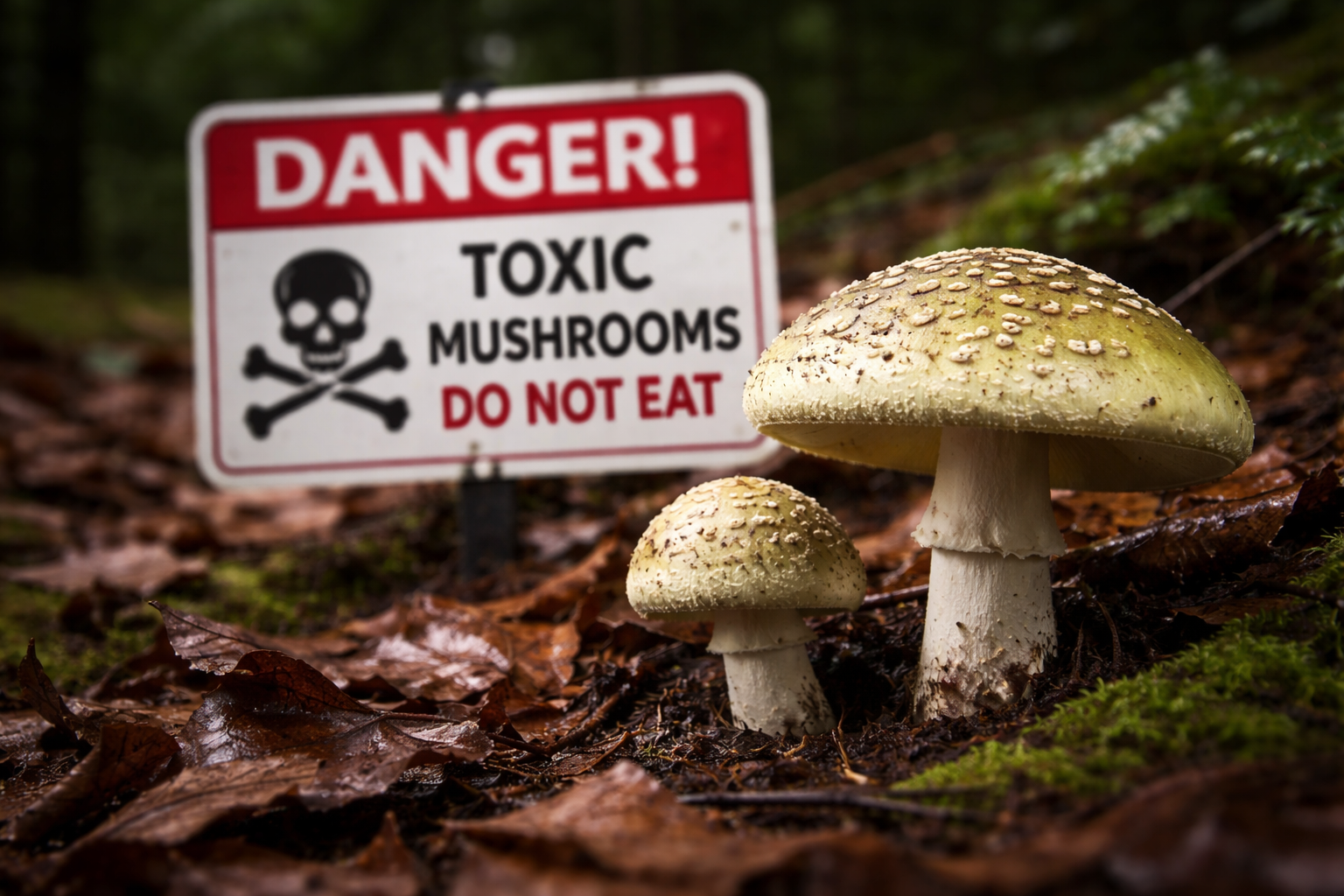
Deadly Wild Mushrooms Prompt California Health Alert After Multiple Deaths
California health officials have issued a strong warning urging residents to avoid consuming wild mushrooms following a sharp increase in poisonings linked to the highly toxic death cap mushroom. The alert comes after dozens of people across the state became seriously ill, with several cases resulting in death or the need for liver transplants.
Authorities say the current spike in poisonings is unlike anything seen in recent years and serves as a reminder that foraging for wild mushrooms carries severe and potentially fatal risks. Even small amounts of toxic mushrooms can cause irreversible organ damage, and traditional cooking methods do not make them safe to eat.
Public health agencies are now increasing outreach efforts, issuing multilingual warnings, and encouraging families to remain vigilant, especially in areas where mushrooms grow naturally.
Unprecedented Increase in Mushroom Poisoning Cases
Since mid November, California has recorded more than 30 confirmed poisonings connected to death cap mushrooms, according to the California Department of Public Health. Among those affected, four individuals have died, and three others required emergency liver transplants to survive. Several patients were hospitalized in intensive care units due to critical complications.
The cases have involved people of all ages, ranging from toddlers under two years old to adults in their late sixties. Health officials emphasize that the wide age range shows how easily anyone can be affected, regardless of experience or awareness.
In most years, California reports only a handful of death cap mushroom poisonings. Medical experts say the nearly 40 cases reported this season represent an alarming departure from the norm.
Dr. Craig Smollin, medical director of the San Francisco Division of the California Poison Control System, noted that the sheer number of people exposed this year is highly unusual and deeply concerning.
Understanding the Danger of Death Cap Mushrooms
Death cap mushrooms are considered one of the most lethal mushroom species in the world. They contain amatoxins, which are powerful poisons that disrupt essential cellular functions. These toxins are responsible for the majority of fatal mushroom poisoning cases globally.
Once ingested, amatoxins primarily target the liver, causing rapid and severe damage. In many cases, liver failure develops quickly, leaving transplantation as the only life-saving option.
A critical danger is that only a small portion of a death cap mushroom is needed to cause serious harm. Cooking, boiling, drying, or freezing does nothing to neutralize the toxins, making any preparation method ineffective at reducing risk.
Health authorities stress that there is no safe way to consume a toxic mushroom. Misidentification, even by experienced foragers, can lead to devastating outcomes.
Where These Mushrooms Are Found
Death cap mushrooms are widespread throughout California and often grow in places people frequent daily. They are commonly found in parks, wooded areas, hiking trails, and residential neighborhoods. One of their most common growing environments is near oak trees, although they can also appear near other tree species.
Because these mushrooms grow in urban and suburban settings, many people mistakenly believe they are safe or edible. Experts warn that familiarity with an area does not reduce the risk.
Another factor that increases danger is the mushroom’s changing appearance. As death cap mushrooms mature, their caps can shift in color from pale white to greenish tones. This variation makes them easy to confuse with edible mushroom species.
Specialists emphasize that accurate identification requires extensive training, and visual inspection alone is not reliable.
How Poisoning Symptoms Develop
Death cap mushroom poisoning often begins with gastrointestinal symptoms within the first 24 hours. These may include nausea, vomiting, diarrhea, and abdominal pain. Because these symptoms resemble common stomach illnesses, people may underestimate the seriousness of the situation.
In some cases, symptoms temporarily subside after the initial phase. This brief improvement can be misleading, as severe internal damage may already be underway.
Two to four days after ingestion, signs of acute liver failure can emerge. These may include yellowing of the skin or eyes, confusion, excessive bleeding, and worsening abdominal discomfort. At this stage, the condition can become life-threatening.
Medical professionals warn that delaying treatment significantly reduces the chances of survival. Anyone who suspects mushroom ingestion should seek emergency care immediately.
Weather Conditions Contributing to Increased Growth
Experts believe that unusual weather patterns played a major role in the surge of death cap mushrooms this season. Early rainfall combined with warm fall temperatures created ideal conditions for mushroom growth, leading to what specialists describe as an unusually large bloom.
Significant clusters have been reported across Northern California and the Central Coast, particularly in the San Francisco Bay Area and Monterey County.
These favorable conditions extended the mushroom growing season and increased the likelihood of accidental exposure. Health officials warn that similar weather trends in the future could result in repeated spikes in poisoning cases.
Impact on Multilingual Communities
Health authorities observed that many of the individuals affected this season primarily speak Spanish, Mixteco, or Mandarin Chinese. Spanish was reported as the primary language for more than 60 percent of patients.
In response, public health agencies expanded safety warnings and educational materials in multiple languages. Officials aim to ensure that critical information reaches all communities, regardless of language barriers.
Community organizations and healthcare providers are working together to distribute translated materials and raise awareness about the risks of wild mushroom consumption.
Risks for Children and Animals
Children have been among the victims of death cap mushroom poisoning, underscoring the importance of supervision in outdoor areas. Young children may unknowingly pick up or taste mushrooms while playing.
Pets, especially dogs, face similar risks. Dogs may ingest mushrooms while exploring yards, parks, or trails. Veterinarians warn that mushroom poisoning can be fatal for animals as well.
Parents and pet owners are advised to remove visible mushrooms from their property and to seek immediate medical or veterinary care if ingestion is suspected.
Health officials strongly recommend purchasing mushrooms only from reputable grocery stores or licensed sellers.
Rising Mushroom Exposure Nationwide
The increase in mushroom poisonings is not limited to California. U.S. Poison Control Centers reported a 40 percent rise in mushroom exposure calls nationwide between September and January compared with the same period the previous year.
Experts suggest that growing interest in foraging, outdoor recreation, and natural food trends may be contributing to the increase. However, they emphasize that the risks associated with wild mushrooms are often underestimated.
Poison control specialists caution that even experienced foragers can make fatal mistakes and advise against consuming wild mushrooms unless verified by certified experts.
What to Do if Exposure Occurs
If mushroom ingestion is suspected, immediate action is essential. Individuals should contact Poison Control or seek emergency medical care without delay. In the United States, Poison Control is available at 800-222-1222 or through PoisonHelp.org.
Early treatment can improve outcomes, but waiting for symptoms to worsen can lead to irreversible organ damage. If possible, bringing a sample or photograph of the mushroom can assist healthcare providers.
Clear Guidance From Health Officials
California health authorities have delivered a clear message. Do not eat wild mushrooms under any circumstances. The potential consequences are severe, and the margin for error is nonexistent.
Officials stress that store-bought mushrooms are the only safe option for consumption. Wild mushrooms should be left untouched, regardless of appearance or location.
As environmental conditions continue to shift, awareness and caution will remain critical in preventing future poisonings.
Final Thoughts
The recent deaths and severe illnesses caused by death cap mushrooms highlight the extreme dangers associated with wild mushroom consumption. With multiple fatalities and life-altering injuries, health officials hope the current warnings will prevent further tragedies.
Avoiding wild mushrooms, supervising children and pets, and acting quickly in cases of suspected exposure can save lives. California’s experience serves as a powerful reminder that when it comes to wild mushrooms, the safest choice is complete avoidance.
Sources
- California Department of Public Health
- U.S. Poison Control Centers
- BC Centre for Disease Control
Disclaimer
This content is intended for informational purposes only and should not be considered medical advice, diagnosis, or treatment. Health outcomes vary by individual, and statistical information reflects general trends. Always consult qualified healthcare professionals for medical concerns or suspected poisoning.