
Core Stability - Test & Exercise
What are the clinical tests to assess instability?
Aberrant movement on flexion-extension
The standard examination involves documenting the range of movement. The quantitative range of movement may not be as significant as the qualitative range of movement. The important feature of spinal instability is the aberrant motion that occurs when flexing and extending the spine. A catch, a painful arc, supporting the arms on the thighs, or a reversal of the lumbopelvic rhythm when standing from the flexed posture indicates instability.
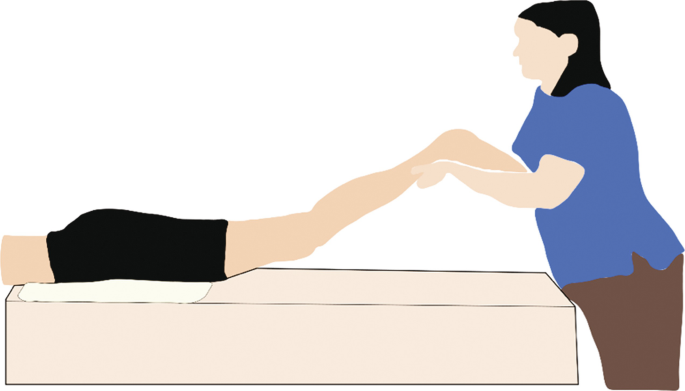
Passive lumbar extension test
The subject lies on the examination couch. The examiner passively lifts the lower limbs to a height of 30 cm from the couch while maintaining the knee in extension and applying gentle traction on the legs. A positive test is recorded if the patient complains of "pain in the lower back region" or complains of "heaviness in the lower back" or complains that, "the lower back is coming off." These experiences should return to normal when the leg returned to the couch. The passive lumbar extension test has the highest combined sensitivity and specificity and may be comparable to radiological findings to identify lumbosacral structural instability.
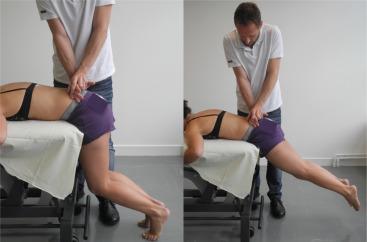
The prone instability test
The patient stands at the foot end of the examination couch. The patient then lowers his/her upper body to rest on the examination couch. The iliac crest should rest on the edge of the examination couch. The patient holds the sides of the examination couch for increased stability. In the first part of the test, the feet of the patient is resting on the ground. The examiner with the heel of his/her hand creates a small posterior to anterior thrust at each segment of the lumbar spine. Pain, if experienced by the patient, is recorded. In the second part of the test, the patient is asked to lift the feet of the floor and steady himself /herself by holding onto the sides of the examination couch. The examiner again repeats the posterior to anterior thrust with the heel of his/her hand at each lumbar segment. The test is positive if the pain created in the initial part of the test subsides when the extensor muscles of the spine are tensed by lifting the feet of the floor. (https://www.ncbi.nlm.nih.gov/books/NBK562179/)
Which exercises enhance core stability?
Abdominal crunch
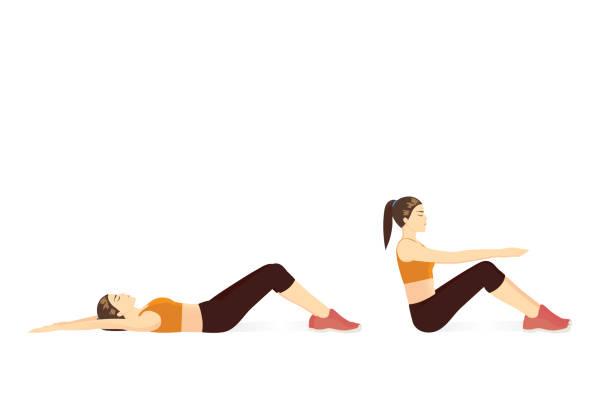
Abdominal crunches are a classic core-strength exercise. To do an abdominal crunch:
- Lie on your back and place your feet on a floor with hips and knees bent at 90 degrees. Tighten the abdominal muscles.
- Raise your upper body off the floor. To avoid straining your neck, stretch the arms towards your feet, rather than locking them behind your head. Hold for three deep breaths.
- Return to the start position and repeat.
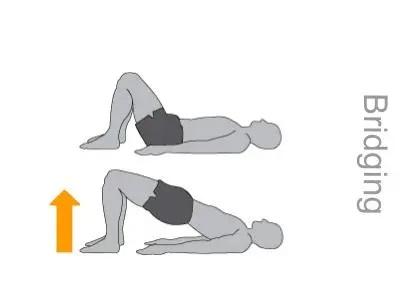
Bridge
To improve core strength of many muscles at one time, try a bridge, sometimes called a glute bridge:
- Raise your hips off the floor by tightening your gluts until your hips line up with your knees and shoulders. Hold for three deep breaths.
- Return to the start position and repeat.
Lie on your back with your knees bent. Keep your back in a neutral position, not arched and not pressed into the floor. Try not to tilt your hips. Tighten the abdominal muscles.
Single-leg abdominal press
The single-leg abdominal press is another popular core-strength exercise. To do this exercise:
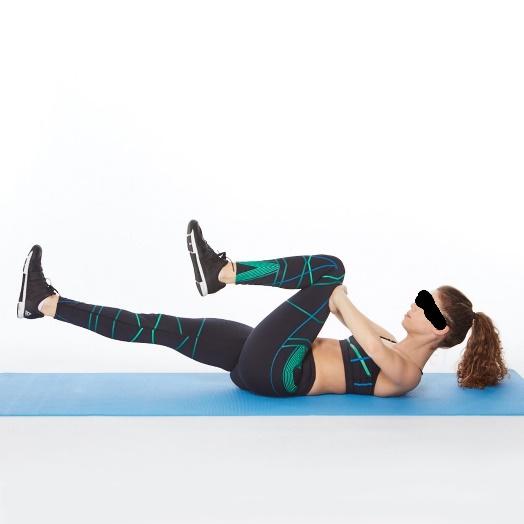
- Lie on your back with your knees bent. Keep your back in a neutral position, not arched and not pressed into the floor. Avoid tilting your hips. Tighten the abdominal muscles.
- Raise your right leg off the floor so that your knee and hip are bent at 90-degree angles. Rest your right hand on top of your right knee.
- Push your hand against your knee while using the abdominal muscles to push your knee toward your hand. Keep your arm straight. Hold for three deep breaths.
- Return to the start position and repeat using your left hand and left knee.
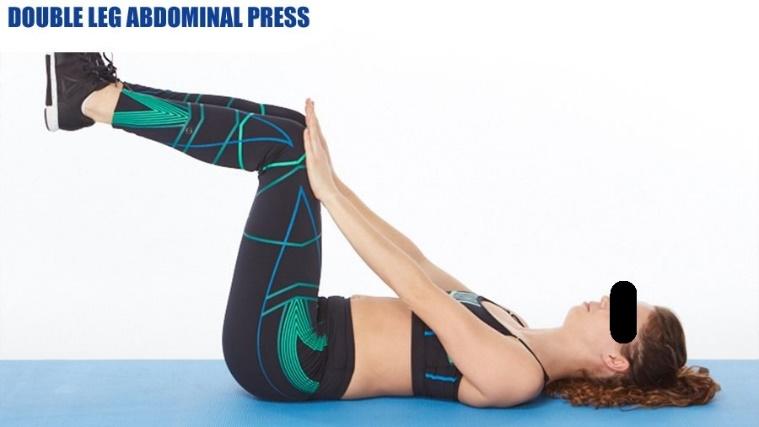
Double-leg abdominal press variations
These variations of the double-leg abdominal press also build your core strength:
- Hands on outside of knees. Place your hands along the sides of your knees. Use your hands to push your knees inward. At the same time, create resistance by pushing your knees away from the center. Hold for three deep breaths. Repeat.
Opposite hands on opposite knees. Place each hand on your opposite knee, toward the inside of your knee. Your arms will cross over each other. Push your hands against your knees while pulling your knees toward your hands. Hold for three deep breaths. Repeat.
Quadruped
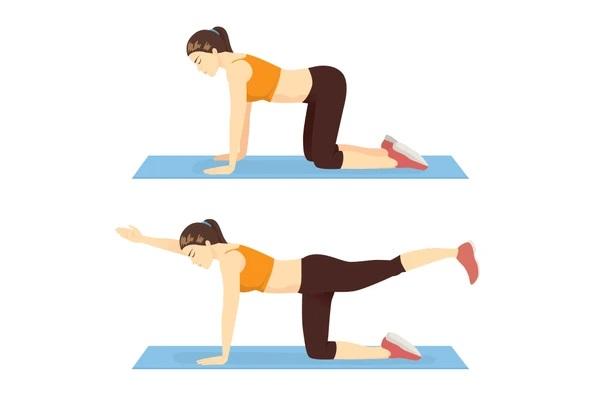
This core-strength exercise is called the quadruped and sometimes called the bird dog:
- Raise your right arm off the floor and reach ahead. Hold for three deep breaths. Lower your right arm and repeat with your left arm.
- Raise your right leg off the floor. Tighten the trunk muscles for balance. Hold for three deep breaths. Lower your right leg and repeat with your left leg.
- For added challenge, raise your left arm and your right leg at the same time. Repeat with your right arm and left leg.
Start on your hands and knees. Place your hands directly below your shoulders, and line up your head and neck with your back. Tighten the abdominal muscles.
Modified plank
Another good core-strength exercise is called the modified plank. In a plank, you raise yourself up on your forearms and feet while keeping your body lined up with your hips. To do a modified plank:
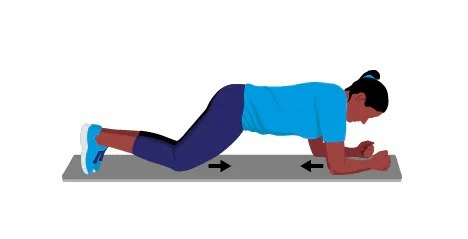
- Lie on your stomach. Raise yourself up so that you're resting on your forearms and knees. Line up your head and neck with your back. Place your shoulders directly above your elbows. Tighten the abdominal muscles.
- Create resistance by pressing your elbows and knees toward one another. Neither should move from their positions on the floor. Hold for three deep breaths.
Return to the start position and repeat.
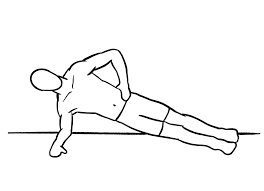
Side plank
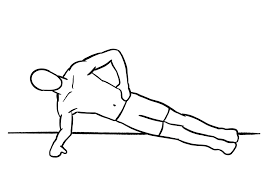
The side plank challenges your stability and improves core strength by working the muscles along the side of your body:
- Lie on your left side, raising yourself onto your left forearm. Place your left shoulder directly above your left elbow, keeping your shoulders, hips and knees in a straight line. Rest your right arm along the side of your body.
- Tighten the abdominal muscles. Hold for three deep breaths. Repeat on your right side.
- For added challenge, balance on your left hand. Raise your hips off the floor and extend your right hand toward the ceiling. Hold for three deep breaths. Repeat on your right side.
Superman
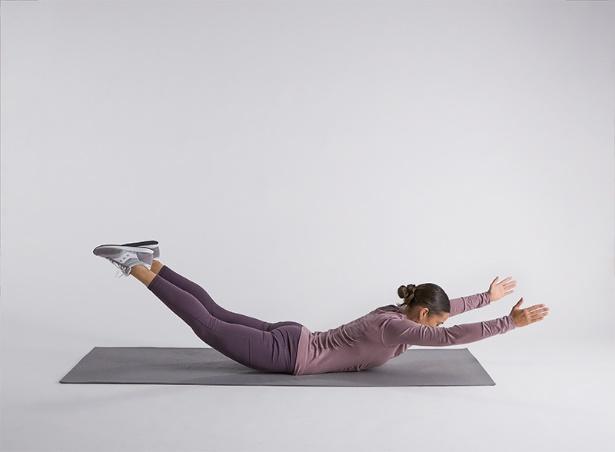
The superman is another core-strength exercise that can help strengthen your lower back:
- Raise your right arm off the floor. Hold for three deep breaths. Lower your right arm and repeat with your left arm.
- Raise your right leg off the floor. Hold for three deep breaths. Lower your right leg and repeat with your left leg.
Lie on your stomach with a rolled towel or a small pillow under your hips to support your back. You also might use a folded towel to support your head. Tighten the abdominal muscles.
(https://www.mayoclinic.org/healthy-lifestyle/fitness/in-depth/core-strength/art-20546851)