
ATHLETE`S FOOT
What is an Athlete`s foot?
Tinea pedis, also known as athlete's foot (AF), results from dermatophytes infecting the skin of the feet. Patients contract the infection by directly contacting the organism while walking barefoot. Symptoms typically develop in the interdigital clefts of the toes but can also affect the soles and medial and lateral edges. If not treated appropriately, tinea pedis can lead to significant morbidity, including cellulitis, osteomyelitis, and lymphangitis.
How common is AF?
Tinea pedis may affect approximately 10% of the total population. Adult males have a higher prevalence of tinea pedis than females. Wearing occlusive shoes for extended periods predisposes patients to dermatophyte infections. Community facilities involving water are likely to increase the chances of infection, as tinea pedis rates are higher among those who use community baths, showers, and pools.
What causes AF?
Trichophyton rubrum accounts for approximately 70% of tinea pedis cases. Factors that favor growth of dermatophytes include:
- A hot and humid environment
- Prolonged use of tightly fitting footwear
- Excessive sweating
- Prolonged exposure to water (https://www.ncbi.nlm.nih.gov/books/NBK470421/)
What are the types of AF?

- Toe web infection: It is the most common of AF, typically affecting the skin between your fourth toe (ring toe) and fifth toe (pinkie toe).
- Moccasin-type infection: affects the bottoms of your feet, your heels, and the edges of your feet.
- Vesicular-type infection: typically affects the bottoms of your feet, but it may appear anywhere on your feet. A vesicular-type infection features bumps or fluid-filled blisters (vesicles).
- Ulcerative infection: is the rarest type of athlete’s foot. Open sores (ulcers) often appear between the toes or on the bottoms of your feet. (https://my.clevelandclinic.org/health/diseases/22139-athletes-foot-tinea-pedis)
What are the symptoms of AF?
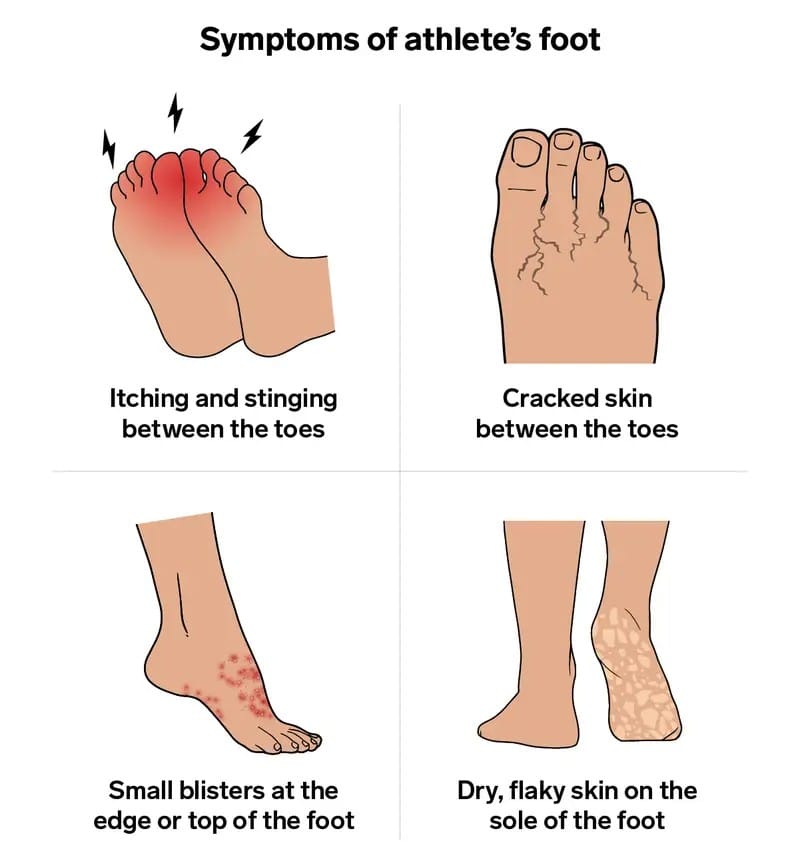
Athlete's foot can affect one or both feet. Common signs and symptoms are:
- Scaly, peeling, or cracked skin between the toes
- Itchiness, especially right after taking off shoes and socks
- Inflamed skin that might appear reddish, purplish or greyish, depending on your skin color
- Burning or stinging
- Blisters
- Dry scaly skin on the bottom of the foot that extends up the side (https://www.mayoclinic.org/diseases-conditions/athletes-foot/symptoms-causes/syc-20353841)
How is AF diagnosed?
Although the physical examination may strongly indicate a dermatophyte infection, tinea can overlap with other skin conditions. Confirmation through microscopy and culture may be necessary. A thorough skin examination is warranted as patients can experience dermatophyte infections in multiple body areas.
In some cases, your healthcare provider may remove a small piece of skin (biopsy) and test it in a lab. Several drops of a potassium hydroxide (KOH) solution dissolve the skin cells so only fungal cells are visible.

Is AF contagious?
Athlete’s foot is contagious. It’s a fungus that grows on or in your skin. Fungi (plural form of fungus) need warm temperatures and moisture to grow. People often wear socks and tight shoes every day, which keep their feet warm and moist. This is the perfect environment for an athlete’s foot to grow.
How is AF treated?
Improving hygiene in swimming pools and bathing areas and frequently washing and cleaning changing room floors and walkways may help control the spread of tinea pedis. Most patients can usually manage their condition effectively with topical treatment.
Over-the-counter (OTC) and prescription antifungal creams, ointments, gels, sprays or powders effectively treat athlete’s foot. These products contain clotrimazole, miconazole, tolnaftate, or terbinafine.
Some prescription antifungal medications for athlete’s foot are pills. These pills contain fluconazole, itraconazole or terbinafine.
It’s important to finish your full course of medicine. If you stop too soon, your athlete’s foot may come back and be harder to treat. (https://my.clevelandclinic.org/health/diseases/22139-athletes-foot-tinea-pedis)